
Photo: Turkey Your Way
Is Turkey Safe to Visit? What American Travelers Should Know
Is Turkey safe? The official US advice, the regions to avoid, the common scams in Istanbul, tips for women travelers and the numbers to save before you land.
It is the first question many American travelers ask us: is Turkey safe? The honest answer is yes, for the places on our tours, with the same common sense you would use in any big country. Every year, tens of millions of foreign tourists visit Istanbul, Cappadocia and the coast without trouble. At the same time, a few regions need extra care, and a few small scams catch first-time visitors. Below, we explain both, from the official advice to the tricks our guides see every week.
Is Turkey Safe? The Official Advice
The US State Department rates Türkiye at Level 2, “Exercise Increased Caution”, the same level it gives many popular European countries. However, it advises travelers to avoid the areas near the borders with Syria and Iraq, and its advice for the southeast has changed several times in 2026. So, before you book, read the current US travel advisory for Türkiye, and enroll in the State Department’s STEP program for alerts.
For the classic route, Istanbul, Cappadocia, Ephesus, Pamukkale and the Mediterranean coast, the risk is low. These regions are busy, well policed and used to visitors from all over the world.
Common Scams in Istanbul
Violent crime against tourists is rare. Instead, the problems visitors meet are small tricks, mostly in the busiest areas of Sultanahmet, Taksim and İstiklal Avenue. Here are the ones our guides see most often.
- The dropped brush: a shoe shiner drops his brush in front of you. When you pick it up, he insists on shining your shoes “as thanks”, then asks for a high price. Simply walk on.
- The friendly bar invitation: a stranger, often to a man traveling alone, suggests a bar he knows. Then the bill for a few drinks is enormous. Choose your own bars.
- The taxi without a meter: some drivers quote a fixed price or take a long route. Ask for the meter, or use a taxi app so the route and fare are recorded.
- Card machines in euros: when you pay by card, always choose to pay in Turkish lira, not your home currency.
- “Ancient” coins and statues: sellers offer Roman coins or “Byzantine” figures. Most are fakes, and in any case, taking real antiquities out of Turkey is a serious crime.
Staying Safe in Turkey Every Day
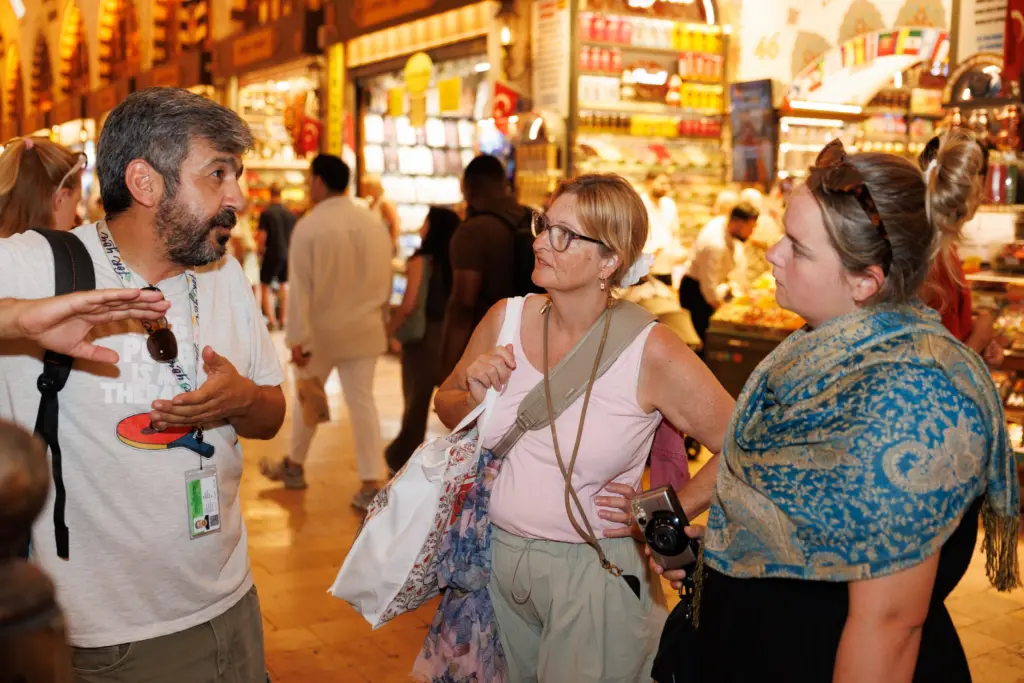
Pickpockets work in crowded trams, ferries and bazaars, as in any big city. So keep your phone and wallet in a front pocket, and wear a backpack on your front in crowds. At night, the central districts of Istanbul stay busy until late, and we walk them with our guests.
Turkey is also a country of earthquakes. Modern hotels follow strict building codes, but it is worth knowing the emergency exits wherever you stay. Also, during summer, the heat at the ancient sites is a bigger risk than crime: carry water and plan outdoor visits for the morning and evening.
Is Turkey Safe for Women Traveling Alone?
Many women travel in Turkey alone or in small groups and have a wonderful time. In cities and tourist areas, dress as you would in Europe. However, cover your shoulders and knees for mosques, and carry a scarf. In rural areas, a little more modest clothing is welcome. If anyone bothers you, say a firm no and move toward other people; Turks are quick to help.
What our guides tell guests
- 112The single emergency number in Turkey for ambulance, police and fire.
- Tourist policeIn Sultanahmet, the tourist police help visitors with reports and advice, day and night.
- PharmaciesAt night, each pharmacy posts the address of the nöbetçi eczane, the one on duty.
- Tap waterIn Istanbul, we drink bottled water. It is cheap and sold everywhere.
Our suggestion Save two numbers in your phone before you land: 112, the emergency number in Turkey, and the number of your guide or hotel. Most problems are solved by one quick call.

Traveling With a Private Guide
Many of our guests ask if Turkey is safe because they are traveling far from home for the first time. With a guide and a driver, you always have a local at your side who knows the streets, the prices and the rules. For emergencies on the road, see our travel assistance, and before you fly, read our Istanbul guide. For a first day with a local at your side, see our one day in Istanbul tour.
Frequently asked questions
Is Turkey safe for American tourists?
Yes, for the classic route of Istanbul, Cappadocia, Ephesus and the coast. Still, check the current US travel advisory before you book.
Which parts of Turkey should I avoid?
The US State Department advises avoiding the areas near the Syrian and Iraqi borders. Its advice for the southeast changes, so check it.
Is Istanbul safe at night?
The central districts stay busy until late, so most visitors feel comfortable. However, watch for pickpockets in crowds.
What is the emergency number in Turkey?
112 is the single emergency number for ambulance, police and fire.
You may also like
-
 Istanbul With Aging Parents: How to Plan the Trip
-
 Cappadocia Without a Balloon: What to Do Instead
-
 Cappadocia Balloon Canceled? What to Do That Morning and Next
-
 Is Hagia Sophia Worth Visiting During the Restoration?
-
 Uzungöl or Ayder: Which to Visit, and When to Pick Pokut
-
 Black Sea Itinerary: 7 Days From Ordu to Ayder
-
 Göbeklitepe vs Karahantepe: Which to See, With a 2-Day Route
-
 Where to Stay on the Lycian Way: Pensions and Boutique Hotels