
Architecture
Bridges & Aqueducts
Roman and Ottoman engineering that still carries water, or once did: the aqueducts of Istanbul.
Photo: İncelemeelemani / Wikimedia Commons, CC BY-SA 3.0
-
 Place · Çanakkale
1915 Çanakkale Bridge
The suspension bridge over the Dardanelles between Gelibolu and Lapseki, opened on 18 March 2022, with a main span of 2,023 meters.
-
 Place · Mediterranean
Taşköprü
Adana's Roman stone bridge of the 4th century AD, still carrying people across the Seyhan on 14 arches.
-
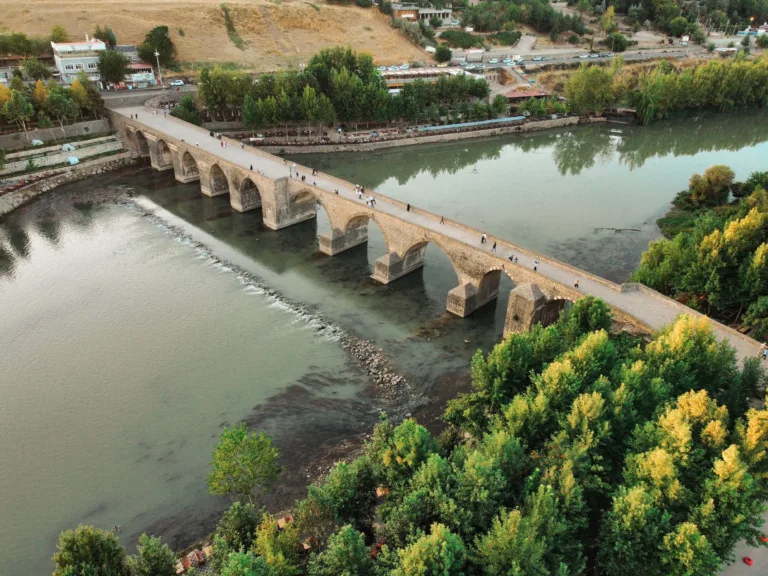 Place · Diyarbakır
Ten-Eyed Bridge
The Ten-Eyed Bridge, or Dicle Köprüsü, crosses the Tigris on ten basalt arches. A floral Kufic inscription dates work to 1064–65, and…
-
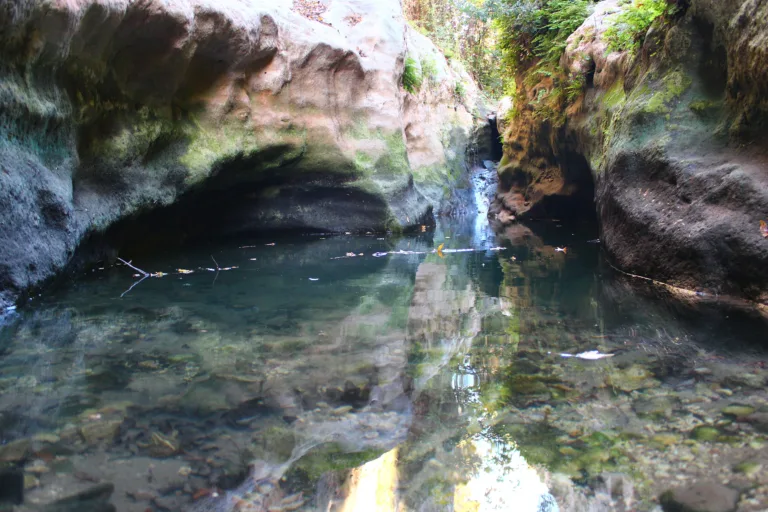 Place · Hatay
Titus Tunnel, Samandağ
The Titus Tunnel at Çevlik, Samandağ: a 1,380 m Roman flood channel begun under Vespasian in AD 69 and finished under Titus…
-
 Place · Antalya
Limyra
Limyra near Finike: the Lycian capital of King Pericles, with a Roman theater at the foot of the acropolis, the cenotaph of…
-
 Place · Istanbul
Galata Bridge
The Galata Bridge across the Golden Horn: fishermen along the rail, fish restaurants below, the tram down the middle and the best…
-
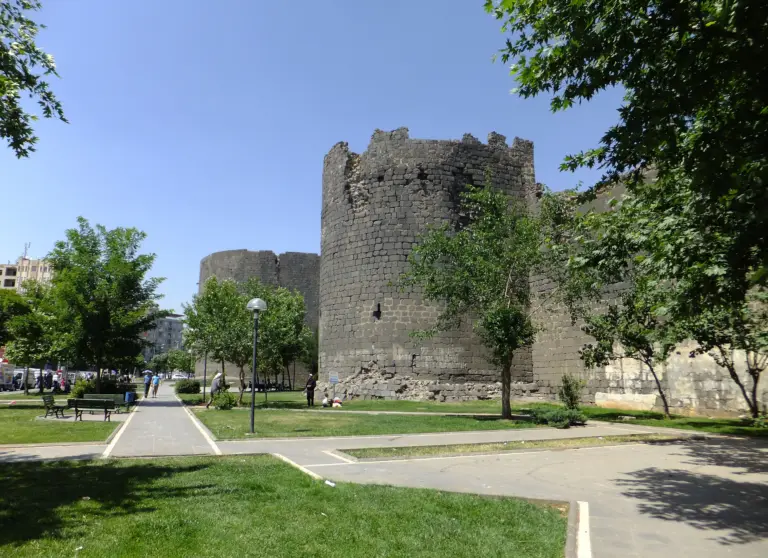 Place · Diyarbakır
Diyarbakır Fortress and Hevsel Gardens
The Diyarbakır Fortress: nearly 6 km (3.6 miles) of black basalt walls with 82 towers and carved Artuqid bastions, above the Hevsel…
-
 Place · Istanbul
Bosphorus Bridge
The Bosphorus Bridge in Istanbul, officially the 15 July Martyrs Bridge: the first bridge across the strait, opened in 1973 between Ortaköy…
-
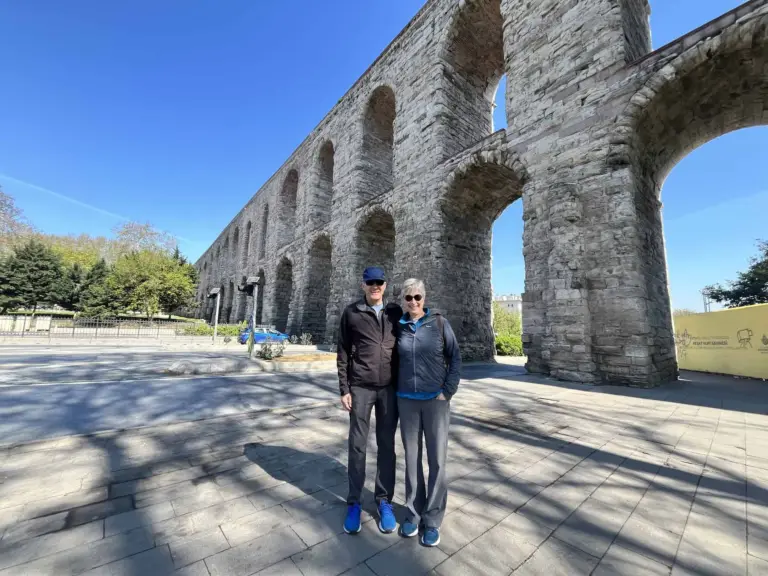 Place · Istanbul
Valens Aqueduct
The Roman aqueduct that carried water into Constantinople across two hills: its story from Valens to Suleiman and Sinan, where to see…
-
 Place · Istanbul
Mağlova Aqueduct
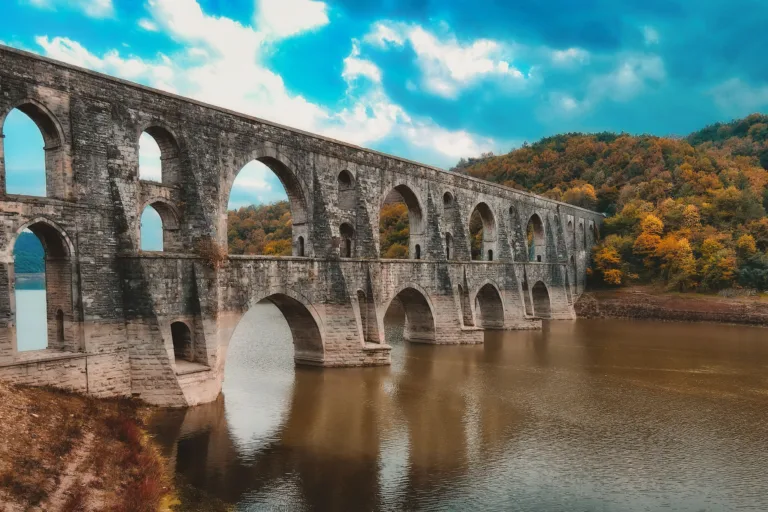
Mimar Sinan's masterpiece of engineering: a two-level aqueduct of 1555–1562 that still carries water to Istanbul, now standing with its feet in…
-
 Place · Diyarbakır
Malabadi Bridge
The Malabadi Bridge near Silvan: a 12th-century Artuqid bridge over the Batman River, with a 38.6-meter (127-foot) pointed arch and rooms for…
About this section
Bridges & Aqueducts
The bridges and aqueducts of Istanbul solved one problem for two thousand years: the city stood on dry hills, and water had to come from the forests to the north.
Emperor Valens completed the Valens Aqueduct in AD 373. About 921 meters (3,020 feet) of it still stand, and the traffic of Atatürk Boulevard flows under its central arches. Later, the Ottomans repaired it and tied it into new water lines, so it worked for centuries.
In the 1550s, Suleiman the Magnificent needed more water, so Mimar Sinan built the Kırkçeşme water system. Its finest bridge, the Mağlova Aqueduct, crosses the valley of the Alibey Creek on two tiers of arches. Many historians call it his masterpiece of engineering. A dam later flooded the valley, so its lower arches now stand in the water.
These bridges and aqueducts are free to see from outside. The Valens arches sit in the old city near the Şehzade Mosque, while Mağlova needs a car. The reservoir around Mağlova is run by İSKİ, Istanbul’s water authority, so stay on the paths along the shore.


