Photo: Turkey Your Way
Church of Saint Mary of the Mongols
The Byzantine church in Fener that was never a mosque, home of a princess who married a Mongol khan.
Overview
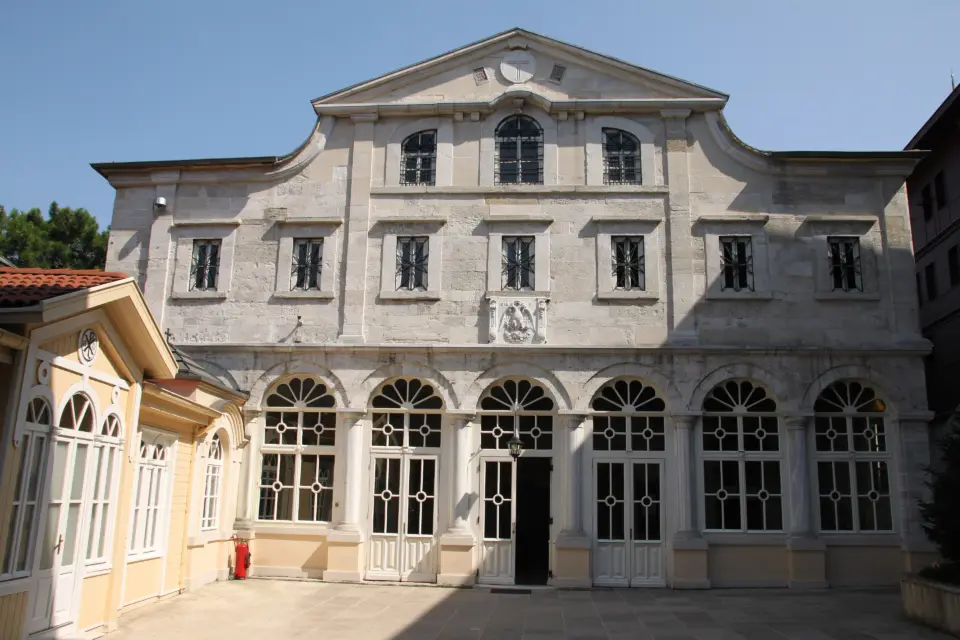
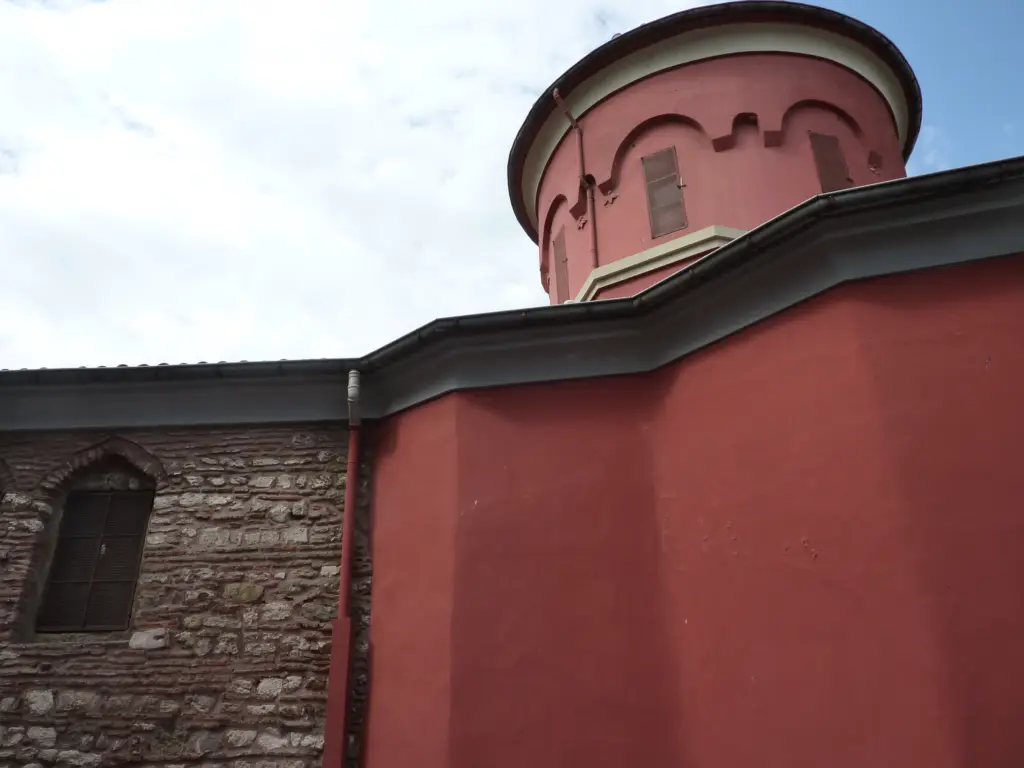
At the top of a steep lane in Fener, above the Golden Horn, a red-painted church hides behind a high stone wall. To get in, you ring a bell at the gate. Inside, candles glow before old icons, as they have for centuries. So this is the Church of Saint Mary of the Mongols, the only Byzantine church in Istanbul that has always stayed a working Greek Orthodox church, never a mosque.
- Good for
- Byzantine history, Orthodox Istanbul, Fener and Balat walks
- Best combined with
- Ecumenical Patriarchate, Fener, Balat
The Story of Saint Mary of the Mongols
A nunnery on the fifth hill
To begin with, early in the 7th century, Princess Sopatra, a daughter of Emperor Maurice, and her friend Eustolia founded a nunnery on this slope of the fifth hill. In 1261, after the Byzantines took the city back from the Latins, Isaac Doukas, an uncle of Emperor Michael VIII, rebuilt it and dedicated it to the All-Holy Mother of God.
Maria, the lady of the Mongols
Then comes the story behind the name. In 1265, Michael VIII sent his daughter Maria Palaiologina east to marry the Mongol ruler Hulagu. Because Hulagu died before she arrived, she married his son Abaqa, the Ilkhan, instead. At his court, the Mongols called her Despina Khatun.
In 1281, after 15 years away, Maria came home. She rebuilt the nunnery and the church in the shape you see today, and she lived there until her death. Since then, people have called it the church of the Mongols, Mouchliotissa in Greek.
1453 and the Bloody Church
On May 29, 1453, as the city fell, people made a last stand around this church. The fighting here was so bloody that the Turks later called it Kanlı Kilise, the Bloody Church. Even today, the lane that climbs to it from the Golden Horn is named Sancaktar Yokuşu, the Ascent of the Standard Bearer, after an Ottoman flag bearer who died here.
Saved by a sultan’s grant
Mehmed II gave the church to the mother of Christodoulos, the Greek architect of the Fatih Mosque. Later, Bayezid II confirmed the grant. Thanks to this, when officials twice tried to turn it into a mosque, under Selim I and again in the late 17th century, the grants saved it. In 1955, the church was damaged during the Istanbul pogrom against the Greek community, and it has since been restored.
What to See at Saint Mary of the Mongols
The rare plan of Saint Mary of the Mongols
First, look at the shape. Originally, the church had four half-domes around a central dome, a plan found nowhere else among the Byzantine churches of the city. In a small way, it even foreshadows the great Ottoman mosques. Fires in 1633, 1640 and 1729, however, led to repairs that changed it heavily, and the south side was rebuilt with three aisles.
Icons and the iconostasis
Next, step inside. Here, the walls are full of icons, silver lamps and chandeliers. Also, a small bell tower was added in 1892.
Tips for visiting Saint Mary of the Mongols
Our notes for the church
- EntryRing the bell at the gate.
- NameKanlı Kilise, the Bloody Church.
- UniqueNever turned into a mosque.
Our suggestion Ring the bell at the gate, dress modestly, and leave a small donation for the candles.
How to Visit Saint Mary of the Mongols
In practical terms, the church stands on Tevkii Cafer Mektebi Street in Fener, near the red brick Phanar Greek Orthodox College. The doors are usually closed, but visitors may ring the bell at the entrance. Our Byzantine churches tour ends here.

Afterward, walk down to the Ecumenical Patriarchate, then on to Balat and the Bulgarian Iron Church.
Because you have to ring a bell to enter history. Behind a high wall in Fener, a princess who married a Mongol khan left a church that has never stopped holding services.
Map
Open in Google Maps (opens in a new tab) Open in Apple Maps (opens in a new tab)
Frequently asked questions
Why is it called Saint Mary of the Mongols?
Maria Palaiologina, a Byzantine princess and widow of the Mongol Ilkhan Abaqa, rebuilt the church after 1281 and lived there until her death.
Was it ever a mosque?
No. Grants from Mehmed II and Bayezid II protected it, and it has always remained a Greek Orthodox church.
Why do Turks call it the Bloody Church?
Because of the fierce fighting around it on May 29, 1453, the day the city fell.
Can visitors go inside?
The doors are usually closed, but visitors may ring the bell at the entrance.