
Photo: Turkey Your Way
Spice Bazaar
The 'Egyptian Bazaar' of 1660 by the Golden Horn: spices, nuts, Turkish delight and dried vegetables under one vault, built to pay for the New Mosque next door.
Overview
Walk in from the Eminönü waterfront, and the smell arrives before anything else: cumin, cinnamon, dried mint, roasting coffee. Under a long vaulted roof, shops glow with pyramids of red pepper, trays of Turkish delight, strings of dried aubergines and bags of saffron and pistachios. The Spice Bazaar has stood beside the New Mosque for more than 350 years, and it is still the place where Istanbul comes to buy its spices, nuts and sweets. For lunch after the bazaar, join our Eminönü and Pandeli lunch tour.
In Turkish it is the “Egyptian Bazaar”, and its rents helped pay for the mosque next door. Pandeli, a restaurant whose story began in 1901, also sits upstairs. Outside, the Turkish coffee roasters of Tahmis Sokak and the market lanes behind are where locals really shop.
- Good for
- Food lovers, shoppers, photographers
- Best combined with
- New Mosque, Rüstem Pasha Mosque, Grand Bazaar, Galata Bridge
The Spice Bazaar at a Glance
The Spice Bazaar (Mısır Çarşısı) stands in the Eminönü quarter of the Fatih district, at the southern end of the Galata Bridge, next to the New Mosque (Yeni Cami). It is the other great covered market of Istanbul, after the Grand Bazaar. It usually opens on Sundays too and closes on religious holidays, but times change, so ask us to confirm before you plan a visit. It belongs to the UNESCO World Heritage Site of the Historic Areas of Istanbul.
The Spice Bazaar in numbers
- 1660completed as the market of the New Mosque complex
- 1901Pandeli Çobanoğlu opens his restaurant
Why It Is Called the Egyptian Bazaar
The Egyptian Bazaar
Its Turkish name, Mısır Çarşısı, means “Egyptian Bazaar”. Revenues from the Ottoman province of Egypt paid for it, while goods from Egypt and the East arrived here by ship. Since mısır also means “corn” in Turkish, some visitors are surprised to learn it was never a corn market.
A market to pay for a mosque
The bazaar belongs to the complex of the New Mosque. Turhan Hatice Sultan, the mother of Sultan Mehmed IV, commissioned it, and it was completed in 1660. The court architect Koca Kasım Ağa designed it, and the rents from its shops paid for the upkeep of the mosque next door. So every bag of spices sold here once helped keep a mosque running.

Inside the Spice Bazaar: What to Taste and Buy
The spice stalls
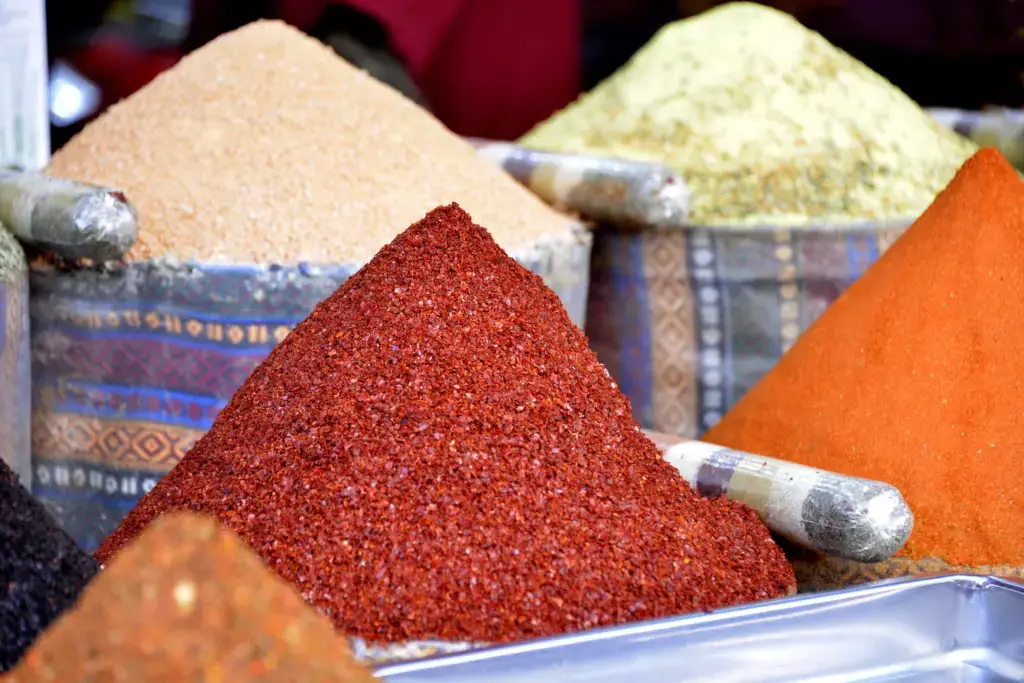
The classic sight is the spice displays: red pepper flakes from Urfa and Maraş, sumac, cumin, dried mint, saffron and colorful “sultan’s” tea blends. Taste before you buy, and ask where each spice comes from. Buy whole spices or freshly ground ones. Real saffron is expensive, and cheap red threads are often safflower.
Dried fruit, nuts and Turkish delight

Shops sell pistachios from Antep, hazelnuts from the Black Sea, dried apricots from Malatya and figs from the Aegean, together with Turkish delight in every flavor. Ask for vacuum packing if you are flying home.
Dried vegetables for dolma
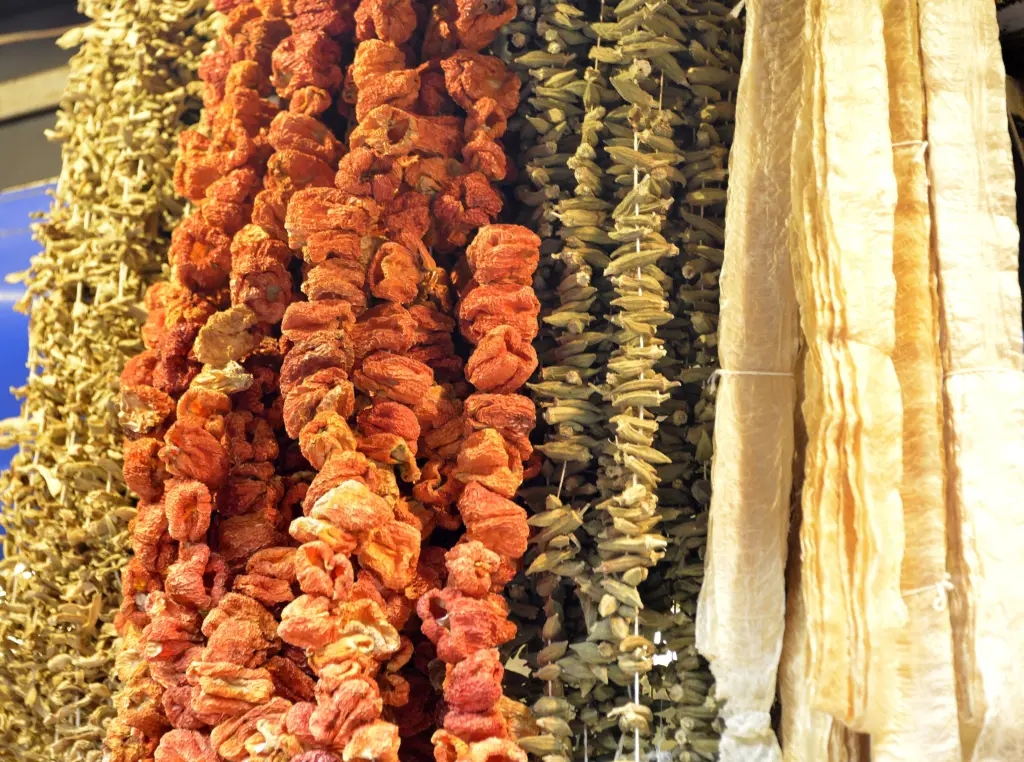
Look also for strings of hollow dried aubergines and peppers hanging from the stalls. Cooks in Gaziantep and southeastern Türkiye stuff them with spiced rice in winter. So they make an unusual souvenir and a taste of real Turkish home cooking.

The New Mosque

Before or after shopping, step into the New Mosque next door. Despite its name, it is more than 350 years old. Its courtyard lies above the square, while inside, İznik tiles cover the walls.

The square in old photographs

An old colored photograph shows the same scene you see today: the New Mosque, the market square and boats crowding the shore. The boats are now ferries, but the energy of Eminönü has not changed. A few minutes’ walk east, in Sirkeci, Orientbank Hotel Istanbul keeps the copper dome and marble staircase of its century-old building. Close by, Neorion Hotel takes its name from the Byzantine harbor on this shore, and Régie Ottoman Hotel recalls the Ottoman tobacco company founded in 1883.
Outside the Gates: Where Istanbul Really Shops
The covered bazaar is only the beginning. On its west side, the open-air streets toward the Rüstem Pasha Mosque are where Istanbul households do their shopping: cheese and olive shops, cured meat, pastırma, coffee and kitchenware. Prices here are often lower than inside the bazaar. Our Istanbul hans tour ends here, after Büyük Yeni Han and Kürkçü Han.
How to Shop for Spices Without Regret
Most stalls will let you taste before you buy, so ask. Then buy small amounts, because ground spices lose their scent within months. Many shops will also vacuum-pack your bags for the flight home, which keeps the smell out of your suitcase.

Real saffron is expensive by nature, and the cheap red threads sold as “Turkish saffron” are usually safflower, a different plant with almost no taste. Similarly, for Turkish delight, the best is fresh and soft, not the dusty boxes stacked for tourists.
Our notes for the Spice Bazaar
- PandeliAbove the main gate, in blue-tiled rooms. Founded in 1901, famous for sea bass cooked in paper.
- Kurukahveci Mehmet EfendiOn Tahmis Sokak, where Istanbul still buys freshly ground Turkish coffee.
- Hacı BekirOn Hamidiye Caddesi, a historic maker of lokum, Turkish delight.
- HamdiA few minutes away, a kebab house with a view over the Golden Horn.
- Balık ekmekGrilled fish in bread on the Eminönü waterfront.
Our suggestion Arrive at nine, walk the covered hall once without buying, then go out by the side gate. Buy coffee at Kurukahveci, buy lokum (Turkish delight) at Hacı Bekir, and save the shopping for the streets toward the Rüstem Pasha Mosque.

How to Visit the Spice Bazaar
Visiting the Spice Bazaar
- Hours: open most days, including Sundays, and closed on religious holidays. Times change, so ask us to confirm before you plan a visit.
- Getting there: the Eminönü tram stop and ferry piers are right outside.
- Time needed: 30 minutes to an hour, more with the surrounding streets.
Local tips for the Spice Bazaar
- Come in the morning, when the shops are setting out their sacks.
- Taste before you buy, and compare prices between a few shops.
- Ask for vacuum packing for spices and nuts if you are flying.
- Shop outside too, because the streets around the bazaar are where locals buy.
- Visit on Sunday if you want a bazaar when the Grand Bazaar is closed.
- Plan your shopping list with our guide to Turkish souvenirs, from lokum to spices.
- Cook what you buy: our Istanbul cooking class starts here with a shopping round for spices and dried fruit.
The Spice Bazaar is also the first stop of our Istanbul food tour, which continues by ferry to the market of Kadıköy.
Because it is a market Istanbul still uses. Come in the morning, taste the pepper from Urfa and the pistachios from Antep, have lunch under Pandeli's turquoise tiles, follow the smell of coffee to Tahmis Sokak and then shop the streets outside with the locals.

Map
Open in Google Maps (opens in a new tab) Open in Apple Maps (opens in a new tab)
Gallery
Frequently asked questions
Is the Spice Bazaar open on Sunday?
Usually yes, and it closes on religious holidays. Ask us to confirm the times before you plan a visit.
Why is the Spice Bazaar called the Egyptian Bazaar?
It was built with revenues from the Ottoman province of Egypt, and goods from Egypt arrived here by ship.
What should I buy at the Spice Bazaar?
Red pepper flakes, sumac, dried mint, pistachios, dried apricots, Turkish delight and dried vegetables for dolma; avoid very cheap saffron.
Where can I eat at the Spice Bazaar?
Pandeli, above the main gate, founded in 1901.
Is the Spice Bazaar better than the Grand Bazaar for food?
For food, yes, and the streets around it are full of food shops too.

You may also like
-
 Tour
Grand Bazaar Tour: Old Hans, Master Craftsmen and the Art of Bargaining
-
 Journey
Istanbul 3 Day Tour: The Old City, the Bosphorus and the Neighborhoods
-
 Journey
Istanbul and Cappadocia Tour in 5 Days: Two Continents and a Valley of Fairy Chimneys
-
 Tour
Istanbul Food Tour: Two Continents, Two Markets, One Long Lunch
-
 Journey
Istanbul in 2 Days: A Private Tour of the Old City, the Bazaars and the Bosphorus
-
 Tour
Mimar Sinan Private Tour: The Great Mosques of Istanbul’s Master Architect
-
 Tour
One Day in Istanbul Private Tour
-
 Tour
Private Eminönü Tour with Lunch at Pandeli: Tiles and Spices