
Photo: Turkey Your Way
Turkish Dolma and Sarma: Stuffed Peppers, Vine Leaves and Mussels
Turkish dolma and sarma: what the names mean, the 'fake' olive oil dolma, the Ottoman palace roots, and what to try, from stuffed peppers and vine leaves to the stuffed mussels of Istanbul's street carts.
On a Turkish table, green peppers arrive filled with rice and meat, vine leaves come rolled as thin as a finger, and on the street at night a vendor opens mussels stuffed with spiced rice and squeezes lemon over them. All of these belong to one big family. So this is Turkish dolma, the stuffed and rolled dishes of Ottoman cooking, now eaten from the Balkans to the Caucasus.
What Is Turkish Dolma?
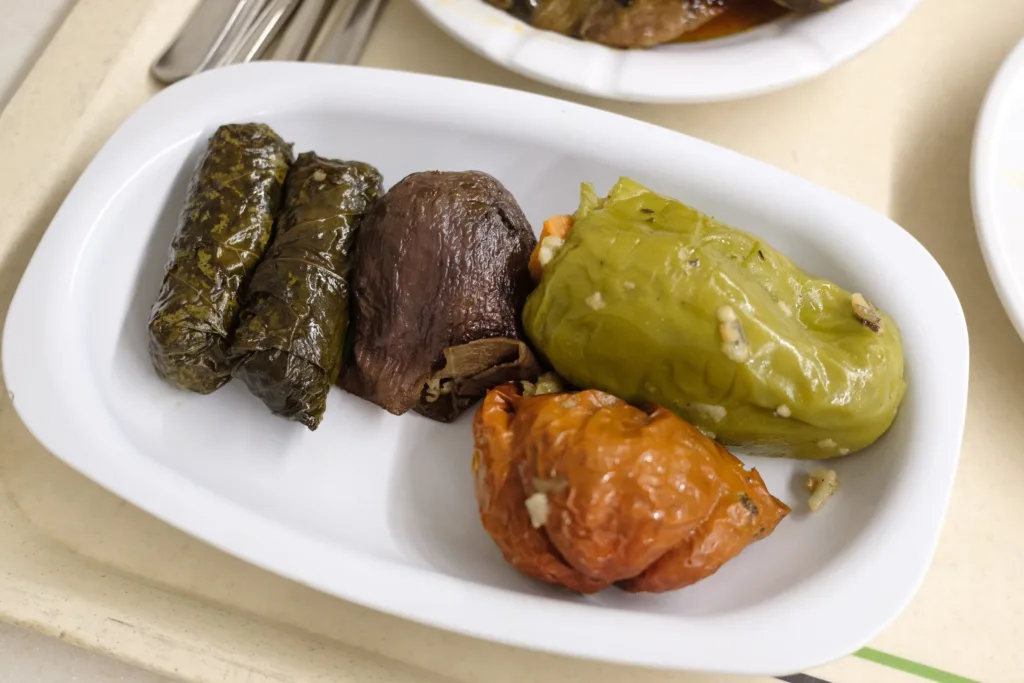
Turkish dolma and sarma
The word dolma comes from the Turkish verb dolmak, to be filled, and simply means a stuffed thing. In Turkey, cooks make a clear difference between the two kinds. Dolma means a hollowed vegetable, such as a pepper or zucchini, filled with stuffing. By contrast, sarma, a wrapped thing, means a filling rolled in leaves, such as vine or cabbage leaves. In everyday speech, however, people often call both of them dolma.
The “fake” dolma
Turks call the meatless versions, filled with seasoned rice, yalancı dolma, the fake or counterfeit dolma. Interestingly, the name goes back to an old idea that dishes without meat were only stand-ins for the real thing. Today, however, these olive oil versions, served cool, are among the favorite meze (small dishes shared at the start of a meal) of Turkey. In the evening, an Istanbul food tour ends at a long table of meze.

The Story of Turkish Dolma
Turkish dolma in the Ottoman palace kitchens
Although its exact origin is disputed, dolma is mainly linked with the Ottoman Empire. Stuffed vegetables first became a regular kind of dish in Istanbul, at the Ottoman court. Greek and Armenian kitchens have long traditions of stuffed dishes too.
An early mention
Curiously, an early mention of dolma as a dish comes from a Persian book, which says that cabbage dolma is common in the land of Rum, meaning Turkey, but not well known in Iran.

Types of Turkish Dolma to Try
Biber dolması, stuffed peppers
First, try stuffed green peppers, filled with rice and minced meat and cooked in a light tomato broth. Usually, they come hot, often with yogurt on the side.
Yaprak sarma, vine leaves
Next, order yaprak sarma, vine leaves rolled around rice. With meat, they come hot with yogurt. In olive oil, by contrast, they come cool as a meze. Some cooks even add sour cherries. Many look for the thin, flexible leaves of the Narince grape from Tokat.
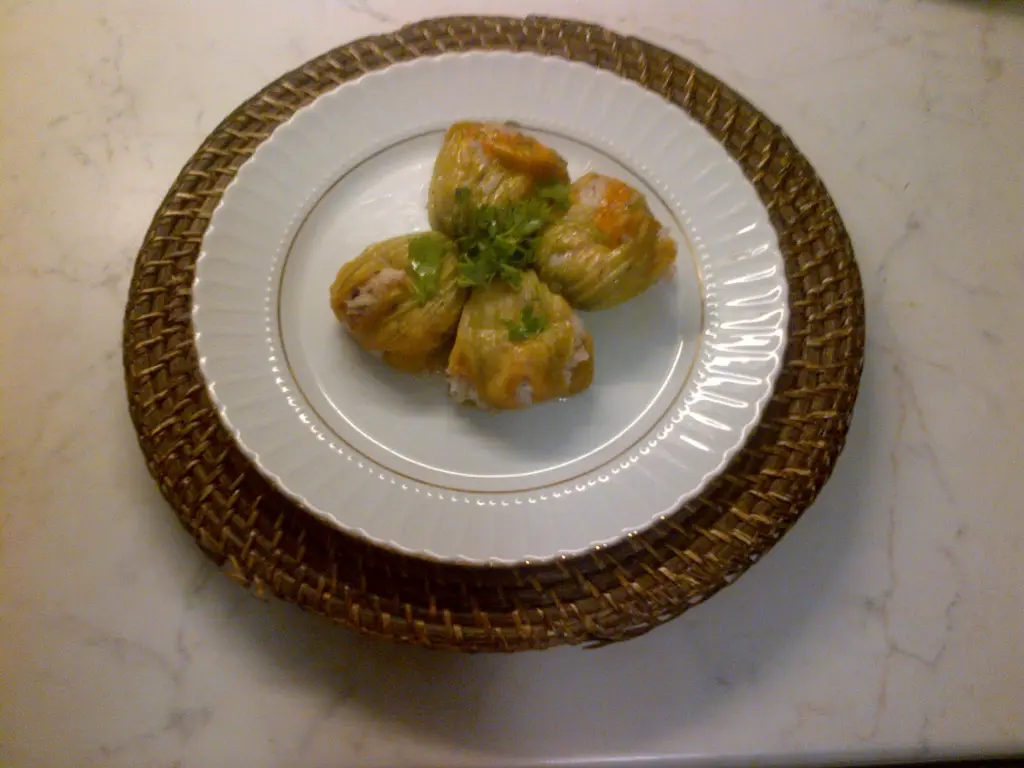
Kabak çiçeği dolması, zucchini flowers
In summer, also look for zucchini flowers filled with herbed rice, a delicate dish of the Aegean coast.
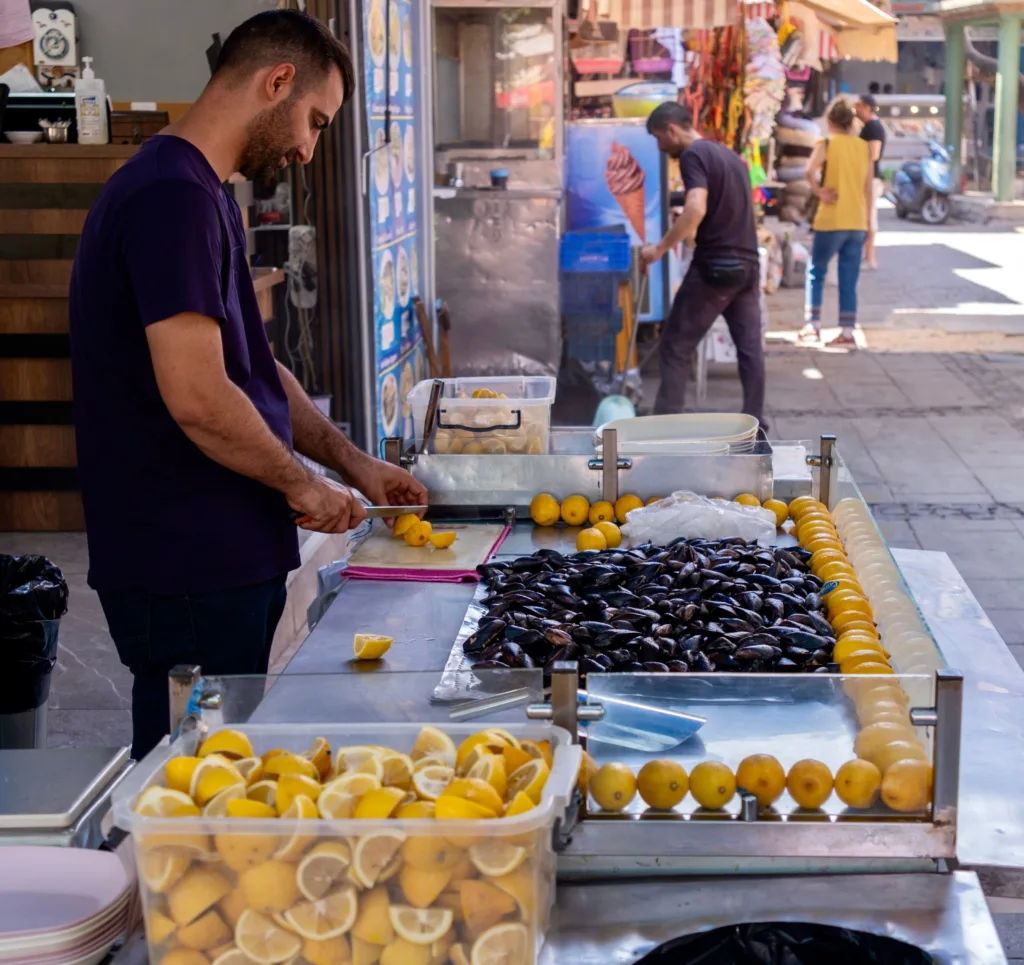
Midye dolma, the street Turkish dolma
Finally, try the best-known street dolma. Midye dolma are mussels filled with rice, spices and currants, sold from carts in the coastal cities. The dish is linked with Armenian cooks in the Ottoman Empire. Later, migrants from Mardin who settled in Galata took over most of the trade, and their version is spicier. Today, families from Mardin still run most of the carts. Mardin itself is known for kaburga dolması, ribs filled with browned meat and spiced rice, then simmered for hours.

Tips for eating Turkish dolma
Our dolma notes
- HotMeat dolma, with yogurt.
- CoolOlive oil sarma, as meze.
- StreetMidye dolma, with lemon.
Our suggestion Eat midye dolma the local way: use the empty half shell as a spoon, then squeeze on lemon.

For more Ottoman dishes, read about imam bayıldı and its eggplant cousins, Turkish mantı, and the meze of a rakı table. Then find midye dolma among the Istanbul street food stalls, or start with our Turkish food guide. For an evening of ferries and meze, join our Istanbul by night tour.
To taste kaburga dolması where it comes from, our Mardin and Midyat tour starts in the old town of Mardin before the Saffron Monastery and Midyat. Book it as a private day, and ask us to plan lunch around the stuffed ribs.
Frequently asked questions
What is the difference between dolma and sarma?
In Turkey, dolma is a hollowed vegetable filled with stuffing, while sarma is a filling rolled in leaves, such as vine or cabbage leaves.
What is yalancı dolma?
A meatless dolma filled with seasoned rice and cooked in olive oil, usually served cool. The name means fake dolma.
What is midye dolma?
Mussels stuffed with spiced rice, sold from street carts in Turkey's coastal cities, especially Istanbul.
Where does dolma come from?
It is mainly linked with Ottoman palace cuisine, though Greek and Armenian kitchens have long traditions of it too.


