
Photo: Turkey Your Way
Turkish Manti: Tiny Dumplings with Garlic Yogurt
Turkish manti from the Silk Road to Kayseri: where the tiny dumplings came from, how Turks serve them with yogurt and butter, and the regional versions to try.
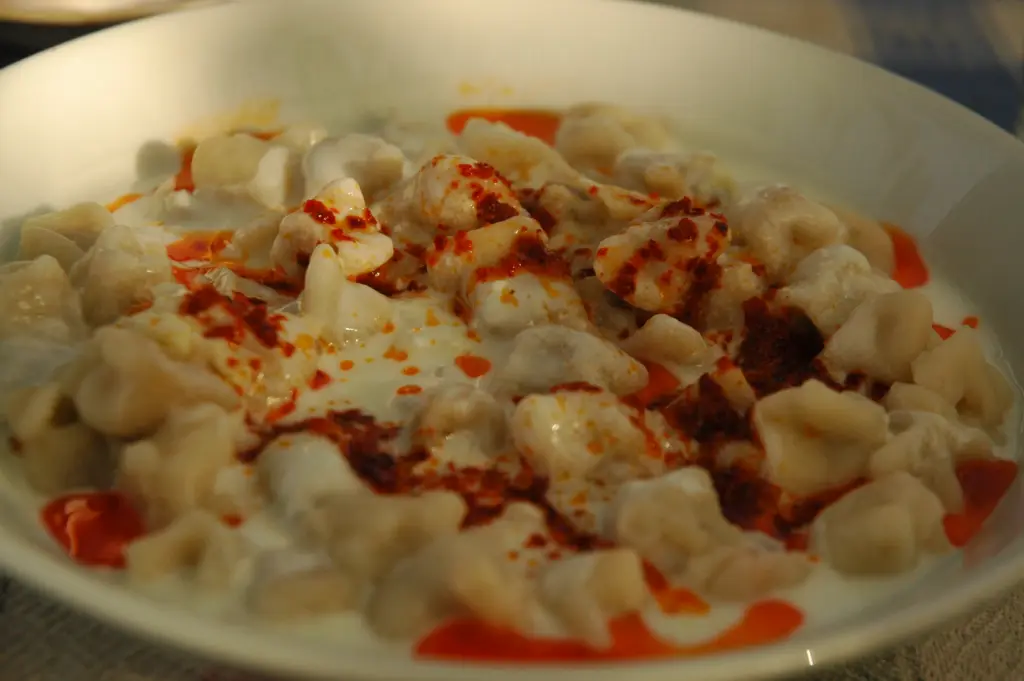
Picture a bowl of dumplings so small that dozens fit on one spoon, under a blanket of garlic yogurt, with butter, red pepper and dried mint on top. That is Turkish manti, written mantı in Turkish. It is comfort food with a long road behind it, from the steppes of Central Asia to the kitchens of Anatolia.
Here is where the dish came from, how Turks serve it, and which regional versions to look for on your trip.
From the Silk Road to Anatolia
Manti is a dumpling of spiced meat, usually lamb or ground beef, wrapped in a thin sheet of dough. Similar dumplings exist across Central Asia, the Caucasus and the Balkans. The name may come from the Chinese mantou, a word recorded as early as the Jin dynasty.
Turkic and Mongol peoples are thought to have carried the recipe along the Silk Road to Anatolia. Horsemen on the move even carried frozen or dried manti that they could boil quickly over a campfire.
An Ottoman recipe from the 15th century
An early Ottoman recipe appears in a 15th-century cookbook by Muhammed bin Mahmud Shirvani. His version was steamed and filled with minced lamb and crushed chickpeas, spiced with cinnamon and sharpened with vinegar. Then, like most Turkish manti today, it came with a garlic yogurt sauce and a sprinkle of sumac.
Oddly, many later cookbooks skip the name. A printed Turkish cookbook of 1844 gives instead a recipe for Tatar böreği, a similar dumpling of minced meat, boiled and served with yogurt.

How Turkish manti is served
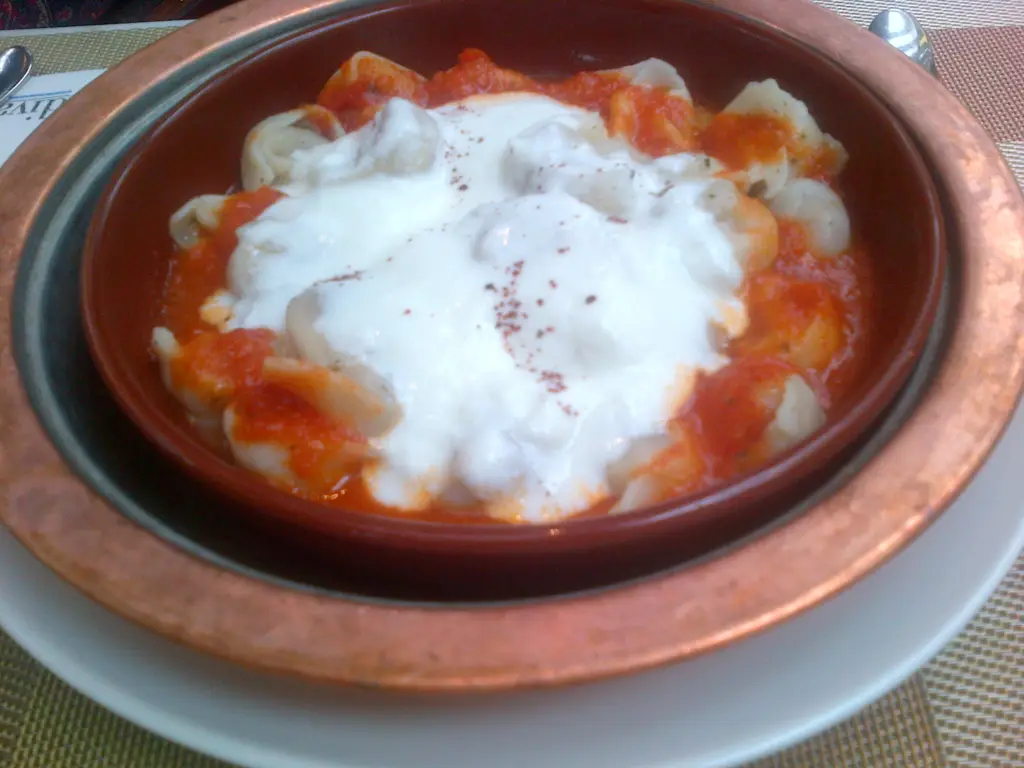
Unlike the large steamed dumplings of Central Asia, the Anatolian kind is small and usually boiled or baked. It also takes more work to make than the Central Asian kind. On the plate, it typically gets three toppings: yogurt, melted butter and a little tomato or pepper paste. Then come dried mint and sumac, the favorite spices.

Kayseri: the capital of manti
More than anywhere, the dish belongs to Kayseri, the city at the foot of Mount Erciyes. The region became famous for it after Tatars settled there. Kayseri manti is tiny and served with yogurt and butter flavored with spearmint or Aleppo pepper, then topped with dried mint and pepper flakes. In 2009, it also received a geographical indication from the Turkish Patent and Trademark Office. Two more Kayseri kinds have been registered since: yağ mantısı, larger squares of yeast dough closed like a flower around raw minced meat and fried, in 2022, and purov mantısı, small triangles of cheese and onion, fried and then simmered in a tomato and butter sauce, in 2026. Kayseri families once spent their summers in vineyard houses outside the city, where bread from town was hard to get, so they made many dishes from dough instead.
Manti is also popular in nearby Nevşehir, so you will find it on many menus in Cappadocia too.
Regional versions of Turkish manti
Across the country, almost every region has its own twist:
- Bartın rice manti: thin squares filled with rice, fried on both sides in a tray, then simmered in chicken or meat broth.
- Bozüyük lentil manti: baked and filled with Kayı-91 green lentils grown in Bilecik province.
- Göceli manti from Çanakkale: filled with cracked wheat instead of meat, then baked and cooked in broth.
- Kandilli manti: made in Tekirdağ with chicken or turkey, and in Edirne with game.
- Alaşehir kapaması: a fried version known as a Tatar dish.
- Boş mantı: “empty manti”, little dough parcels with no filling at all.
Several of these, including the Bartın and Bozüyük versions, carry their own geographical indications. You can look them up on the official Turkish Patent geographical indications portal. To eat manti in Kayseri itself, join our Kayseri day trip for the Seljuk city and its food.
Tips for ordering Turkish manti
- Ask for Kayseri manti by name if you like the tiny kind.
- Stir it well, so the yogurt, butter and spices coat every dumpling.
- Add sumac and mint at the table to taste.
- Pair it with a glass of Turkish tea afterward, or try Turkish kebabs the next night.
Our mantı notes
- Forty in a spoonIn Kayseri, they say a good bride makes mantı so small that forty fit in one spoon, and that her future mother-in-law checks.
- Protected nameKayseri mantı received a geographical indication in 2009.
- The butterThe finishing touch is melted butter with red pepper flakes poured over the yogurt.
Our suggestion Order mantı in a family restaurant at lunch, ask for extra garlic yogurt, and judge it by the size: the smaller the dumplings, the prouder the cook.
For a whole trip around Turkish food, our Taste of Turkey food tour in 10 days runs from Istanbul to Gaziantep, Adana, Urla and Cappadocia. Book it, and we can add a day in Kayseri for its mantı.
Frequently asked questions
What is Turkish manti?
Small dumplings of spiced lamb or beef in thin dough, boiled or baked and served with garlic yogurt, melted butter, mint and sumac.
Where is the best manti in Turkey?
Kayseri is the most famous home of manti; Kayseri manti received a geographical indication in 2009.
Where does manti come from?
Turkic and Mongol peoples are generally thought to have carried it from Central Asia to Anatolia along the Silk Road.
Is there vegetarian manti?
Yes. Bozüyük manti is filled with green lentils, and göceli manti from Çanakkale with cracked wheat.
You may also like
-
 Place
Göreme
-
 Place
Mount Erciyes
-
 Article
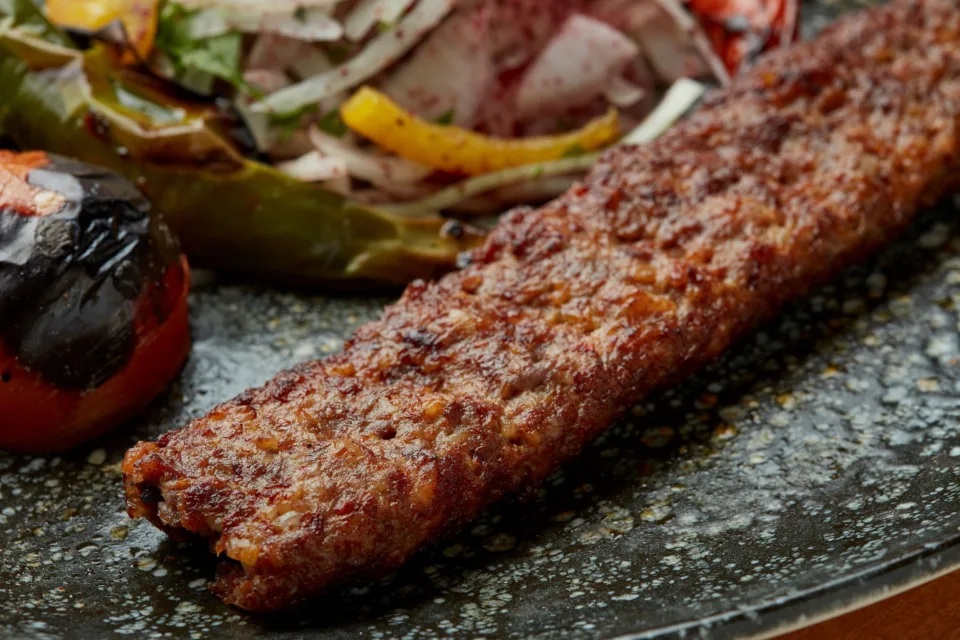
Turkish Kebabs: Döner, İskender, Adana and Cağ Explained
-
 Article
Turkish Tea: How to Drink Çay Like a Local
-
 Article
The 5 Best Restaurants in Pamukkale, Below the Travertines
-
 Article
The 5 Best Restaurants in Cappadocia, From Ürgüp to Göreme
-
 Article
Where to Eat in Istanbul: Historic Restaurants Locals Love
-
 Article
Turkish Food: A Traveler’s Guide to What to Eat in Turkey