Photo: Robert Cutts from Bristol, England, UK / Wikimedia Commons, CC BY-SA 2.0
The Silk Road in Turkey: Caravanserais From Bursa to the East
The Silk Road in Turkey: how caravans crossed Anatolia, the stone caravanserais of the Seljuks, Sultanhanı and Ağzıkara Han, the silk inn of Bursa, the city hans of Istanbul, İzmir and Diyarbakır.
For centuries, camels carrying silk, spices, dyes and porcelain crossed Anatolia on their way between Asia and Europe. They walked roughly a day’s journey at a time, and at the end of each day a fortified inn waited behind high stone walls. Many of those inns still stand, with carved gates as grand as any mosque. So the Silk Road in Turkey is not a museum idea: you can still sleep, shop or drink tea where the caravans stopped.
The Silk Road in Turkey Through History
To begin with, the great trade routes from China and Central Asia ran west through Iran and Mesopotamia. From there, in turn, some branches turned north across Anatolia toward Constantinople and the Black Sea. For example, the port of Trebizond, today’s Trabzon, became a key market where Genoese traders bought goods brought overland from Asia. Travelers such as Ibn Battuta crossed these lands in the 14th century and left vivid accounts of their cities.
The Seljuk caravanserais
In the 12th and 13th centuries, the Seljuk sultans of Anatolia built a chain of caravanserais along their roads. However, unlike the brick inns of Iran, the Anatolian ones are built of stone. Typically, a tall carved portal leads into a courtyard with rooms and stables, and behind it lies a vaulted winter hall. Many even have a small mosque raised on arches in the middle of the courtyard, so travelers could pray without leaving their goods.
Caravanserais to Visit on the Silk Road in Turkey
Sultanhanı and Ağzıkara Han
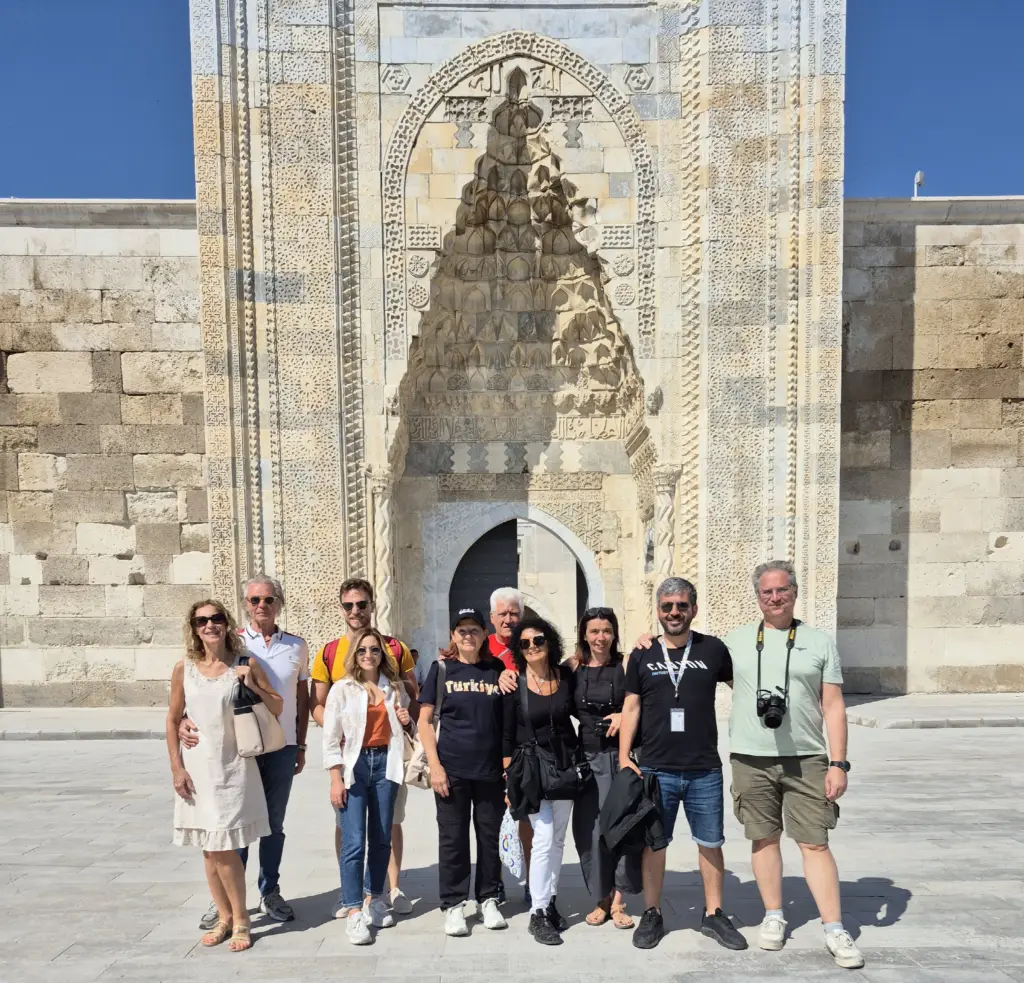
First, on the road between Konya and Aksaray, the Sultanhanı Caravanserai covers about 4,680 square meters (about 50,000 square feet). Its portal, carved like a stone waterfall, is one of the masterpieces of Seljuk art. Further east, near Aksaray and Cappadocia, the Ağzıkara Han is smaller but just as beautiful. On the road from Cappadocia, our Cappadocia to Konya tour stops at Sultanhanı before the Mevlana Museum.
Koza Han, the silk inn of Bursa
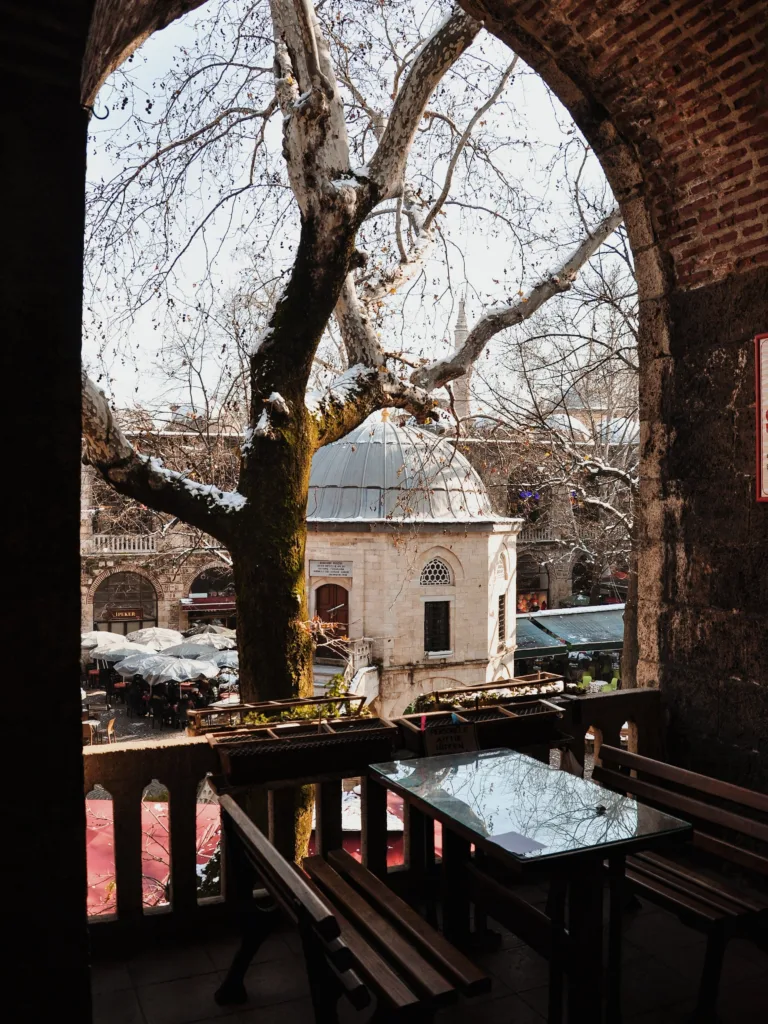
Next, Bursa, the first Ottoman capital, was also the center of the empire’s silk production and trade. In 1490, Sultan Bayezid II ordered the Koza Han, the “inn of the silk cocoon”, next to the old Orhan Gazi Mosque, and it opened in September 1491. Even today, therefore, silk shops line its galleries, and tea tables fill the courtyard.

The Silk Road in Turkey’s city bazaars
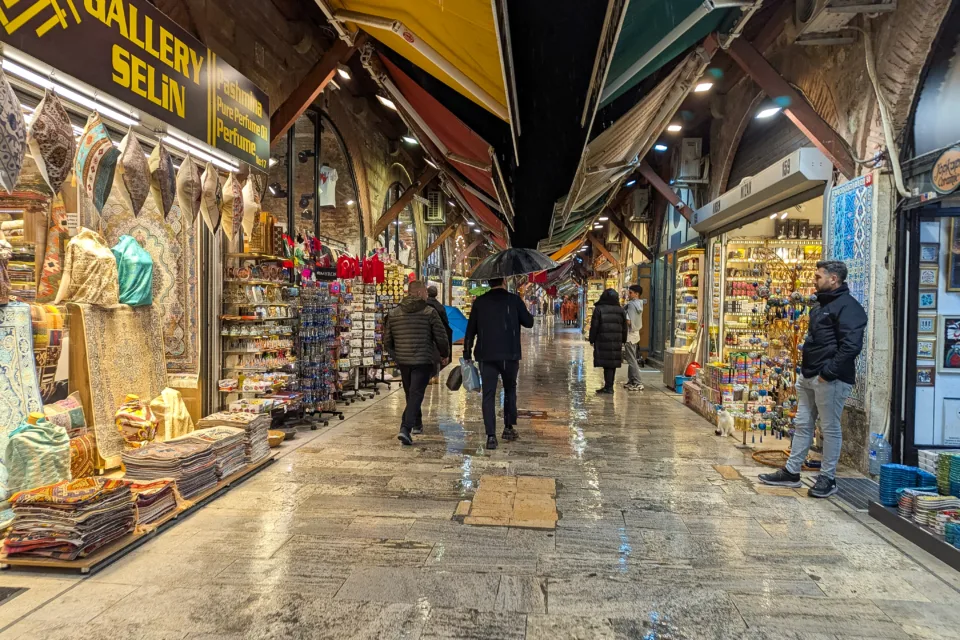
Similarly, in the cities, merchants stayed in hans built around courtyards in the heart of the bazaars. For example, in Istanbul, the Büyük Valide Han, built for Kösem Sultan in the reign of Murad IV, stands near the Grand Bazaar. Similarly, the Kızlarağası Han of 1744 survives in the Kemeraltı Bazaar of İzmir. Likewise, in Diyarbakır, the 16th-century Hasan Paşa Han near the city walls is now full of breakfast cafés.

On the eastern branch
Finally, in the far east, the Ishak Pasha Palace near Doğubayazıt sits on a high platform that once guarded a branch of the Silk Road toward Iran. Along the old roads of the north, Safranbolu also keeps its caravanserais, one reason UNESCO listed the town in 1994. Our Safranbolu Amasya tour in 3 days gives you a night there.
Our notes for a Silk Road journey
- SultanhanıOn the road between Konya and Aksaray.
- BursaHave tea in the Koza Han courtyard and buy silk scarves.
- IstanbulWalk through the courtyards of the Büyük Valide Han with a guide.
- DiyarbakırBreakfast in the Hasan Paşa Han, an inn built in the 1570s under the governor Hasan Paşa, known today for its breakfast halls.
Our suggestion Drive from Konya to Cappadocia and stop at Sultanhanı on the way. Look up at the portal, then sit in the courtyard and imagine the camels coming in at dusk.
Follow the Silk Road in Turkey With Us
We can plan a route that follows the caravans from Istanbul and Bursa across Anatolia to Cappadocia and the east. For more of the history, read about the Museum of Anatolian Civilizations and Turkish carpets and kilims, another treasure of the old trade.
Frequently asked questions
Did the Silk Road pass through Turkey?
Yes. Branches of the trade routes from Asia crossed Anatolia toward Constantinople and the Black Sea port of Trebizond (Trabzon).
What is a caravanserai?
A fortified inn for traders and their animals, built around a courtyard. The Seljuks built many in stone in the 12th and 13th centuries.
Which is the largest caravanserai in Turkey?
The Sultanhanı Caravanserai on the road between Konya and Aksaray is one of the best known; it covers about 4,680 square meters (about 50,000 square feet).
Where can I see the silk trade today?
In the Koza Han in Bursa, built in 1490–1491, where silk shops still line the galleries.