Klaus Schmidt
The prehistorian from Bavaria who spent twenty years on a hill near Şanlıurfa and argued that the temple came before the city.

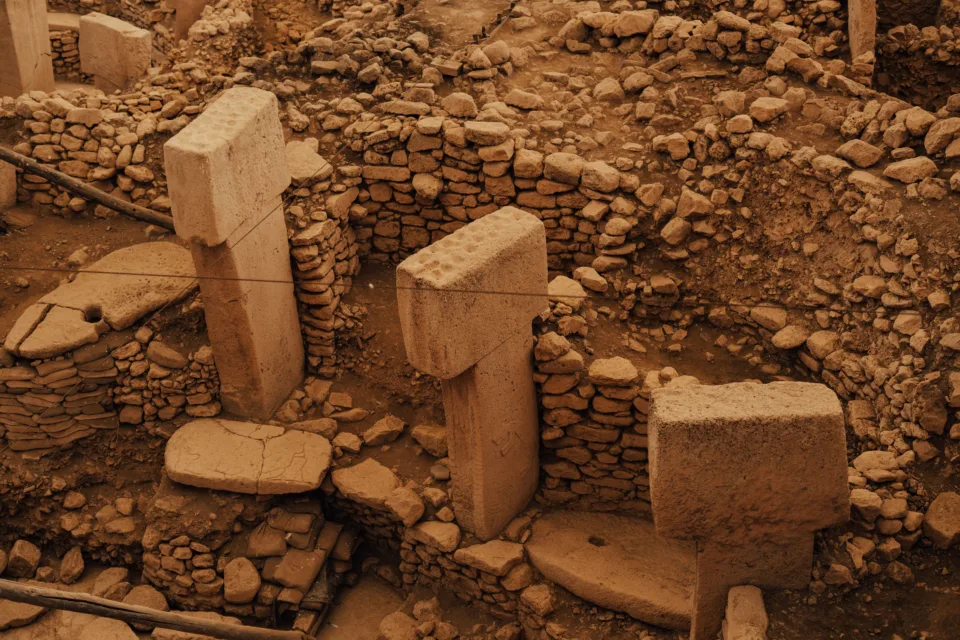
In 1994, a German archaeologist climbed a limestone ridge near Şanlıurfa. Surveyors had recorded the mound three decades earlier, but nobody understood it. Klaus Schmidt did: under the soil lay carved pillars, buried for more than 10,000 years. His work at Göbeklitepe changed the story of how civilization began. Our Göbeklitepe tour takes you to the site.
Schmidt led the excavations for almost twenty years, until his sudden death in 2014. So at Göbeklitepe today, you walk on a path named after him. Around you stand the stone circles he first brought to light.
Who Was Klaus Schmidt?
Klaus Schmidt was born on December 11, 1953, in Feuchtwangen in Bavaria. From 1974 to 1983 he studied prehistory, classical archaeology and geology at the universities of Erlangen and Heidelberg. As a student, he also joined digs in Germany, Greece, Egypt, Saudi Arabia and Jordan.
Turkey shaped his career from the start. In 1978 and 1979 he studied finds from the Norşuntepe excavation at the Elazığ Museum. They became the subject of his doctorate, which he completed in Heidelberg in 1983. Later he worked for the German Archaeological Institute, and from 2007 he was also a professor at the University of Erlangen.
Klaus Schmidt in numbers
- 1953born in Feuchtwangen, Germany
- 1994recognizes Göbeklitepe
- 1995excavations begin
- 2014dies at the age of 60
Klaus Schmidt at Göbeklitepe

The discovery
Surveyors first recorded the site in 1963. Then, in 1994, Schmidt recognized its importance. A local farmer had sent his two sons to break up a stone that kept catching his plow. The piece they broke off belonged to the first pillar found. Excavations began the next year as a joint project of the Şanlıurfa Museum and the German Archaeological Institute.

Life on the dig
Schmidt bought a house in Urfa, which became the base of the excavation. His team usually dug for two months in the spring and two months in the fall. Over the years they uncovered round enclosures of T-shaped limestone pillars. Their carvings show foxes, boars, snakes and vultures.

“First came the temple”
Schmidt believed that Göbeklitepe was a ritual center. In his view, small groups of hunter-gatherers met on the hilltop to build enclosures and hold great feasts, then scattered again. In 2000 he summed up the idea in a famous title: “First came the temple, then the city.” His 2006 book, They Built the First Temples, made the site known to a wide public.
How the picture has changed
Research did not stop with him. After his death, new radiocarbon dates placed the site between about 9500 and 8000 BC, and his team’s idea that the enclosures were deliberately buried has fallen out of favor. Experiments also suggest that a smaller group could have raised the pillars than he thought. Still, nobody doubts that he was the first to see what the hill held.

Death and Legacy
Schmidt was married to the Turkish archaeologist Çiğdem Köksal-Schmidt. On July 20, 2014, he died of a heart attack on vacation on the Baltic island of Usedom. He was 60. Afterward the Turkish prehistorian Necmi Karul took over the excavations. Then, in 2018, Göbeklitepe became a UNESCO World Heritage Site.
Today a walking path at the site carries his name, and a memorial house remembers him. His work also opened the way for research at nearby sites such as Karahantepe.
Following Klaus Schmidt in Şanlıurfa
- Göbeklitepe: walk the path under the roof over the main enclosures at Göbeklitepe.
- Karahantepe: a sister site of the same age; its visiting status can change, so ask us to confirm before you plan a visit.
- Further west: compare it with the Neolithic town of Çatalhöyük near Konya.
For another archaeologist who changed the map of Turkey, read about Heinrich Schliemann at Troy.
His traces in Urfa
- First templeHe called Göbeklitepe the first temple of humankind. The phrase still appears on signs in Urfa.
- The replicaThe Şanlıurfa Archaeology Museum has a full-size copy of one of the great stone enclosures, so you can stand inside it.
- Village workersMen from the villages around the hill dug with him for years, and some still work at the site.
Our suggestion Visit Göbeklitepe early and then the Şanlıurfa Archaeology Museum, where many of the finds stand.

You may also like
-
 Tour
Göbeklitepe and Şanlıurfa Tour: The World’s Oldest Temples and the City of Abraham
-
 Tour
Private Karahantepe Tour with Göbeklitepe
-
 Journey
Göbeklitepe and Mardin in 3 Days: A Private Tour of Upper Mesopotamia
-
 Place
Göbeklitepe
-
 Place
Karahantepe
-
 Person
Heinrich Schliemann
-
 Person
James Mellaart
-
 Person
Osman Hamdi Bey