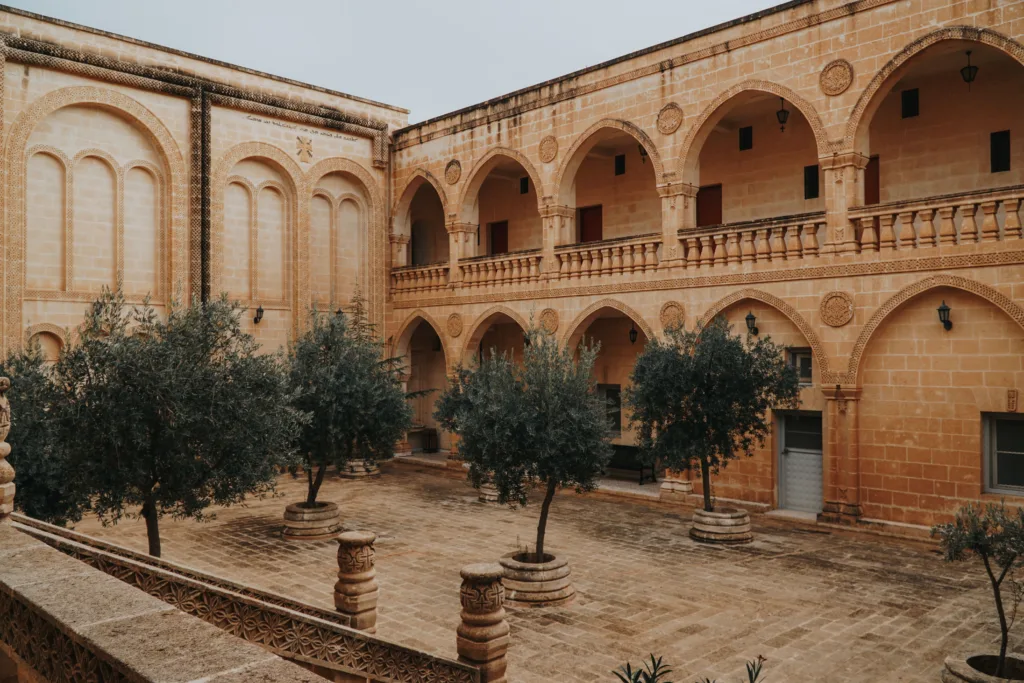
Ishak Pasha Palace
The Ishak Pasha Palace above Doğubayazıt: a 99-year Ottoman-era palace with Seljuk gates, Persian lions and…
Türkiye GMT+3
Monday, November 9, 2026
Replies within 24 hours
Photo: Turkey Your Way
The city of a thousand and one churches: red and black stone ruins on a high plateau above a river gorge.
On a high, windswept plateau at the far eastern edge of Turkey, the ruins of a medieval city stand in the grass: a cathedral with a fallen dome, churches of red and black stone, a lone minaret and long lines of walls. Below, a deep river gorge drops away to the east. This is Ani, once called the “city of a thousand and one churches”. For nine days in the east, see our Lost Kingdoms of Eastern Anatolia tour.
Few places in Turkey feel so remote, or so moving. So plan a full morning, walk slowly between the monuments, and let the steppe do the rest.
Ani lies in Kars province, about 42 kilometers (26 miles) from the city of Kars. By train, see our Eastern Express to Kars tour in 4 days. The city stands on a triangular site, protected on the east by the gorge of the Akhurian River, known in Turkish as the Arpaçay, and on the west by another valley.
In the 10th and 11th centuries, Ani was the capital of the medieval Armenian Bagratid kingdom. Since July 2016, the site has also been on the UNESCO World Heritage List as a meeting place of Armenian, Georgian and Islamic traditions.
Ani in numbers
King Ashot III moved his capital from Kars to Ani in 962. The city then grew fast, especially under Smbat II and Gagik I, when it reached the height of its power. Although it did not lie on an old trade route, its size and wealth turned it into a trading hub linked to Byzantium, Persia and the Arab world. That is why people called it the “city of forty gates”.
Then, in 1045, the city passed to the Byzantine Empire. It came under the Seljuks, then the Shaddadid dynasty from 1072, and later the Zakarian princes. The Mongols took it in 1236. An earthquake in 1319 and the shift of trade routes sent Ani into decline, and by the 17th century it was abandoned.
Later, in the early 20th century, the scholar Nicholas Marr excavated large parts of the city. Today, Turkey’s Ministry of Culture and Tourism leads conservation, and restoration of several monuments continues.
The Cathedral of the Holy Mother of God was begun in 989 and finished in the early 11th century. Its architect was Trdat. Its dome fell in the earthquake of 1319. Inside, however, pointed arches and clustered piers look surprisingly Gothic, even though the building is centuries older than Europe’s Gothic cathedrals.

Finished in 1215, this is the best-preserved monument at Ani. For this church, a rich merchant, Tigran Honents, paid the bill. On the outside, carvings of real and imaginary animals fill the spaces between the blind arches. Inside, too, cycles of frescoes survive, including scenes from the life of Saint Gregory the Illuminator.

The mosque takes its name from Manuchihr, the first Shaddadid ruler of Ani after 1072. Even now, its minaret stands, with the word Bismillah in Kufic letters high on its north face. Further south, the citadel hill held the palace of the Bagratid kings and the oldest church in Ani.
Double walls with tall round towers guard the north side, the only side not protected by ravines. Close to them, the Church of the Holy Redeemer, completed shortly after 1035, once had 19 sides outside. However, its eastern half collapsed in a storm in 1955.

Outside the walls, goats and sheep still shelter in the cave dwellings carved into the cliffs. The nearest city is Kars, whose kaşar and gravyer cheeses are registered geographical indications.

Our notes for Kars
Our suggestion Spend the morning at the ruins and the afternoon in Kars: roast goose for dinner, and a piece of gravyer to take home.
Because few ruins anywhere feel so vast. Walk from the city walls past Trdat's cathedral and the frescoed church of Tigran Honents to the minaret of the Manuchihr Mosque, with the river gorge at your feet.
The Ishak Pasha Palace above Doğubayazıt: a 99-year Ottoman-era palace with Seljuk gates, Persian lions and…
Nature
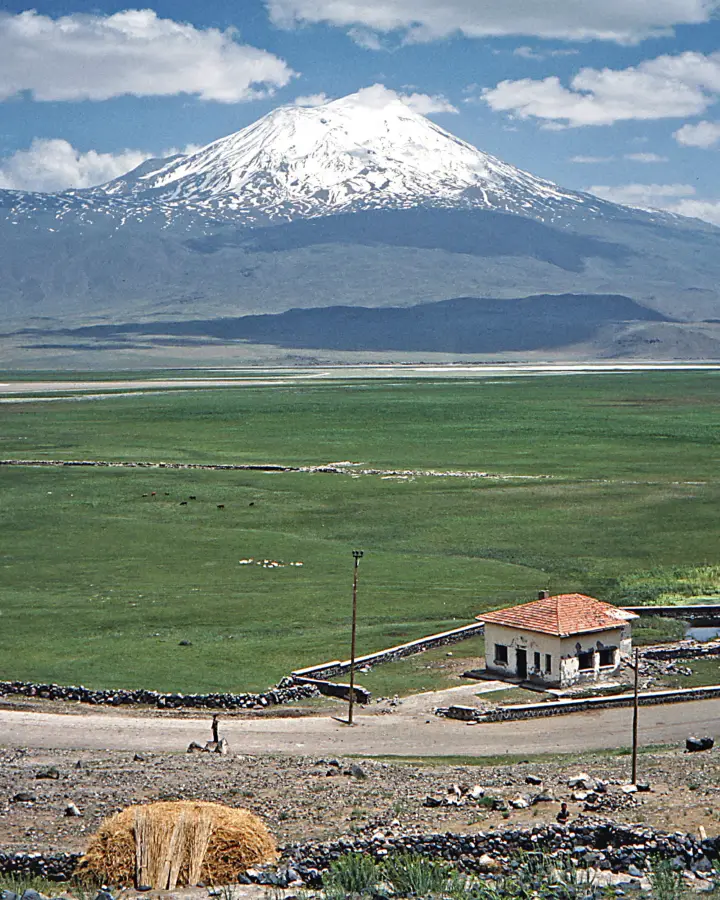
Mount Ararat, Turkey's highest peak: the volcano of Noah's Ark, the first ascent, the 1840 disaster,…

Open in Google Maps (opens in a new tab) Open in Apple Maps (opens in a new tab)
In Kars province in northeastern Turkey, on a plateau about 42 km from the city of Kars.
It was a nickname for its many churches; the ruins include many churches and chapels.
In the 10th and 11th centuries, as the capital of the medieval Armenian kingdom of the Bagratids.
Yes. The Archaeological Site of Ani joined the World Heritage List in July 2016.
Drive east from Kars to the village of Ocaklı at the site entrance; Kars has an airport and rail links.
 Tour
Private Ani Tour from Kars: The Medieval City on the Plateau
 Journey
Eastern Turkey and the Black Sea Tour in 9 Days: Trabzon, Sumela, Ayder, Kars, Ani and Lake Van
 Journey
Eastern Express Tour in 4 Days: A Private Journey to Kars and Ani
 Tour
Private Ishak Pasha Palace Tour in Doğubayazıt
 Article
The Eastern Express: Turkey’s Famous Train From Ankara to Kars
 Place
Sarıkamış
 Place
Kars Cheese Museum
 Article
Turkey in Winter: Snowy Cappadocia, Mild Istanbul and the Slopes