

Gallipoli
Gallipoli, the battlefields of 1915 on the Dardanelles: Anzac Cove, Conkbayırı, the 57th Regiment cemetery and…
Photo: Jorge Láscar / Wikimedia Commons, CC BY 2.0
The 600-meter cove on the Arıburnu coast of the Gallipoli Peninsula, where Australian and New Zealand troops came ashore on April 25, 1915.
Anzac Cove is a small cove on the Arıburnu coast of the Gallipoli Peninsula, about 600 meters (2,000 feet) long. Here, on April 25, 1915, Australian and New Zealand troops came ashore, and the cove carries their name. The point of Arıburnu closes its north end. Each year on Anzac Day, the Dawn Service is held at the Anzac Commemorative Site at North Beach. For the battlefield as a whole, see our Gallipoli page.
Quick facts
On April 25, 1915, some 16,000 Australians and New Zealanders, together with British, French and Indian troops, landed on the peninsula. British forces went ashore at Cape Helles, while French troops made a feint landing on the Asian shore. At first light, the first wave of the 3rd Australian Brigade rowed the last stretch in 36 boats towed by naval steamboats. The boats grounded around the tip of Arıburnu, below steep, broken cliffs, and a second wave followed about 20 minutes later. A small detachment of the Ottoman 27th Regiment met the first boats. Soon the regiment's reserve battalions came up from Zeytinlik. By mid-morning, more troops arrived under Mustafa Kemal Atatürk, and the 57th Regiment went into the line. That evening, the Allied commander ordered the troops to dig in.
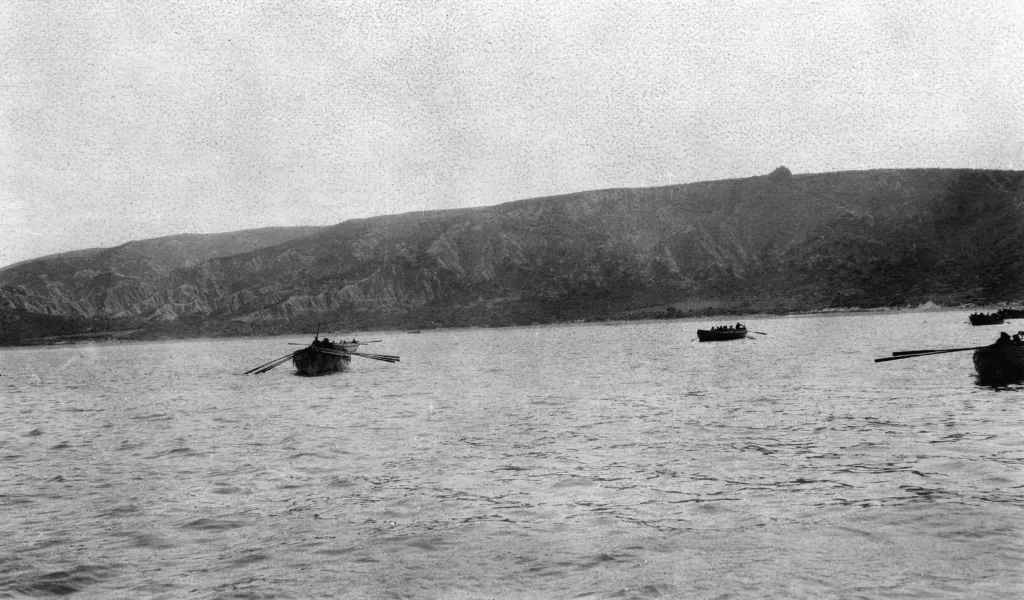
The name Anzac Cove was in use by April 29, 1915, at the request of the Anzac Corps commander, Sir William Birdwood. By May 1, some 27,000 Australian, New Zealand, British and Indian troops had come ashore here. For the next eight months, the cove served as the base of the whole Anzac area, with stores on the beach and a pier built out into the water. Because Ottoman guns could reach the beach, reinforcements came ashore at night from early June. After the evacuation of December 19–20, 1915, the base disappeared, and only the old pier posts stayed in the water.
On Anzac Day, April 25, 1985, Türkiye officially named the cove Anzac Cove. In return, Australia named a stretch of Lake Burley Griffin in Canberra Gallipoli Reach. A part of the harbor at Albany, in Western Australia, became the Atatürk Entrance.
At the southern end of the cove, a stone carries the words Anzak Koyu, Anzac Cove. At the other end, near Arıburnu Cemetery, a monolith carries the English text of the words attributed to Atatürk in 1934, addressed to the mothers of the fallen. One line reads: "There is no difference between the Johnnies and Mehmets to us where they lie side by side here in this country of ours."
Above the beach, the cliffs rise to a steep, eroded ridge. The Anzacs named it the Sphinx, because they had trained in Egypt and had seen the real one there. At the north end, Arıburnu Cemetery lies by the shore where the first boats landed. On the left of the coastal road, a monolith remembers the 27th Regiment.

From Çanakkale, take a car ferry across the strait to Eceabat, then drive to the Arıburnu coast. From the cove, the road climbs to Lone Pine Memorial and up the ridge to 57th Regiment Memorial and Chunuk Bair. For ferries, hotels and the rest of the province, see our Çanakkale guide.
The Anzac Day Dawn Service on April 25 needs an attendance pass, issued in advance for each person. Read our Anzac Day at Gallipoli guide before you plan. Around Anzac Day, the coastal road past Anzac Cove runs under timed traffic controls. In 2026, these lasted from 2:00 p.m. on April 24 until 2:00 p.m. on April 25. Inside the historic site, stay on the marked paths and keep your voice low. Park only in the parking areas, and leave alcohol behind, because it is not allowed anywhere in the site. We tell the story of the landing on the beach itself, at the Anzac Cove stop of the historic site.
Updated: November 1, 2026.
On our Gallipoli day trip from Istanbul, we walk along the water at Anzac Cove and stop at the stone with the words attributed to Atatürk. Our two-day Gallipoli and Troy tour starts its Gallipoli day here, before the road climbs to Lone Pine and Chunuk Bair. If you are looking for a family name from the Anzac area, send it to us before the trip, and we will plan the visit with you.
Gallipoli, the battlefields of 1915 on the Dardanelles: Anzac Cove, Conkbayırı, the 57th Regiment cemetery and…

The Lone Pine Memorial stands at Lone Pine Cemetery, on the plateau Turks call Kanlısırt. It…

The 57th Regiment Memorial stands on the ridge road of the Gallipoli Peninsula, between Lone Pine…

Chunuk Bair, Conkbayırı in Turkish, is a hilltop on the Gallipoli Peninsula where Turkish and New…
Open in Google Maps (opens in a new tab) Open in Apple Maps (opens in a new tab)
The cove takes its name from the Australian and New Zealand Army Corps, the Anzacs, who landed here on April 25, 1915. The name was used from April 29, 1915, and Türkiye made it official on Anzac Day 1985.
The Dawn Service on April 25 is held at the Anzac Commemorative Site at North Beach. It needs an attendance pass, issued in advance for each person.
Yes. The cove is about 600 meters long, and our guides walk along the water with you before stopping at the memorial stones.
 Tour
Gallipoli Day Trip from Istanbul: Anzac Cove, Lone Pine and Chunuk Bair
 Tour
Gallipoli and Troy Tour from Istanbul: Two Days on the Dardanelles
 Place
Anadoluhisarı
 Place
Rumelihisarı
 Place
Theodosian Walls
 Person
Alexander the Great
 Place
Assos Nar Konak
 Article
Çanakkale Cruise Stop: Troy or Gallipoli in One Day
