
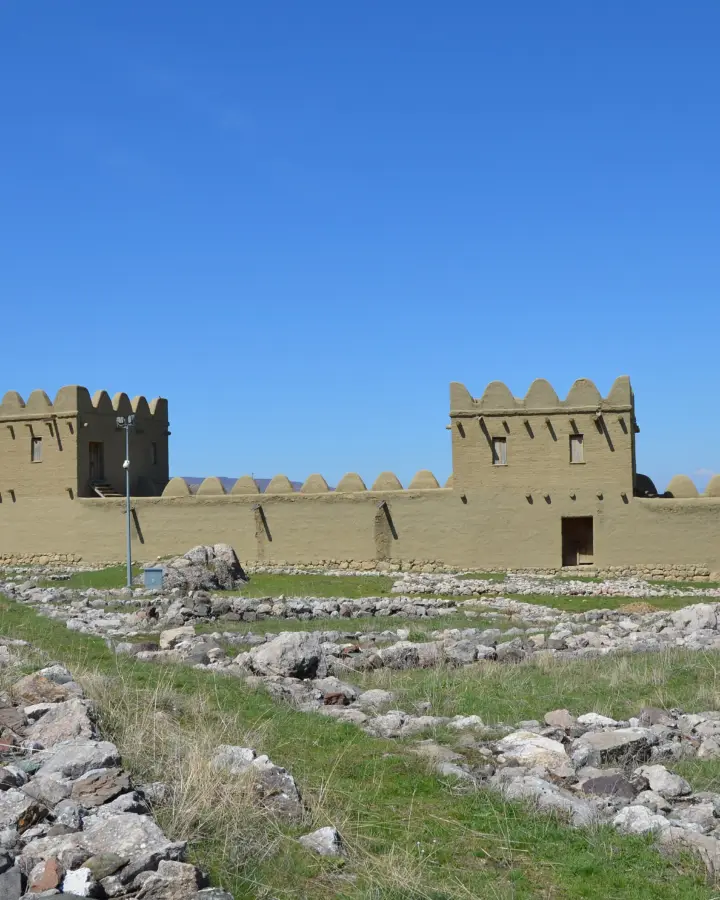
Hattusa
Hattusa at Boğazkale: the capital of the Hittite Empire, with the Lion Gate, the Yerkapı rampart,…
Photo: Klaus-Peter Simon / Wikimedia Commons, CC BY-SA 3.0
Lion Hill: a mound in the apricot country of Malatya where the world's oldest swords lay beside painted walls of the first states.
On the edge of Malatya, a low mound rises from a sea of apricot orchards. It looks like little more than a dusty hill, yet inside it archaeologists found some of the oldest swords in the world, painted walls from the age of the first cities, and the palace of a Neo-Hittite king. This is Arslantepe, “Lion Hill”, a UNESCO World Heritage Site since 2021. With a guide, join our Arslantepe tour.
For anyone curious about how states and power first took shape, Arslantepe answers in mudbrick, copper and paint. So it is a place for patient travelers, best paired with a visit to the Malatya Museum.
Arslantepe lies near Malatya, on the Tohma River, a tributary of the upper Euphrates. Overall, the mound covers about 4 hectares (10 acres) and rises some 30 meters (100 feet) above the plain. In antiquity, however, the city was known as Melid.
People lived here from the Chalcolithic period onward, and the layers of the mound cover more than four thousand years. Since 1961, a team from Sapienza University of Rome has led the excavations.
Arslantepe in numbers
In the late 4th millennium BC, at the time of the Uruk culture of Mesopotamia, a great complex of temples and buildings rose on the mound. Inside, for example, archaeologists found many clay sealings, a sign of an early administration. Around 3000 BC, however, fire destroyed this settlement.
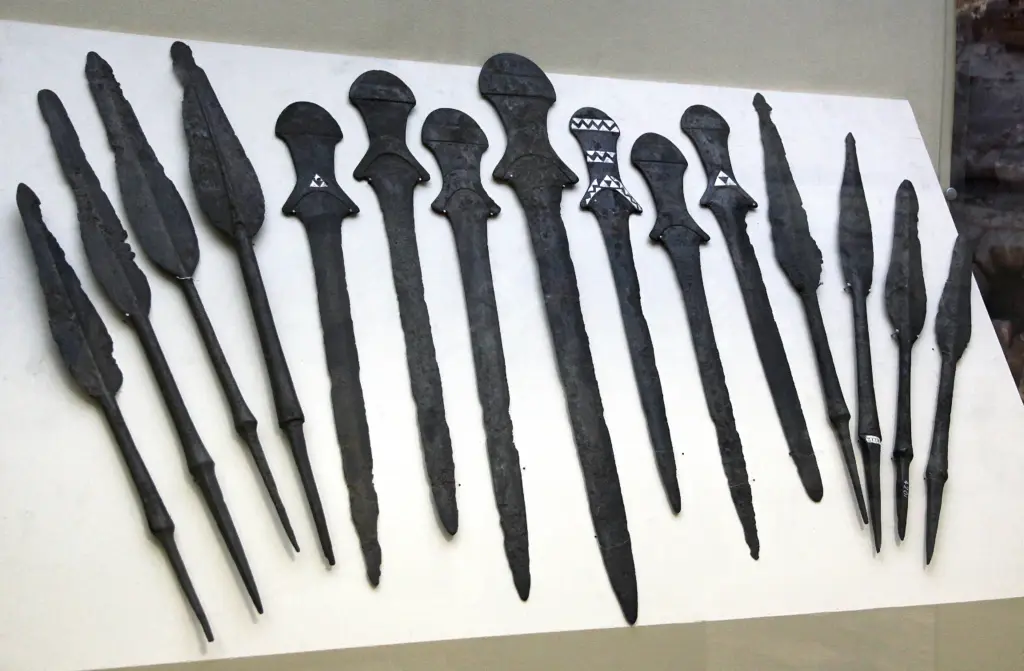
In the 1980s, Marcella Frangipane’s team found a cache of nine swords and daggers cast from arsenic copper. They date to about 3300–3000 BC, so they are the oldest swords known so far. Three of them are inlaid with silver. A rich “Royal Tomb” of the same era held more fine metal objects and another sword.
Later, Melid became a fortified regional capital of the kingdom of Isuwa. Around 1350 BC, the Hittite king Šuppiluliuma I conquered it on his way to fight the Mitanni. After the fall of the Hittite empire, Melid became the capital of a Neo-Hittite kingdom, with a palace and stone sculptures of lions and rulers. The Assyrian king Sargon II sacked the city in 712 BC.
The most moving sight on the mound is a set of mudbrick walls with red and black paintings, from one of the monumental buildings of the 4th millennium BC. They show how richly the first rulers of the city decorated their buildings.
Around the painted walls, the excavations expose the foundations of temples, storerooms and later houses. Because the layers lie open, you can read the history of the mound like a cross section.

The famous swords and spearheads are on display in the Malatya Museum in the city, together with other finds from the excavations.
Arslantepe sits on the outskirts of Malatya, surrounded by orchards. Malatya is one of the most important apricot-growing areas in the world, so try its dried apricots. The Italian excavations of Sapienza University of Rome still continue.
Our notes for Malatya
Our suggestion Combine the mound with the apricot bazaar in Malatya. In July, during the harvest, the whole province smells of apricots.
Because the first chapters of power and war were written here. See the painted mudbrick walls of a 4th-millennium palace on the mound, then the silver-inlaid swords of 3300 BC in the Malatya Museum.
Hattusa at Boğazkale: the capital of the Hittite Empire, with the Lion Gate, the Yerkapı rampart,…

Mount Nemrut in Adıyaman: the mountaintop tomb-sanctuary of King Antiochus I of Commagene, with giant stone…

Open in Google Maps (opens in a new tab) Open in Apple Maps (opens in a new tab)
The oldest known swords, from about 3300–3000 BC, along with painted walls, temples and a rich Royal Tomb.
In the Malatya Museum in the city of Malatya.
Yes. Arslantepe Mound joined the UNESCO World Heritage List in 2021.
"Lion Hill" in Turkish; in antiquity the city was called Melid.
It was closed for maintenance in 2025, so ask us to confirm before you plan a visit.
 Tour
Private Arslantepe Tour: Malatya, Its Mound and Its Apricots
 Article
Hittites in Turkey: Who They Were and Where to See Them
 Article
UNESCO World Heritage Sites in Turkey: All 22
 Article
The Karahantepe Statue: A Human Seated on a Leopard
 Article
Göbeklitepe vs Karahantepe: Which to See, With a 2-Day Route
 Place
Çavuştepe
 Place
Aslantaş
 Place
Ayazini
