Ulu Camii, Sivas
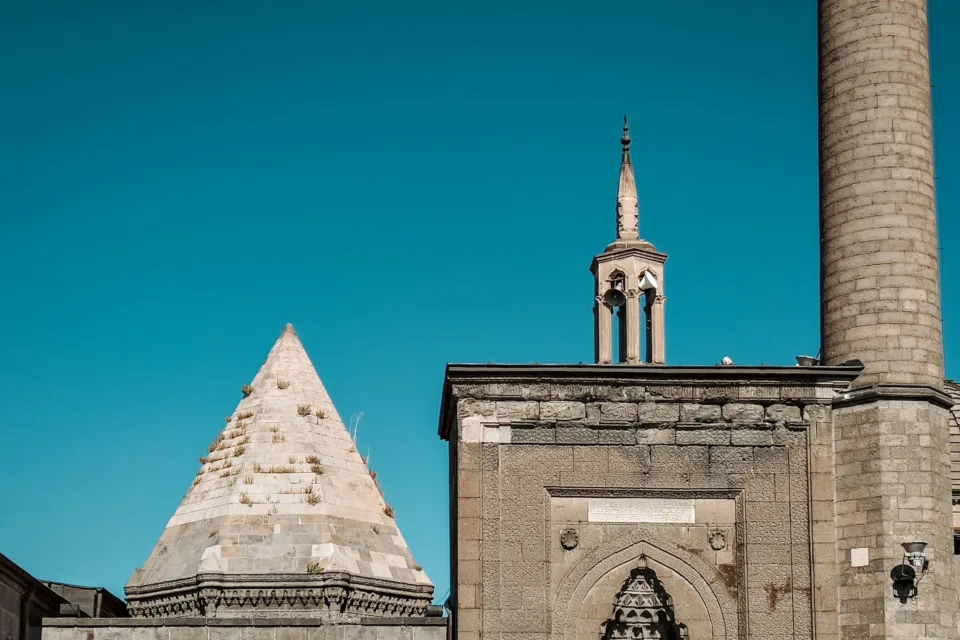
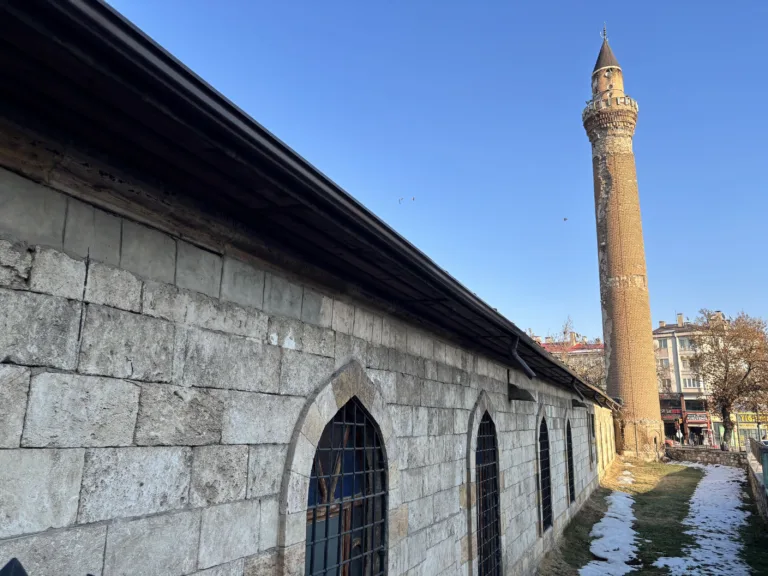
The Ulu Camii of Sivas: a Seljuk mosque of 1196–1197 with a flat roof, eleven aisles,…
Photo: Turkey Your Way
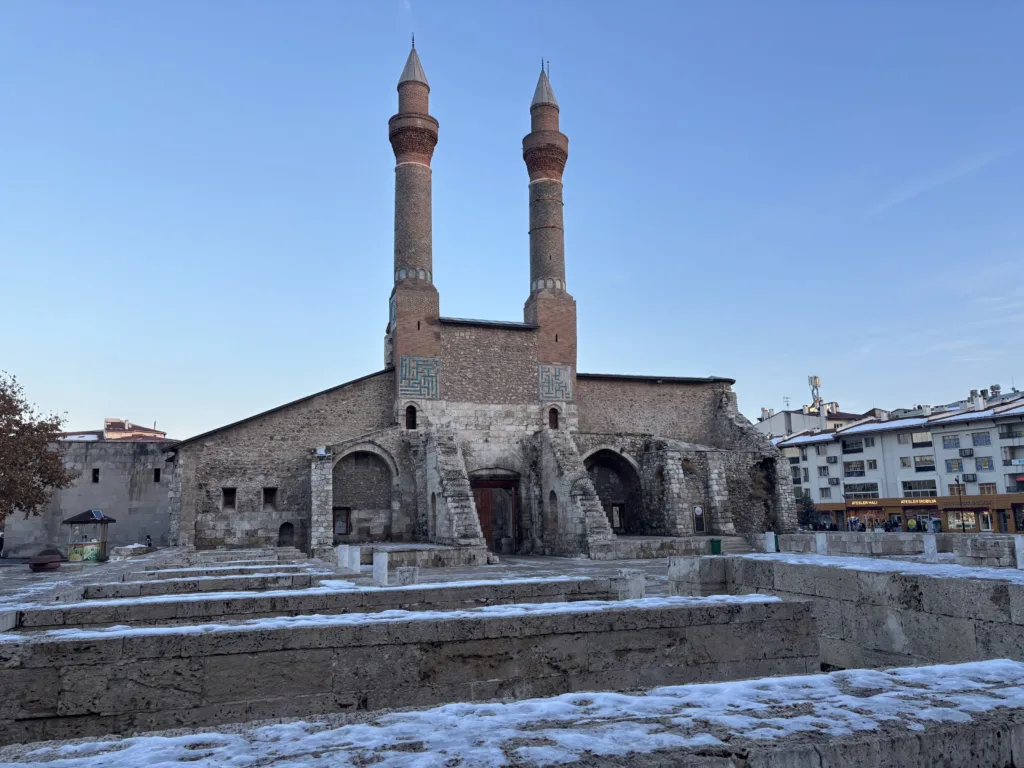
A Seljuk school of science on the City Square of Sivas, beside twin minarets and a medieval hospital.
On the wide City Square of Sivas, three Seljuk buildings stand within a few steps of each other: a perfectly balanced stone school, a gateway with two brick minarets and nothing behind it, and a medieval hospital where a sultan lies buried. At their center is the Buruciye Madrasa, a school of science founded in 1271 by a scholar from Iran.
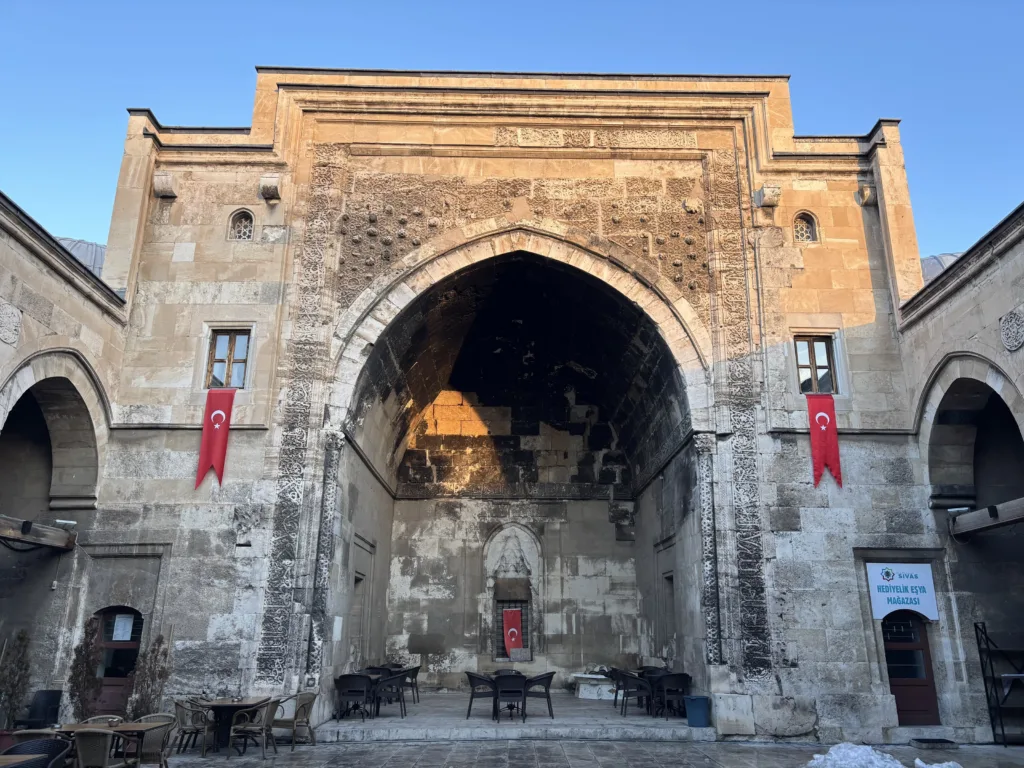
To begin with, the madrasa went up in 1271, under the Seljuk sultan Kaykhusraw III. Its founder, Muzaffer Burucerdi, in turn, came from Borujerd, near Hamadan in western Iran, and the school taught physics, chemistry and astronomy. Afterward, he found his last rest in his own building, where his tomb still stands.
Even though the architect is unknown, the plan follows old Turkic madrasas of Central Asia. Of all Anatolian madrasas, furthermore, it has the most regular symmetry, with four iwans around an open courtyard. For this reason, it is often called one of the best and most harmonious examples of Seljuk architecture in Anatolia.


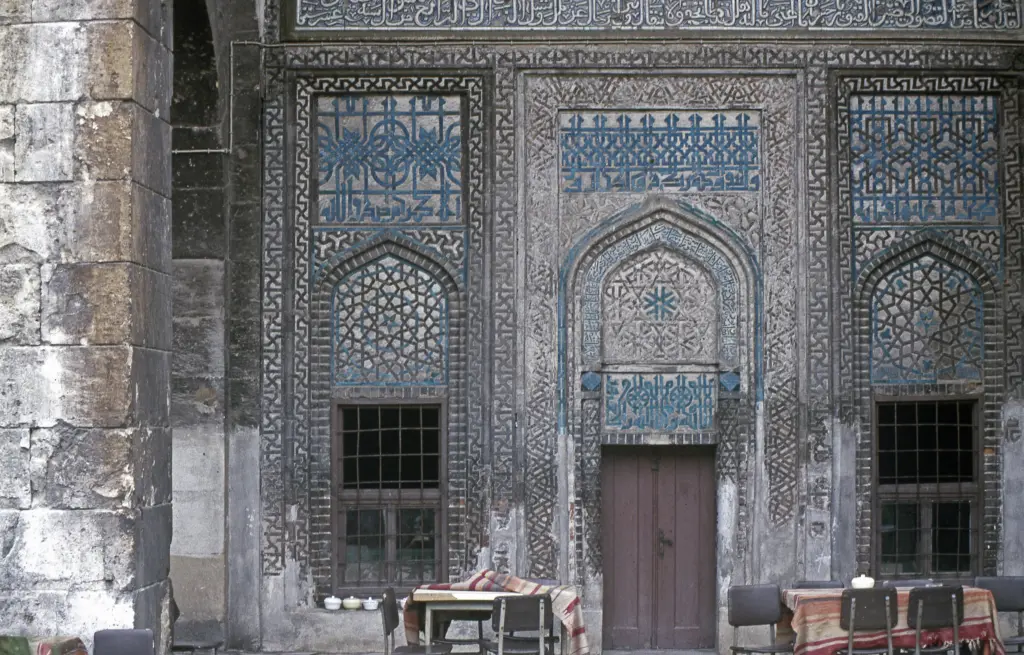
First, study the main gate on the west side. There, inscriptions surround the deep portal niche, and its muqarnas hood is decorated with geometric patterns. On either side, likewise, two muqarnas windows and two fluted corner towers frame it.
Next, look into the room to the left of the gate as well. Inside, in turn, the founder and his children lie in their sarcophagi. At one time, similarly, hexagonal tiles in blue and black covered all the walls, and parts of them survive, with an inscription band giving his full name below the tiled muqarnas. By contrast, the domed room on the right, with its mihrab (the niche that shows the direction of prayer), probably served as a small mosque.
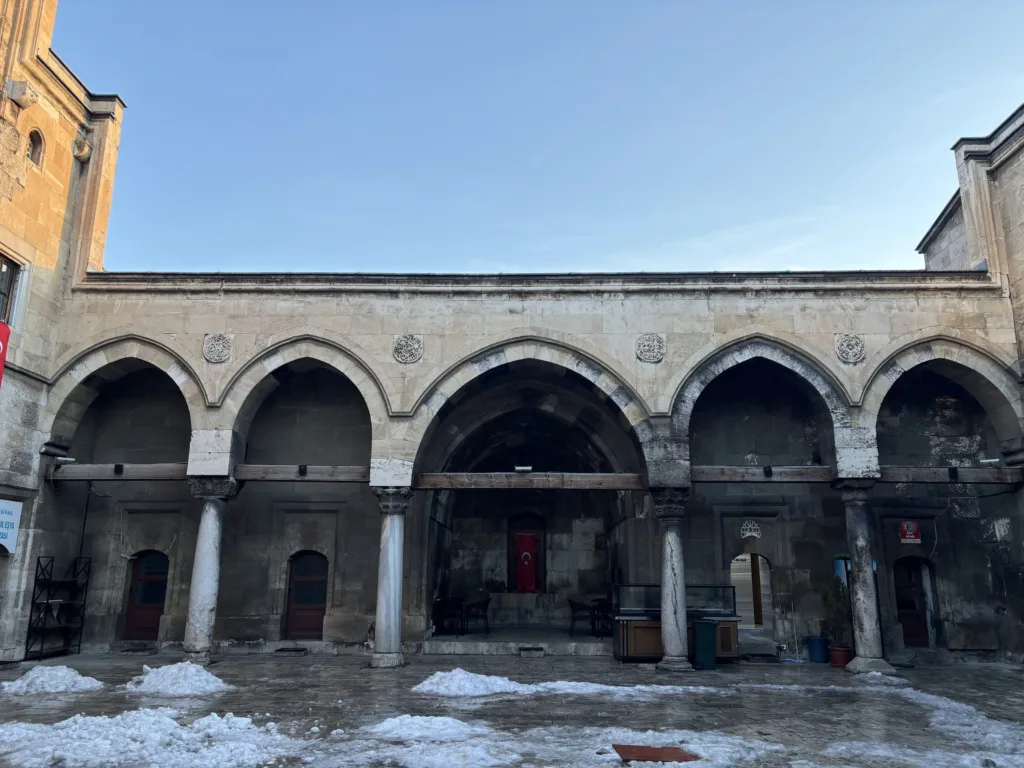
After that, step into the courtyard. All around it, porches rest on round columns about 2.7 meters (9 feet) high. Interestingly, the builders reused older columns, so some capitals are Corinthian and others carry Byzantine monograms.
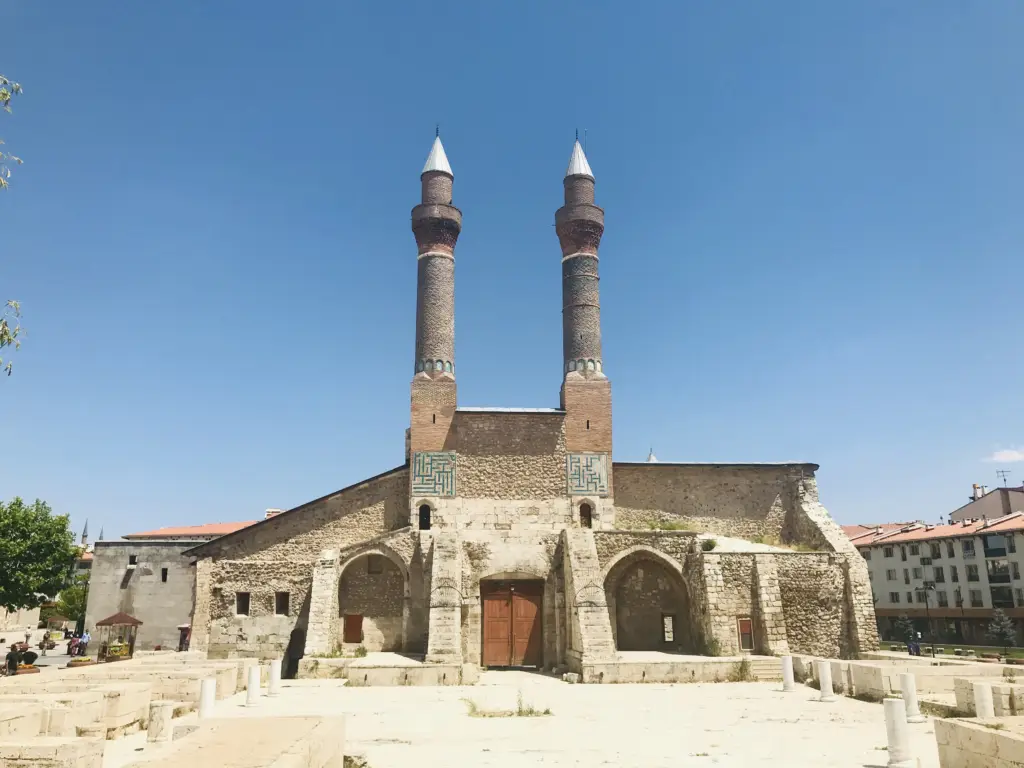
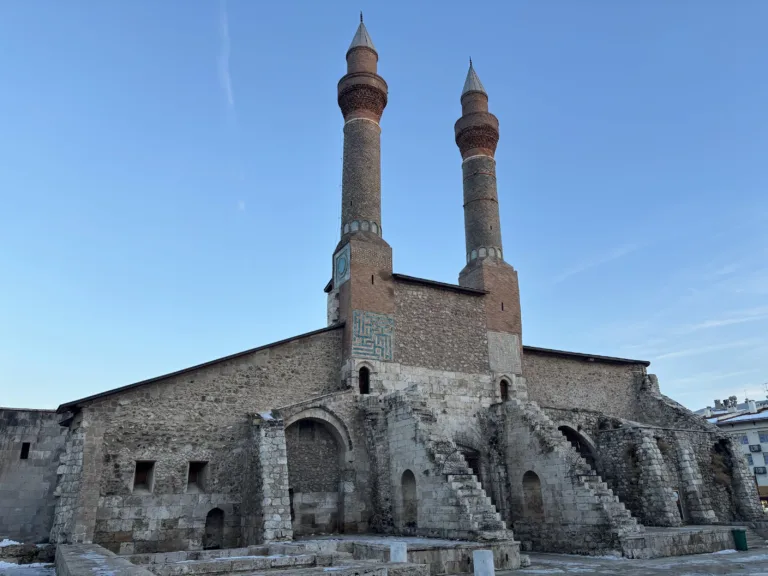
Across the square, two tall brick minarets rise above a carved gate, yet almost nothing stands behind them. Thus, this is the Çifte Minareli, the Double Minaret Madrasa, built in 1271 or 1272 for Shams al-Din Juvayni, a vizier of the Ilkhanid Mongols, whose inscription still crowns the gate.
Finally, visit the oldest of the three. Back in 1217, Sultan Kaykaus I, who loved Sivas, founded the Şifaiye, a hospital and a medical school. He chose to be buried here himself, so the complex also carries his name.

Our notes for the City Square
Our suggestion See all three Seljuk buildings in one walk, then continue to the Gök Medrese (a school of Islamic learning) a few streets away.

In practical terms, the madrasa stands on the City Square, Kent Meydanı, in the Eskikale quarter of central Sivas, with its main entrance on the west. Travelers on the Eastern Express also stop in Sivas on the way to Kars.
Afterward, walk to the turquoise minarets of the Gök Medrese, or drive to the carved portals of the Divriği Great Mosque. For more Seljuk schools, compare the Karatay Madrasa in Konya. To follow these buildings from Konya to Divriği, join our Turkey architecture tour in 8 days.

Because three Seljuk worlds share one square. Study physics and astronomy's old home, then a gate with nothing behind it, then a hospital where a sultan lies.
The Ulu Camii of Sivas: a Seljuk mosque of 1196–1197 with a flat roof, eleven aisles,…
The Çifte Minareli Madrasa in Sivas: a hadith school of 1271 founded by the Ilkhanid vizier…
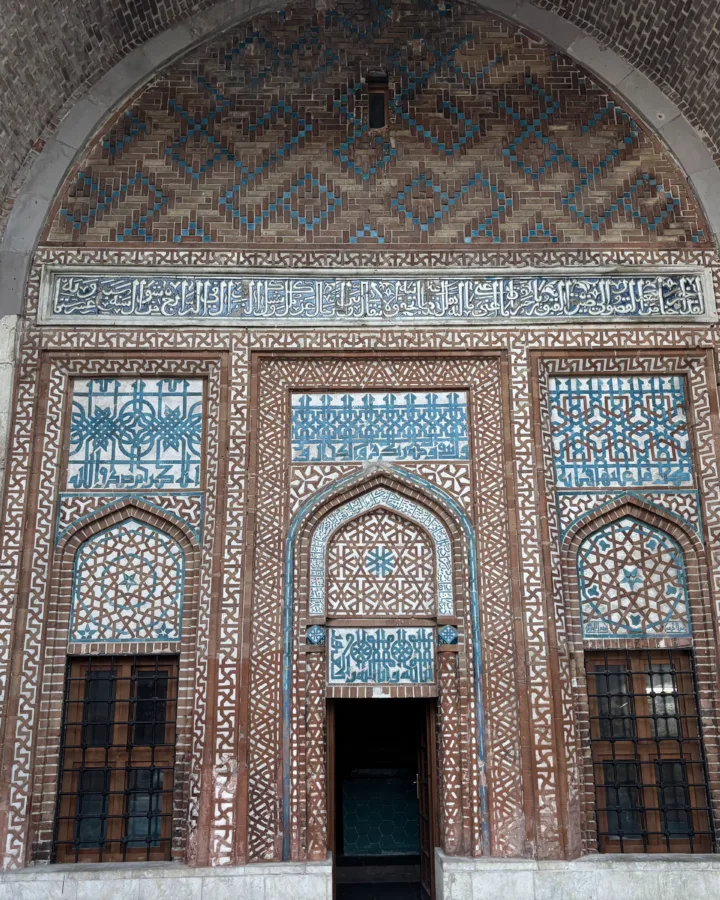
The Şifaiye Madrasa in Sivas: built in 1217 as a hospital for the Seljuk sultan İzzeddin…
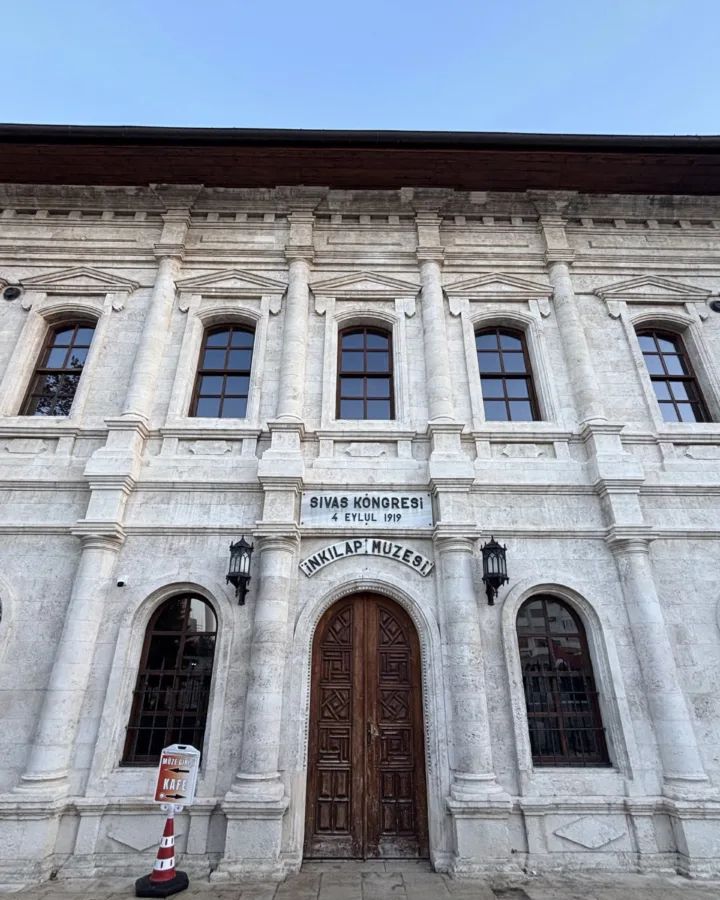
The Sivas Congress Museum: an 1892 school where the Sivas Congress met in September 1919 and…

The Kangal Dog Breeding Farm in Sivas: where the famous Turkish shepherd dog is bred to…

The Gök Medrese in Sivas: the Blue Madrasa of 1271, built for the Seljuk vizier Sahip…

The Divriği Great Mosque and Hospital in Sivas province: a Mengücek complex of 1228–1229 with the…
Open in Google Maps (opens in a new tab) Open in Apple Maps (opens in a new tab)
In 1271, under Sultan Kaykhusraw III, by Muzaffer Burucerdi from Borujerd in Iran.
Physics, chemistry and astronomy.
A madrasa of 1271 or 1272 built for the Ilkhanid vizier Shams al-Din Juvayni. Only its gate and twin minarets still stand.
A hospital and medical school founded in 1217 by Sultan Kaykaus I, who is buried there.