
Çifte Kümbetler
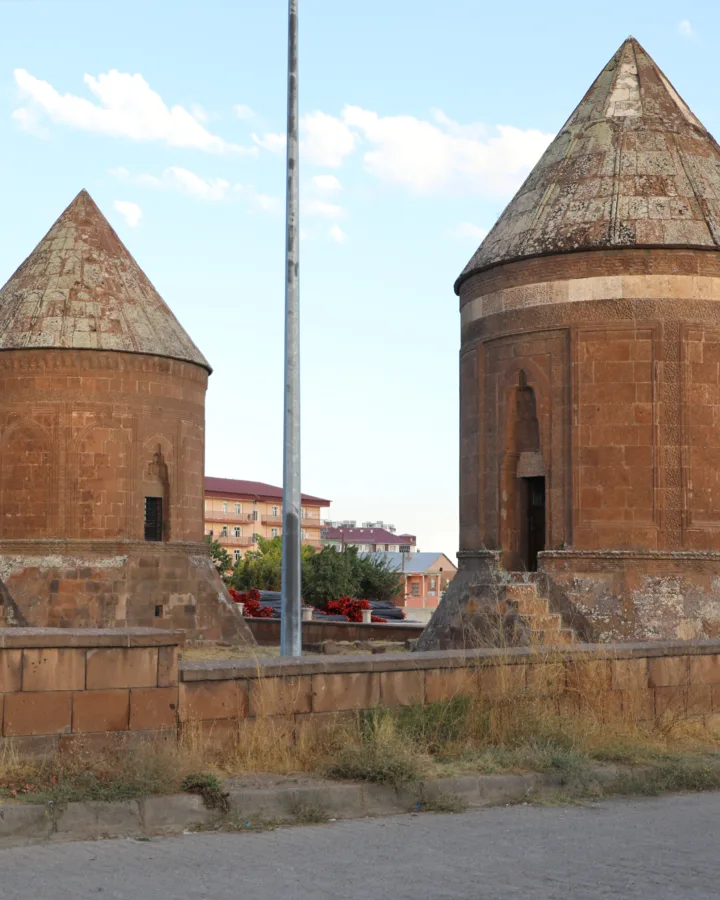
Two Seljuk-era tomb towers side by side in Ahlat, built for an emir, his son and…
Türkiye GMT+3
Friday, November 20, 2026
Replies within 24 hours
Photo: Dosseman / Wikimedia Commons, CC BY-SA 4.0
A twelve-sided Seljuk tomb in Kayseri, carved with eagles, lions and winged beasts, and dated to around 1275.
The Döner Kümbet is a Seljuk tomb on Talas Avenue in Kayseri, across from the Seyyid Burhanettin Cemetery. Its proper name is the tomb of Şah Cihan Hatun. The inscription names her but gives no date; comparison with similar tombs in Niğde and Ahlat places it around 1275. It counts among the finest Seljuk works in the city.
The tomb rises from a square base in twelve faces of cut stone, under a cone-shaped roof. Ten of the faces look so alike in shape and carving that people named it döner, turning. Its carvings show a double-headed eagle, winged panthers with human heads, lions and the tree of life, with palm trees beside the door. Inside, a dome covers a round room, and the whole shape recalls a great tent.
The door faces north. Two short flights of five steps rise to it, one from each side. Muqarnas, the stepped honeycomb carving of Seljuk stonework, fills the arch over the doorway.
Just above the door, two carved animals face the inscription, and both are badly damaged. Beside the door, much of the double-headed eagle has been broken away.
On the remaining faces, the panels carry geometric patterns only. Under the cornice, a floral band and a geometric band run around the whole tomb.
Two windows, one facing east and one facing west, light the round room. Almost opposite the door, a mihrab (the niche that shows the direction of prayer), the niche that shows the direction of prayer, is cut into the wall.
Döner Kümbet means the turning tomb, and in English it is often spelled Doner Kumbet, without the Turkish letters. It stands at the Kartal junction on Talas Avenue, in the Melikgazi district of central Kayseri. Turkish Airlines links Istanbul with Kayseri’s Erkilet Airport in summer and in winter, and the airport lies close to the city.
The tomb is one of several Seljuk works in central Kayseri. Gevher Nesibe, twin madrasas that held a hospital and a medical school, carries a portal inscription of 1205–1206. Its builder, Sultan Gıyaseddin Keyhusrev I, named it for his sister Gevher Nesibe. Mahperi Hatun, a Seljuk queen, saw her complex of mosque, madrasa, bath and tomb finished in 1238.
On a day in Kayseri, we take you to the Döner Kümbet with the Gevher Nesibe hospital and the Hunat Hatun Complex. We can add it to our Kayseri day trip, and our guide to the Anatolian Seljuks tells the story of their builders. The tomb is one of the Kayseri stops of our Seljuk architecture tour through central Anatolia.
Two Seljuk-era tomb towers side by side in Ahlat, built for an emir, his son and…

Museum
Twin madrasas of 1205-1206 in central Kayseri, built as a hospital and a medical school, now…
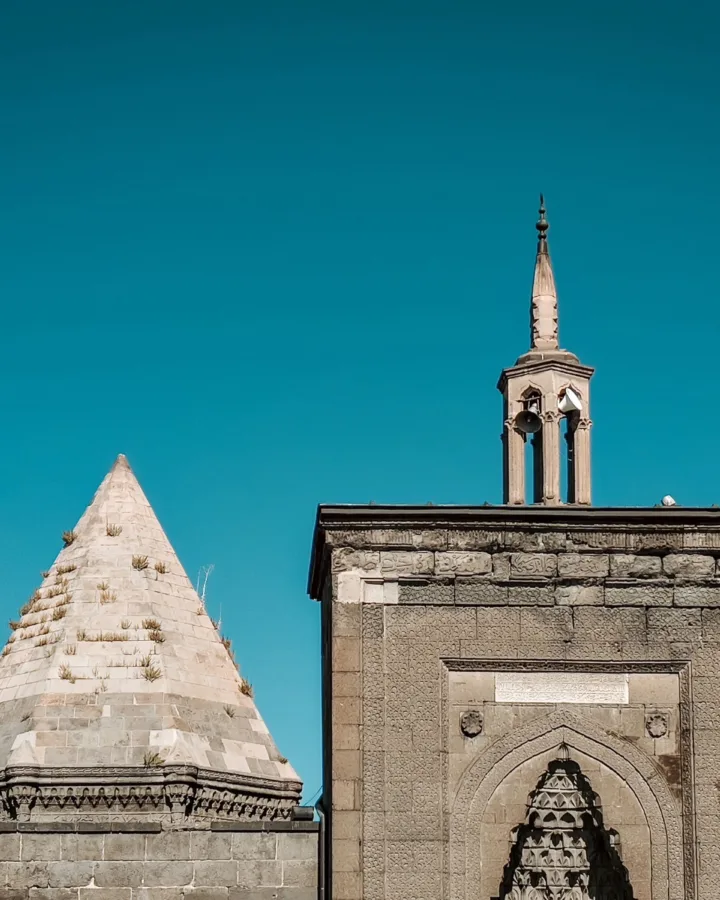
A Seljuk mosque, madrasa, bath and tomb of 1238 on Kayseri's main square, built by Mahperi…
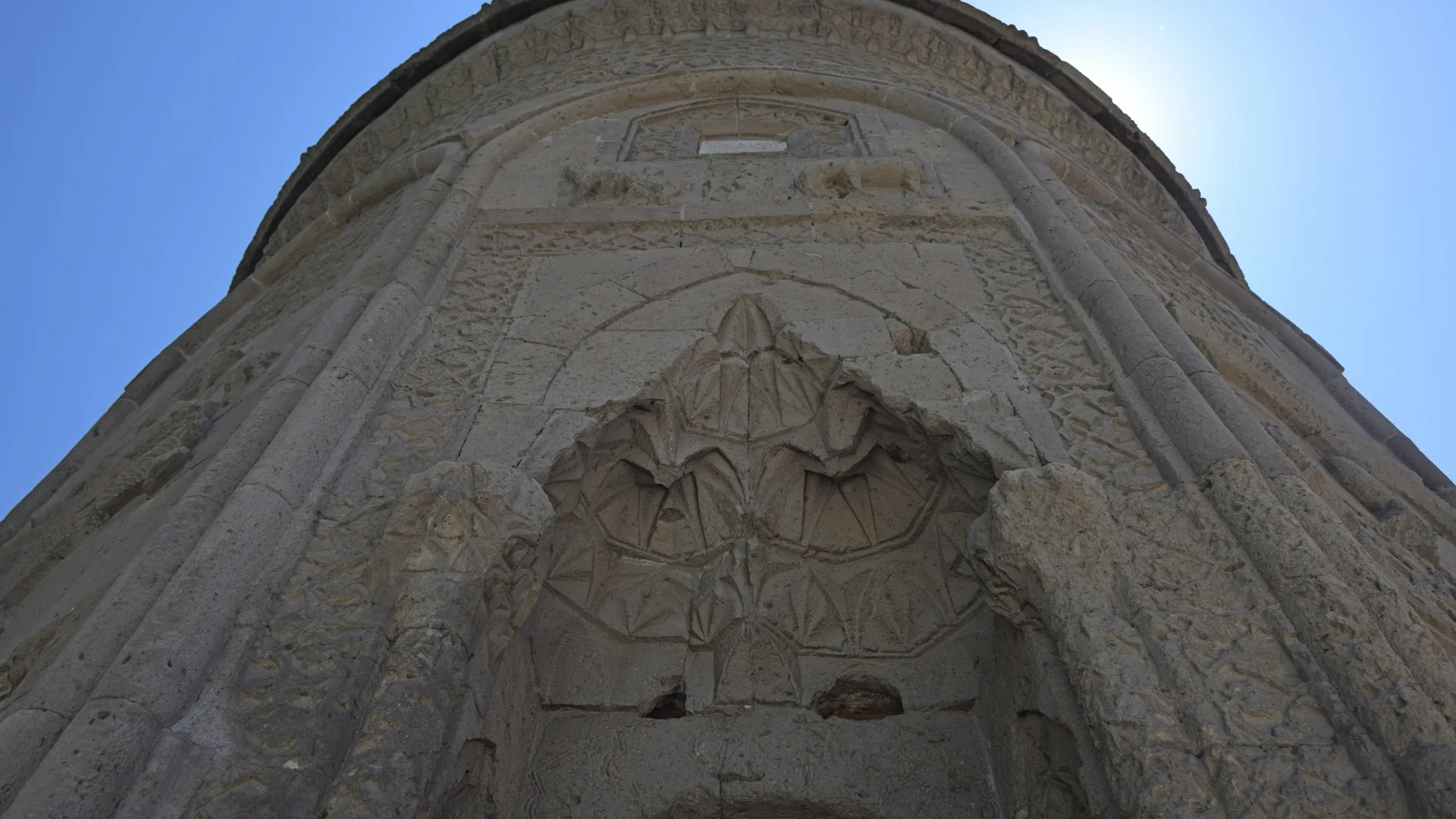
The inscription over the door gives the name Şah Cihan Hatun. Beyond her name, nothing is known about her.
Its inscription carries no date. From its style, it belongs to the late 13th century.
Yes. Our Kayseri day trip collects you at your hotel in Cappadocia. It covers the tomb with Gevher Nesibe and the Hunat Hatun Complex, in about eight hours.
 Article
Chinese New Year in Turkey 2027: Istanbul and Cappadocia
 Article
Christmas in Cappadocia: Nativity Frescoes and Cave Hotels
 Article
Half-Term in Turkey: February, May and October for Families
 Place
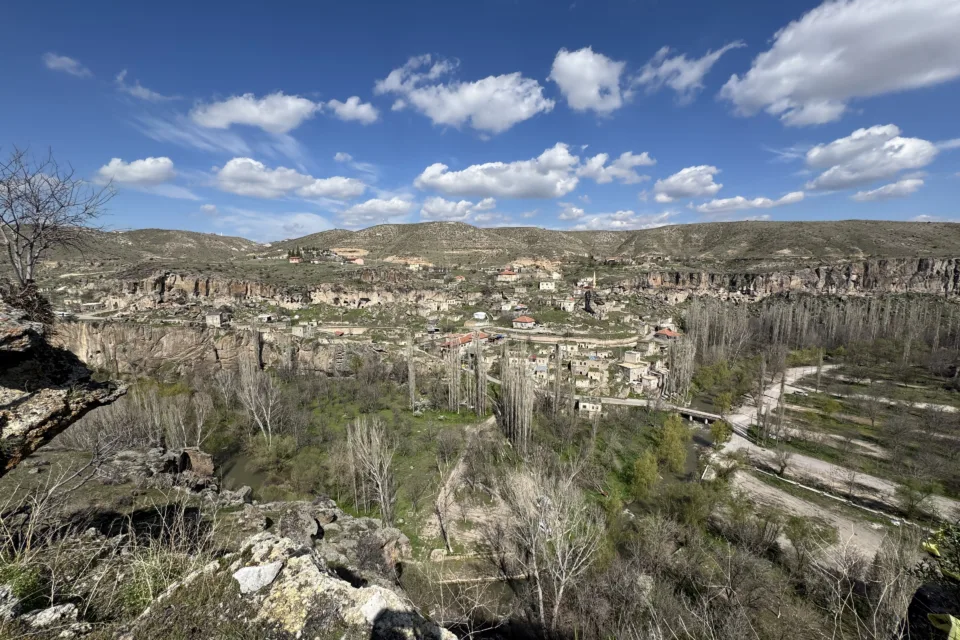
Belisırma
 Place
Sırçalı Madrasa
 Article
November 10 in Turkey: What Visitors See at 9:05
 Article
Cappadocia Without a Balloon: What to Do Instead
 Article
Cappadocia Balloon Canceled? What to Do That Morning and Next