
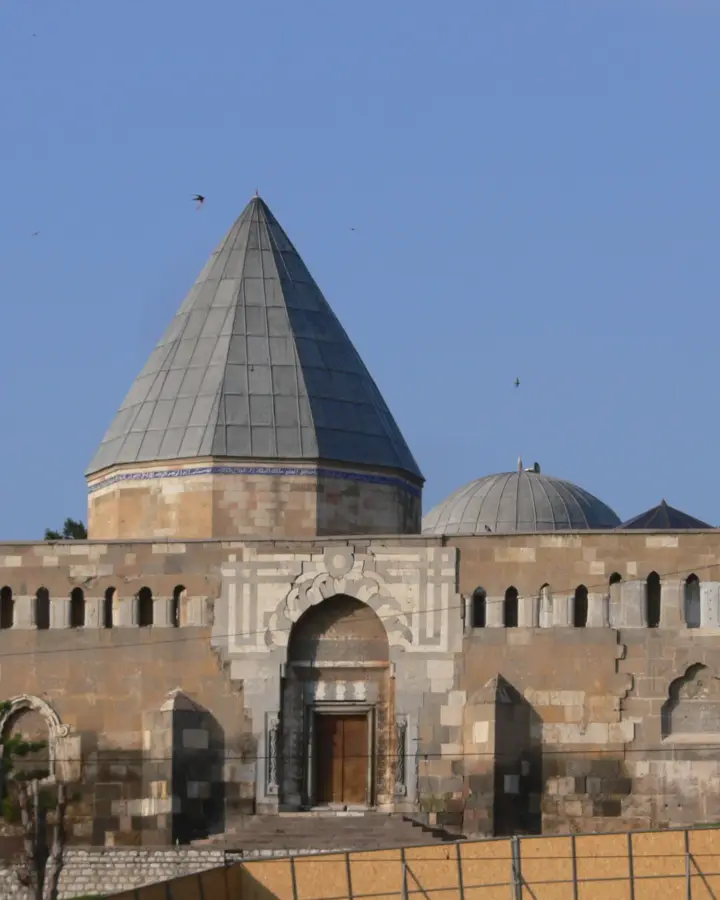
Alaeddin Mosque
The Alaeddin Mosque on Alaeddin Hill in Konya: the great mosque of the Seljuk sultans, with…
Türkiye GMT+3
Saturday, November 21, 2026
Replies within 24 hours
Photo: Dosseman / Wikimedia Commons, CC BY-SA 4.0
A Seljuk school of law from 1242–43 across from Alaeddin Hill in Konya, known for the glazed tiles of its main iwan.
The Sırçalı Madrasa is a Seljuk school in the center of Konya, across from Alaeddin Hill. Bedreddin Muslih had it built in 1242–43, the year 640 of the Islamic calendar, for teachers and students of Islamic law. After him, it is also called the Muslihiye Madrasa. Its rooms open onto a courtyard, with a large iwan, a vaulted hall, on one side.
The iwan is the richest part of the building. Tiles and verses from the Quran once covered its facade, and much of the tilework on the arch and the upper walls has fallen. On each side of the iwan, a domed room served as a winter classroom. The master of the work, Muhammad ibn Muhammad al-Tusi, came from Tus and signed his name in tile in a six-sided frame on the iwan arch. In Turkish, he is Tuslu Mehmed Usta.
\n\n
\n\n
Sırçalı means “glazed” in Turkish. Glazed brick and tile mosaic once covered the iwans and arcades around the courtyard. The tiles are turquoise and cobalt blue, cut and set piece by piece.
\n\n
\n\n
The madrasa has two floors and two iwans, and arcades frame its open courtyard. Student rooms line the north and south sides. The entrance iwan and the main iwan face each other across the courtyard. Beside the entrance, a two-story room holds the tomb of Bedreddin Muslih.
\n\n
\n\n
In 1960, the madrasa opened to visitors as part of the Konya Museum, given over to gravestones and tomb monuments. Repairs had begun in the 1940s, and a restoration followed in 1969. Heritage offices have used the upper floor in recent decades. We confirm which rooms you can enter on your date before we plan the walk.
On a day in Konya, we add the Sırçalı Madrasa to a walk around Alaeddin Hill, with the Alaeddin Mosque, the Karatay Madrasa and the İnce Minareli Madrasa. All four date from the age of the Anatolian Seljuks. We bring you to the Sırçalı Madrasa on day two of our Seljuk architecture tour, the Konya day.
The Alaeddin Mosque on Alaeddin Hill in Konya: the great mosque of the Seljuk sultans, with…
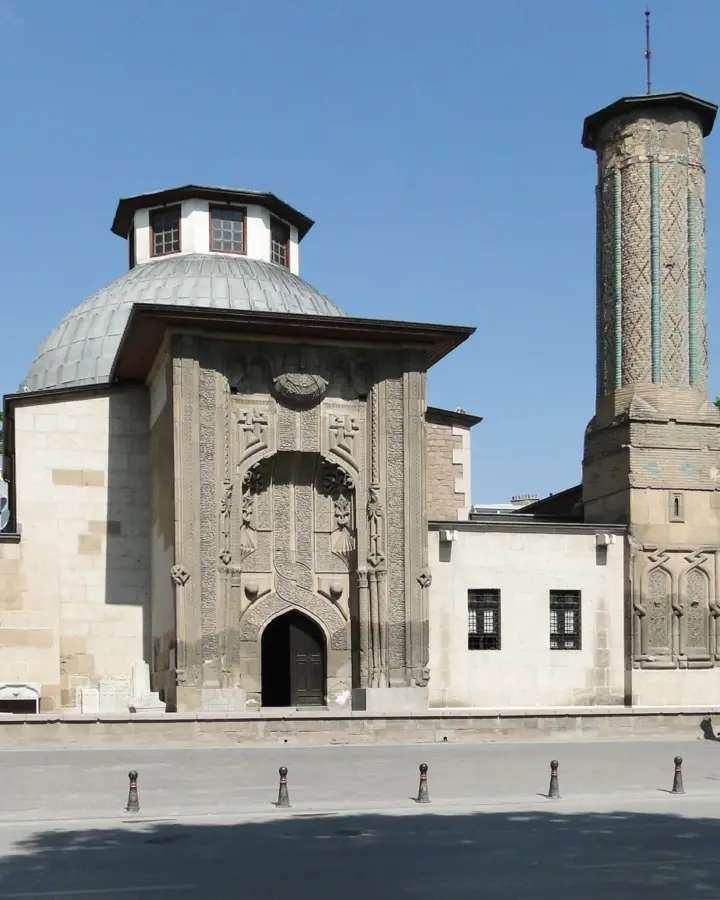
The İnce Minareli Madrasa in Konya: a Seljuk school of 1265 with a portal of intertwining…
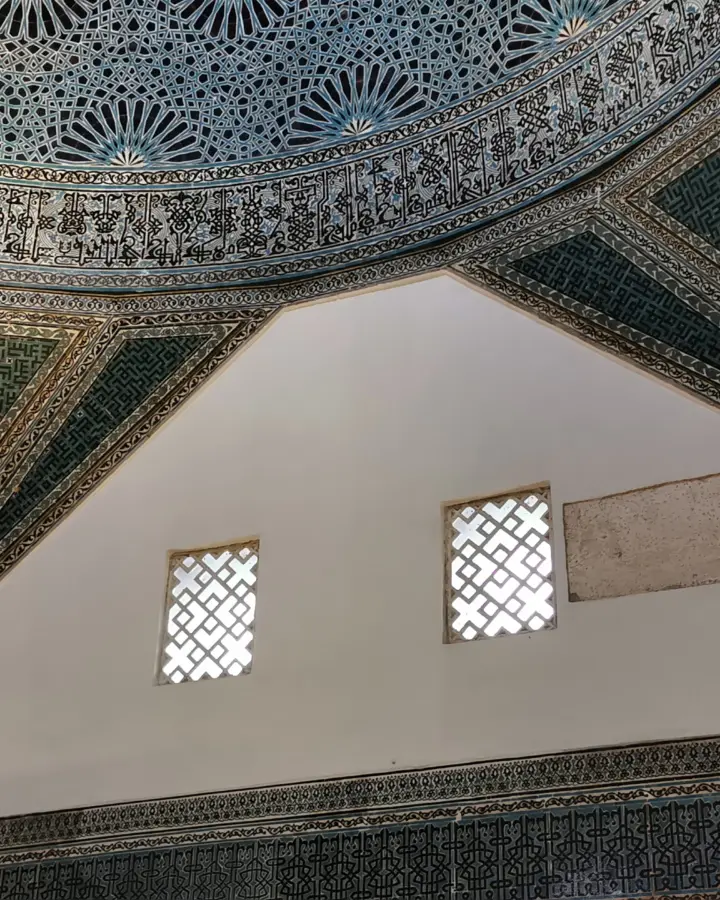
The Karatay Madrasa in Konya: a Seljuk school of 1251 with a dome of turquoise and…
Glazed. The name comes from the glazed tiles and bricks that dressed the building in turquoise and cobalt blue.
Bedreddin Muslih founded it in 640 AH, or 1242–43, as a law school. A master from Tus, Muhammad al-Tusi, signed the tilework.
In 1960. It became a section of the Konya Museum for carved gravestones and tomb monuments.
Yes. Bedreddin Muslih lies in a two-story tomb room next to the entrance.
 Article
Chinese New Year in Turkey 2027: Istanbul and Cappadocia
 Article
Christmas in Cappadocia: Nativity Frescoes and Cave Hotels
 Article
Half-Term in Turkey: February, May and October for Families
 Place
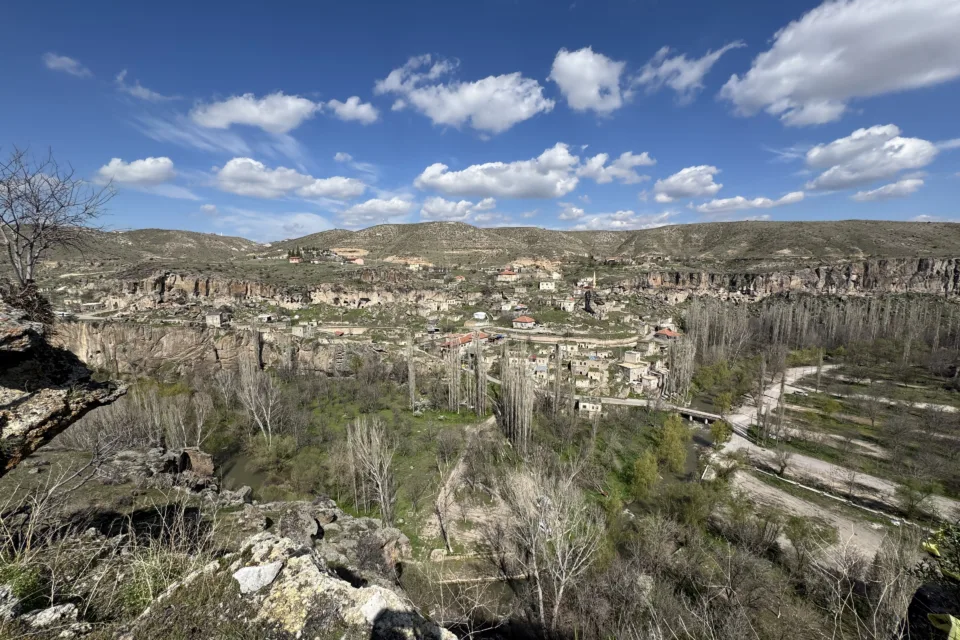
Belisırma
 Place
Döner Kümbet
 Article
November 10 in Turkey: What Visitors See at 9:05
 Article
Cappadocia Without a Balloon: What to Do Instead
 Article
Cappadocia Balloon Canceled? What to Do That Morning and Next