

Ayasuluk Castle, Selçuk
Ayasuluk Castle in Selçuk: Byzantine, Aydınoğulları and Ottoman walls with 15 towers on the hill above…
Photo: Turkey Your Way
The best-preserved ancient city of the eastern Mediterranean: the Library of Celsus, the Terrace Houses, Saint Paul's theater and a Wonder of the World.
Walk down the Curetes Street of Ephesus and your feet follow the grooves of two thousand years. Marble paving runs downhill between statues, fountains and temples to the façade of the Library of Celsus, glowing gold in the morning light. Beyond it, a vast theater still holds the echo of a riot against Saint Paul. Ephesus is a UNESCO World Heritage Site, and it is far more than a ruin, so here you can still read how a great Roman city actually lived. Our Ephesus tour from Bodrum stops here, our Istanbul and Ephesus tour in 3 days adds Istanbul, and our Cappadocia, Ephesus and Pamukkale tour in 5 days joins all three.
A king once flooded the old town to force people to move. A man burned the Temple of Artemis, one of the Seven Wonders, so that his name would live forever. Later, gladiators were buried in a cemetery outside the walls. Centuries later, the visions of a German nun led priests to a small stone house on a mountain above the city. Selçuk, Şirince and that house, the House of the Virgin Mary, all fit into the same day, as on our Ephesus Şirince tour from İzmir.
Ephesus (Efes in Turkish) lies near the town of Selçuk in İzmir province, on the Aegean coast of Türkiye. It is also about 20 minutes from Kuşadası and about an hour from İzmir Airport. Today the ruins stand several kilometers inland, but in antiquity Ephesus was a port. Its harbor gradually silted up because the river carried soil down the valley.
In 2015, Ephesus joined the UNESCO World Heritage List, together with the Temple of Artemis, the Basilica of St. John and the İsa Bey Mosque in Selçuk. The ancient city opens every day of the year, with longer hours in summer and evening openings on some summer nights. We arrange your entry to Ephesus and time the day to its seasonal hours. The ticket also covers the Ephesus Experience Museum. However, the Terrace Houses need a separate ticket. We arrange your entry to the ancient city and the Terrace Houses, and to the evening openings if you wish.
| Time you have | What we suggest |
|---|---|
| 2–3 hours | The ancient city from the Upper Gate down to the theater |
| Half a day | Add the Terrace Houses, with their mosaics and wall paintings |
| A full day | Add the House of the Virgin Mary, the Basilica of St. John, the Ephesus Museum and Şirince |

Ionian Greeks founded Ephesus around the 10th century BC, near an older Anatolian settlement. It moved several times, always following the coastline as the sea retreated. Later, around 300 BC, King Lysimachus, one of Alexander’s generals, built a new city on the present site. But the people refused to leave their old homes. So, Lysimachus blocked the drains during a storm and flooded the old town until they agreed to move.
Ephesus was famous above all for its Temple of Artemis, one of the Seven Wonders of the Ancient World. In 356 BC, a man named Herostratus set it on fire for one reason: he wanted his name to be remembered forever. Afterward, the Ephesians condemned him and forbade anyone to speak his name. Yet the historians wrote it down anyway, and today “herostratic fame” means fame won through a destructive act. By tradition, Alexander the Great was born on the same night.
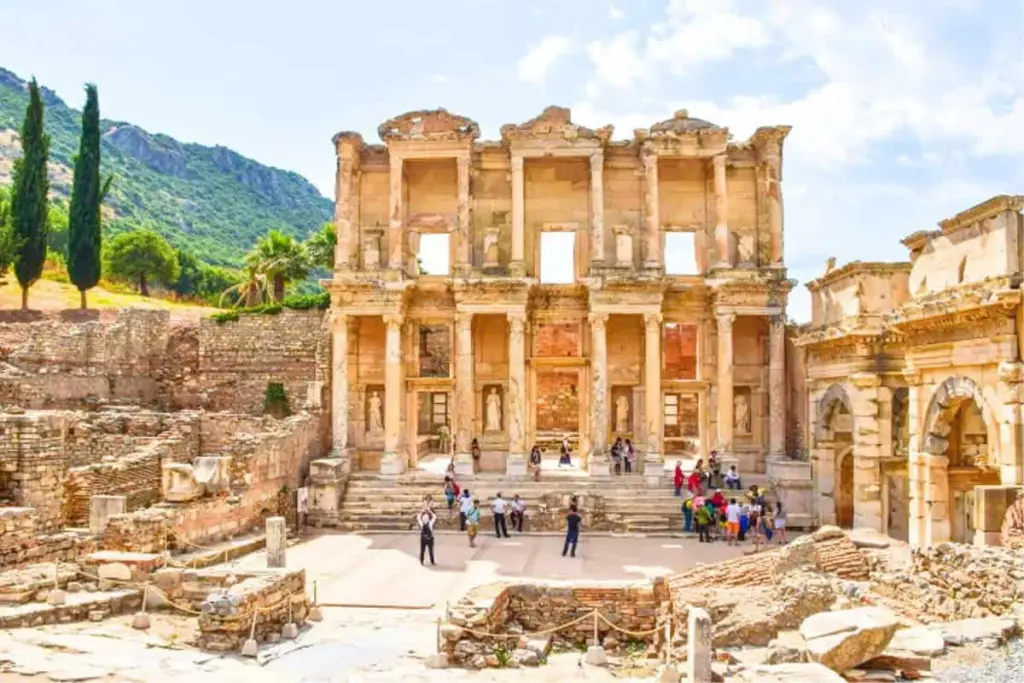
Under Rome, Ephesus became the capital of the province of Asia and grew rich. So most of the buildings you see today date from this golden age of the 1st and 2nd centuries AD. Wealthy citizens competed to build fountains, baths and monuments, while the city’s merchants traded across the Mediterranean.
Ephesus also played a key role in early Christianity. Saint Paul lived here for about three years in the 50s AD. His preaching led to a riot of silversmiths who sold models of Artemis’s temple; the crowd filled the theater shouting “Great is Artemis of the Ephesians!”. Saint John lived and was buried here. In AD 431, the Council of Ephesus met in the Church of Mary and declared Mary the Mother of God.
As the harbor silted up, earthquakes struck and trade moved elsewhere, so Ephesus slowly emptied. The population moved up to the hill of Ayasuluk, today’s Selçuk. Excavations by the Austrian Archaeological Institute began in 1895, and they still continue today.
Ephesus through time
Most private visits start at the Upper (Magnesian) Gate and walk downhill, which is easier on the legs. Here, first of all, lies the State Agora, the political center of the city. Nearby, the Odeon, a small roofed theater, hosted the city council and also concerts.
Then the main street slopes down between the remains of fountains, temples and statues. Further down, look for the Fountain of Trajan, the Gate of Hercules and the graceful Temple of Hadrian with its carved arches. Look down: the marble is worn smooth by countless feet.
Near the bottom of Curetes Street also lie the public latrines, a long row of marble seats around a central pool. Water ran under the seats while people sat side by side and talked. So it is no surprise that visitors love this place. Guides like to say that in winter, slaves warmed the cold marble for their masters, though no ancient source confirms it.
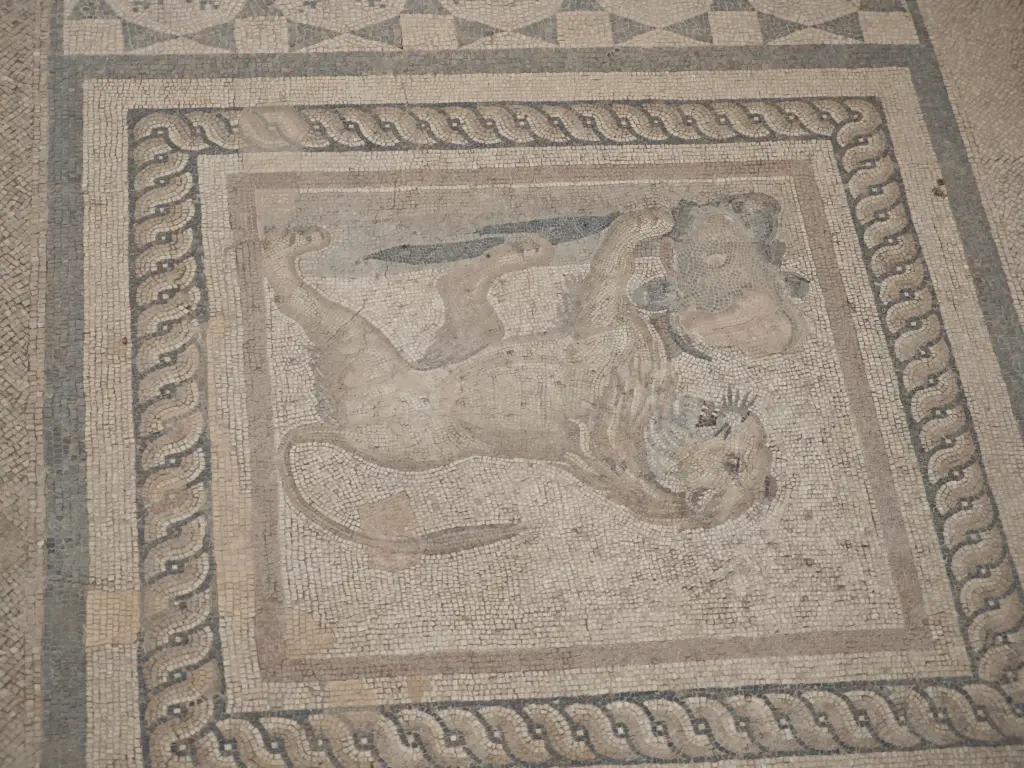
Across from the Temple of Hadrian, a modern roof protects the Terrace Houses, the homes of wealthy Ephesians. Inside, walkways lead past mosaic floors, painted walls, marble panels and even a room where archaeologists are piecing together thousands of marble fragments. We count this among the highlights of Ephesus, so do not skip it to save time.
Finally, at the foot of Curetes Street stands the most famous building of Ephesus. In the early 2nd century AD, the consul Julius Aquila built it in memory of his father, Celsus, governor of the province of Asia. Celsus was also buried in a crypt beneath the library, a rare honor inside a city. The library once held thousands of scrolls, although none survive today. Its two-story façade, with statues of Wisdom, Knowledge, Intelligence and Virtue, rose again from its original pieces when archaeologists rebuilt it.
From the library, Marble Street then runs toward the theater. In one paving stone, guides also show a carved footprint, a woman’s head and a heart. They often call it the oldest advertisement in the world, pointing the way to a brothel. It makes a good story, but scholars are not certain what the carving means.

Built into the slope of Mount Pion, the Great Theater held huge crowds. It dates from the Hellenistic period, but the Romans enlarged it. This is where the silversmiths rioted against Paul. Stand at the top and look down the Harbor Street, the Arcadian Way. It once led to the sea, although the coast today lies several kilometers away.
Archaeologists found a gladiator cemetery near the stadium of Ephesus. Surprisingly, the skeletons showed healed wounds and signs of medical care. They also suggested that gladiators were valuable professionals, not just doomed men. The finds are on display at the Ephesus Museum in Selçuk.
On the slope of Mount Pion, a series of tombs is linked to a famous legend. Seven young Christians, persecuted by the emperor, hid in a cave and fell asleep. They woke two centuries later in a Christian empire. The story also appears in both Christian tradition and the Quran.
In Selçuk, a single re-erected column marks the site of the Temple of Artemis. On the hill above, the Basilica of St. John, built by Emperor Justinian over the saint’s tomb, overlooks the Isa Bey Mosque of 1375. The Ephesus Museum displays the famous statues of Artemis with her strange egg-like ornaments, together with finds from the Terrace Houses.

On Mount Koressos above Ephesus stands a small stone house venerated as the last home of the Virgin Mary. Its story, however, is unusual. In the 19th century, a German nun, Anne Catherine Emmerich, described in her visions a house near Ephesus. Following her description, priests searched the mountain and identified the building in 1891. Several popes have visited since, and Christians and Muslims alike come to pray here. Outside, visitors leave written wishes on a long wall.

Ephesus fits into a morning, but the town beside it deserves an evening. We prefer to stay a night in Selçuk, the market town three kilometers from the ruins. Then you can be at the gate when it opens, before the heat, and eat where the town eats in the evening.
On Saturdays, Selçuk holds a big weekly market behind the bus station. Villagers from the hills bring cured olives, olive oil soap, honey, dried figs and wild thyme, and nobody is selling to tourists. The vendors start setting up the night before, so nearby streets close early in the morning. A smaller Wednesday market sells fruit, vegetables and village cheeses.
The valleys around Ephesus also grow figs, olives, peaches and grapes. In the hills above, the village of Şirince makes fruit wines and dry local wines, and the countryside is at its most beautiful in spring.
Our notes for Ephesus and Selçuk
Our suggestion Take a taxi to the Upper Gate at 8 am and let your driver wait at the Lower Gate. Walk downhill, add the Terrace Houses at the Library of Celsus, and be back in Selçuk for çöp şiş.

In summer, Ephesus is hot and sunny, and the site has little shade. The ancient city keeps longer hours then, with evening openings on some summer nights, so you can choose the cooler ends of the day. Start at the Upper Gate at opening time and walk downhill, and bring water, a hat and sunscreen. For the season across the country, read Turkey in summer.
You can visit Ephesus without a guide, but a licensed guide makes the ruins readable. A guide explains what the Library of Celsus, the public latrines and the Terrace Houses tell you about daily life. Stories such as the “advertisement” on Marble Street also need someone to tell you what is known and what is only a good tale. Our guide at Ephesus fits the route to your pace.
Arriving by cruise ship? Our Ephesus shore excursion starts at the pier in Kuşadası and brings you back in time. To add Pamukkale, see our Ephesus and Pamukkale tour in 2 days.
Because Ephesus lets you walk through a living Roman city, not just look at ruins. You go down a marble street worn by two thousand years of feet, sit in the public latrines where Ephesians gossiped, step into the painted homes of the rich and stand in the theater where a crowd shouted against Saint Paul. Come at opening time with a guide who knows the stories, and the stones start to speak.
Ayasuluk Castle in Selçuk: Byzantine, Aydınoğulları and Ottoman walls with 15 towers on the hill above…

The Basilica of Saint John on Ayasuluk Hill in Selçuk: Justinian's great church over the tomb…

The Isa Bey Mosque in Selçuk: an Aydınid mosque of 1374–1375 below Ayasuluk Hill, built by…

The Temple of Artemis at Ephesus, one of the Seven Wonders of the Ancient World: the…

The House of the Virgin Mary, Meryem Ana Evi, on Mount Koressos near Ephesus: the stone…

Open in Google Maps (opens in a new tab) Open in Apple Maps (opens in a new tab)
Every day of the year, with longer hours in summer, and we time your visit to them.
Yes. Their mosaics and frescoes show how wealthy Ephesians lived. They need a separate ticket.
Yes, Ephesus is about 20 minutes from the port; a private guide and car make the most of a short stop.
Yes, on Mount Koressos above the ancient city, about 15 minutes by car.
Spring and autumn, at opening time; summer middays are very hot with little shade.
Near Selçuk; today a single re-erected column marks the site of this Wonder of the Ancient World.
On some summer nights, yes, and we plan an evening visit for you.
 Tour
Private Ephesus Tour from Bodrum
 Tour
Private Ephesus and Şirince Tour from Izmir
 Tour
Private Ephesus Museum Tour: Selçuk, St. John and Ayasuluk
 Journey
Ephesus, Pamukkale and the Turquoise Coast Tour in 8 Days
 Journey
Istanbul, Ephesus and Pamukkale in 5 Days: A Private Tour
 Journey
Cappadocia, Ephesus and Pamukkale in 5 Days: A Private Tour
 Journey
Antalya to Pamukkale and Ephesus in 3 Days: A Private Tour by Road
 Journey
Ephesus and Pamukkale from Bodrum in 2 Days: A Private Tour
