Archaeological site
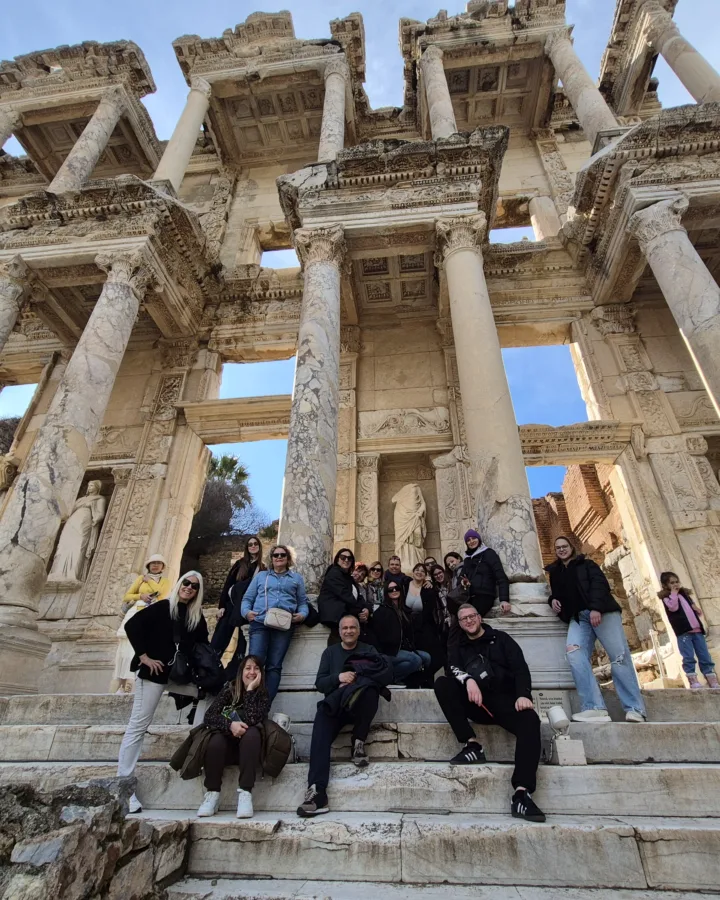
Ephesus
The best-preserved ancient city of the eastern Mediterranean: the Library of Celsus, the Terrace Houses, the…
Photo: Carole Raddato from FRANKFURT, Germany / Wikimedia Commons, CC BY-SA 2.0
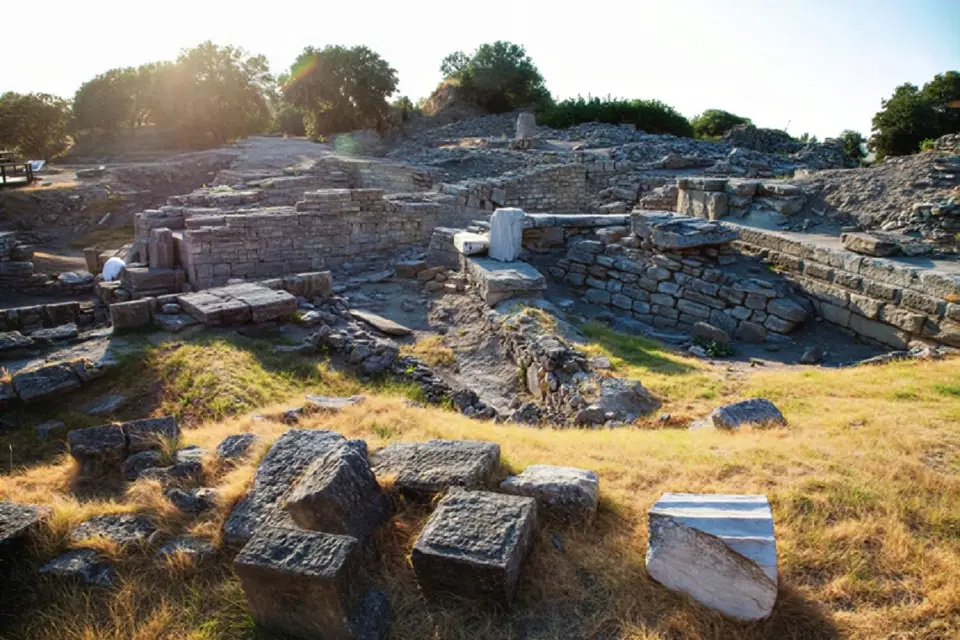
The mound of Hisarlık, where nine cities rose on top of each other over 4,000 years, and where Homer set the Trojan War.
From the top of a low mound, you look across a flat green plain toward the Dardanelles. Below your feet lie nine cities, one on top of another, spanning more than 3,000 years. Somewhere in those layers, Homer set the story of Helen, Achilles and the wooden horse. This is Troy, a famous ruin that is smaller than its legend.
Troy is small, but it is deep. So come with a little patience and a good guide, and the walls, ramps and trenches will start to speak. Then finish at the Troy Museum nearby, where finds from the excavations fill the galleries.
Troy lies at a mound called Hisarlık, near the village of Tevfikiye in Çanakkale province, in the northwest corner of Turkey. For a night in Çanakkale, see the best hotels in Çanakkale. In Greek, the city was also called Ilion, which gave the Iliad its name. In Turkish, people call it Truva or Troya.
Since 1996, the site has been the heart of a historical national park, and in 1998 it became the UNESCO World Heritage Site of the Archaeological Site of Troy. For another great ancient city in western Turkey, see Ephesus, a few hours to the south.
Troy in numbers
People first settled here around 3600 BC. Over the next four millennia, each new town rose on the ruins of the last. So archaeologists number the layers from Troy I, the oldest, to Troy IX, the Roman city. The second city, around 2550 BC, was already rich, with massive walls and treasures of amber, carnelian and lapis from distant lands.
In the Late Bronze Age, Troy VI and VII formed a large city with a citadel and a lower town. Hittite records call a city in this region Wilusa, a name that probably stands for Ilion. Later, the layer called VIIa was destroyed, and the ruins show signs of an enemy attack, including scorch marks. However, there is still no clear proof of a Greek war against the city. So the link between myth and history remains open.
Later, Greeks and Romans honored Troy as a holy place of legend. Even the Persian king Xerxes made a great sacrifice here to Athena. The Romans also believed that Aeneas, a Trojan prince, was their ancestor. For that reason, Julius Caesar and Augustus both favored the city, and Augustus paid to rebuild its temple, theater and council house.
In 1865, Frank Calvert, who owned a farm nearby, dug here and identified the site with ancient Ilion. Then the German businessman Heinrich Schliemann took over, digging mainly from 1871. He found a hoard of gold that he called Priam’s Treasure, but his rough methods destroyed many layers. Today parts of that treasure are in Istanbul and in Moscow. Since 2014, a team from Çanakkale Onsekiz Mart University has led the work.

The most impressive remains are the sloping walls of the Late Bronze Age citadel. During his work, Wilhelm Dörpfeld found a weaker section in the wall of the sixth city. Since Homer also describes a weak spot in the walls of Troy, Dörpfeld became convinced that this was the city of the legend.

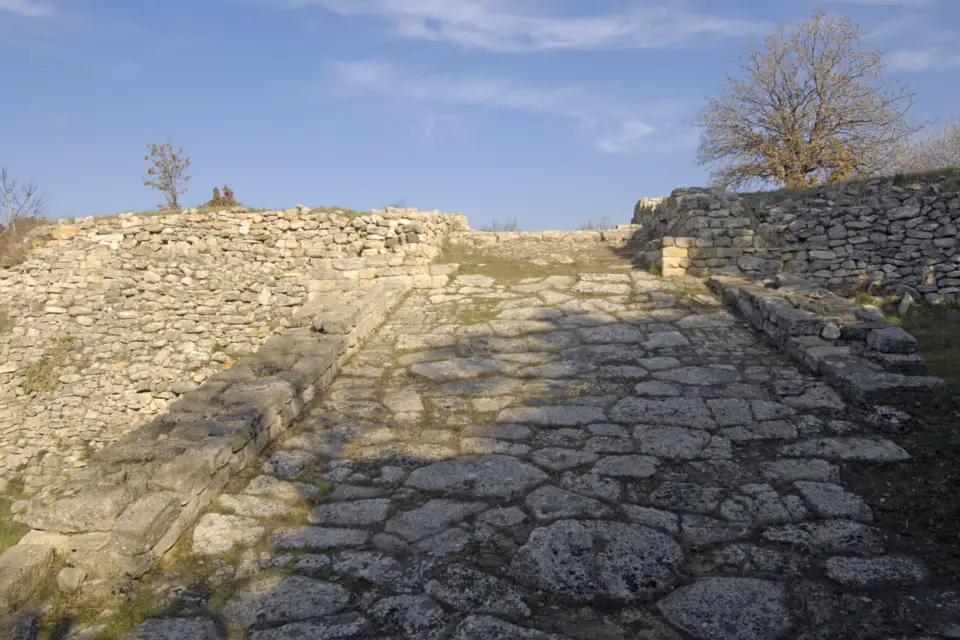
A paved stone ramp leads up to the citadel of Troy II. Schliemann believed this was the city of Priam, but later research showed it was about a thousand years too old. Even so, it remains one of the most photographed spots on the site.
In 1870, Schliemann cut a deep trench straight across the mound to reach the oldest layers. Today, the trench shows the cities stacked like the pages of a book. A covered area also protects the remains of an early hall and its wall.

Near the site entrance, the museum opened in 2018. Its cube-shaped building holds finds from the whole region. Here you see the pottery, jewelry and sculpture that give the walls their meaning.

Troy has two wooden horses, one at the site and one in Çanakkale. Near the site entrance stands the climbable horse, with a ladder and rooms inside, which children love. The second one stands 30 kilometers (19 miles) away on the waterfront of Çanakkale. It is the horse used in the 2004 film Troy. Locals meet under it, and it is a favorite photo in town.

Around the site, farms still cover the plain that once ran down to the sea, and the villages make well-known cheese.
Our notes for Troy and Çanakkale
Our suggestion Start with the Troy Museum at Tevfikiye to see what the mound once held, then walk the ruins with that picture in your head. Finish in Çanakkale with cheese halva by the water and the film horse at sunset.
From Çanakkale, it is also a short ferry ride across the Dardanelles to the Gallipoli peninsula. Our guides can combine Troy and Gallipoli in two easy days, or join our Gallipoli and Troy tour. Also from Çanakkale, our Gökçeada day trip takes the ferry to an island of hills and stone villages.
From Istanbul, our Troy day trip crosses the 1915 Çanakkale Bridge and includes the Troy Museum.
Because this is where the Iliad meets archaeology. Walk along the sloping walls of the Late Bronze Age city, look into Schliemann's trench at nine cities stacked like pages, then see the finds in the new Troy Museum.
Open in Google Maps (opens in a new tab) Open in Apple Maps (opens in a new tab)
Yes. The ruins at Hisarlık in Çanakkale province are widely accepted as ancient Troy, or Ilion, although no clear proof of the Trojan War itself has been found.
Archaeologists have found nine main layers, from Troy I, the oldest, to Troy IX, the Roman city, with many sublayers.
Yes, a large wooden horse stands near the entrance, with a ladder and rooms inside that visitors can climb.
Parts of the hoard that Schliemann found are in Istanbul, while most of the rest is in the Pushkin Museum in Moscow.
Yes. Opened in 2018 near the site, it holds finds from the whole region.
Nobody can prove it. The layer called Troy VIIa was destroyed with signs of an enemy attack, but there is no clear proof of a Greek war against the city.
 Tour
Gallipoli Day Trip from Istanbul: Anzac Cove, Lone Pine and Chunuk Bair
 Tour
Troy Day Trip from Istanbul: Nine Cities, Homer’s Legend and the Troy Museum
 Tour
Gallipoli and Troy Tour from Istanbul: Two Days on the Dardanelles
 Tour
Istanbul to Antalya Tour with a Blue Cruise: 9 Days
 Tour
All Around Turkey Tour with a Blue Cruise: 17 Days
 Tour
Istanbul to Fethiye Tour with a Blue Cruise: 12 Days
 Place
Bozcaada
 Place
Assos