Giresun Island
Giresun Island, the Island of Ares off the Black Sea coast: Amazon and Argonaut legends, a…
Photo: Listeningsea / Wikimedia Commons, CC BY-SA 4.0
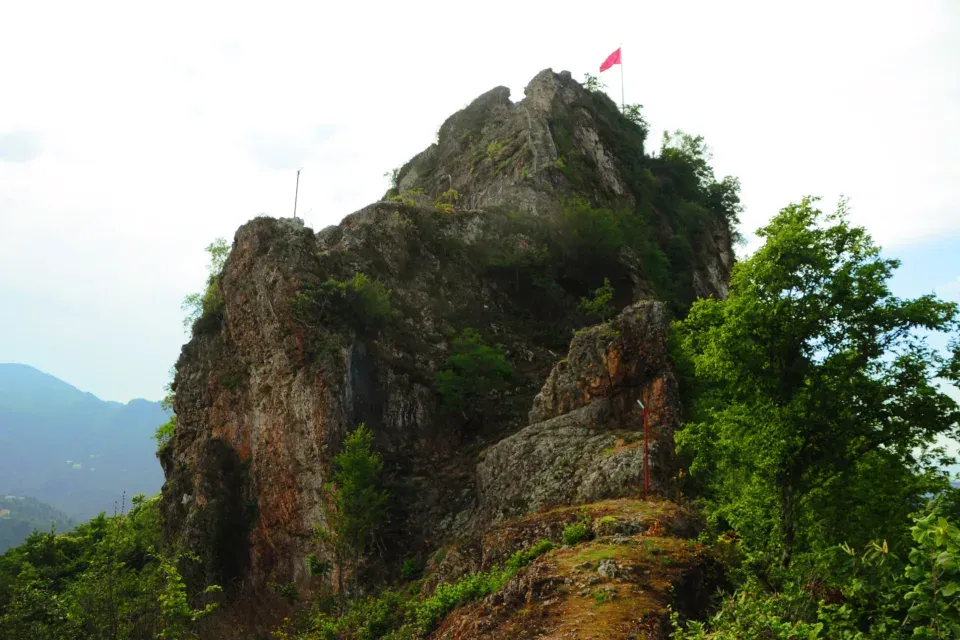
A walled castle on the volcanic high point of Giresun's peninsula, with cisterns, rock-cut spaces and a view over the city below.
Giresun Castle stands on a volcanic rock at the highest point of the peninsula that splits Giresun in two. The castle sits about 100 meters (328 feet) above sea level. Also, it stands in Kale neighborhood, above the city center. So, from the top, it looks out over the city below.
Its builders placed the castle to defend against attack from both sea and land. Rough-cut stone, laid without mortar, forms its walls. Their lines are rectangular, while in places they merge with the natural cliffs. Towers also rise within the walls. The walls run from the southwest and then around the city to the northeast.
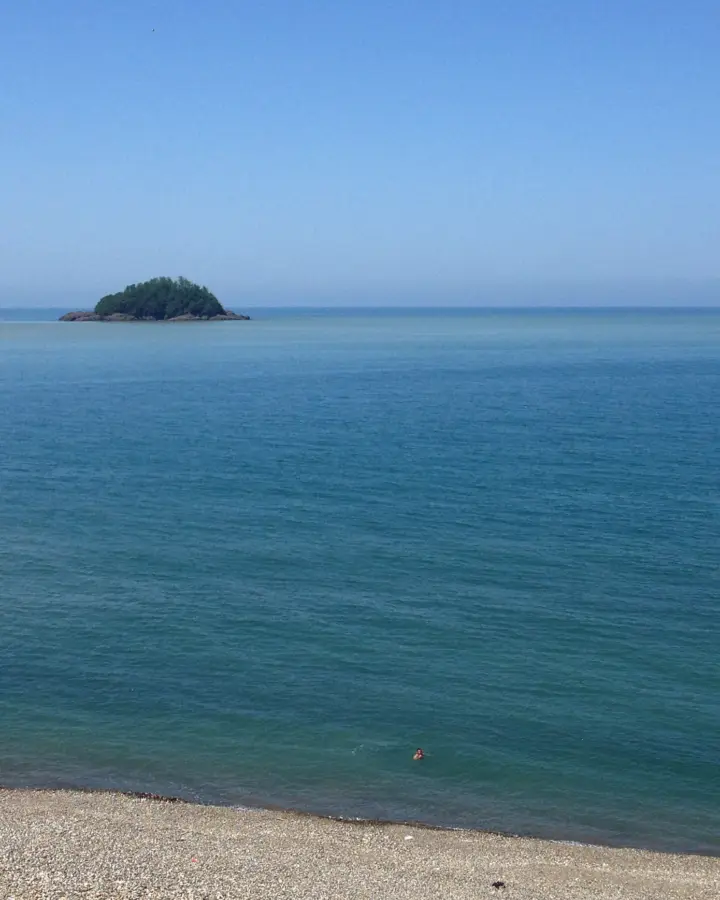
Off the city center, about 1.6 km (1 mile) out to sea, lies Giresun Island.
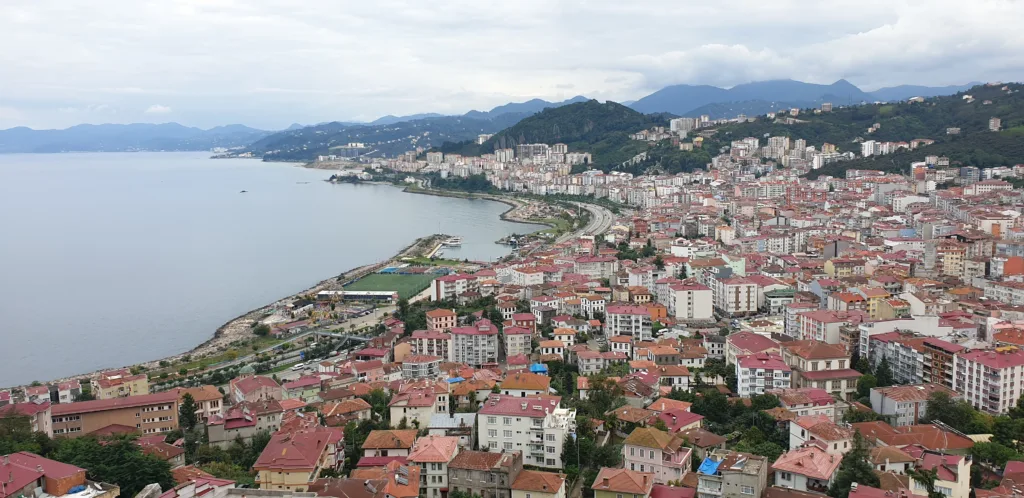
The castle has an inner and an outer section. Inside are cisterns, wells, watchtowers and caves. The ruins of a palace stand in the inner castle as well. The east side of the outer castle has two rock-cut areas. They hold benches, niches and traces of frescoes.
Today, the castle is also a first-degree protected site.
The city below the castle has an old name. In Greek it was Kerasous. The usual explanation ties it to the wild cherry of these slopes, while a second view links it to keras, the Greek word for horn. So, from the walls, you look over a city that carries a fruit in its name. Then, on the east side of the outer castle, find the two rock-cut areas with benches, niches and traces of frescoes.
Also, the castle is part of a longer walk. Below it lies the old quarter of Zeytinlik, with about 80 registered houses. Then comes the Giresun Museum in its 19th-century church. Across the water, Giresun Island lies about 1.6 km (1 mile) offshore.
Walk down to Zeytinlik and the Giresun Museum, take a boat to Giresun Island, or drive east to Bedrama Castle. For the whole province, see our Giresun guide and our Black Sea tour.
The date of the castle's founding is not known. In ancient times, people knew the place as the Bronze-Walled Castle.
Later, in the Byzantine period, a wide settlement grew up on the castle. For this reason, it is known as a kale-şehir, a castle-city.
Later, the castle lay within the borders of the Empire of Trebizond. Its key dates follow.
Giresun Castle, 1301 to 1756
Topal Osman Ağa's tomb stands in the castle grounds, which also hold a cemetery. His full name was Feridunzade Osman Ağa. He was the municipal head who organized local resistance in Giresun during the National Struggle.
In World War I he led local militias. He became mayor of Giresun after 1918. He also took part in the eastern-front activities of the Teşkîlât-ı Mahsûsa (Special Organization). In 1919, an Istanbul court-martial ordered his arrest, to be tried "as a deportation offender" (tehcir suçlusu olarak). The Ottoman cabinet pardoned him and 168 others on July 7, 1919.
On March 27, 1923, Ali Şükrü Bey, a deputy for Trabzon, was called away and strangled at Osman's house. His body was found outside Ankara, near Mühye village. An arrest order for Osman followed, and he died in a clash with the Presidential Guard on April 2, 1923. His first grave was at the castle. Later, Atatürk ordered the grave moved to its present place inside the castle.
Giresun Island, the Island of Ares off the Black Sea coast: Amazon and Argonaut legends, a…
Today, the castle is also a picnic and excursion area. Visitors reach it on foot or by kale dolmuşları. These shared minibuses run up to the castle from the city center. No ticket is needed, and there is a tea garden in the castle grounds. Check current hours locally before you go.
Updated:
Open in Google Maps (opens in a new tab) Open in Apple Maps (opens in a new tab)
On the highest point of the peninsula in the center of Giresun, about 100 m (330 feet) above the sea, in Kale neighborhood.