Neighborhood
Balat
Beyond the colorful houses: a ship-shaped synagogue pulpit, an iron church from Vienna and the only…
Photo: Dosseman / Wikimedia Commons, CC BY-SA 4.0
A Byzantine church by the Golden Horn, turned into a mosque after 1453, with a high vaulted basement, an Ottoman dome and old stories of roses.
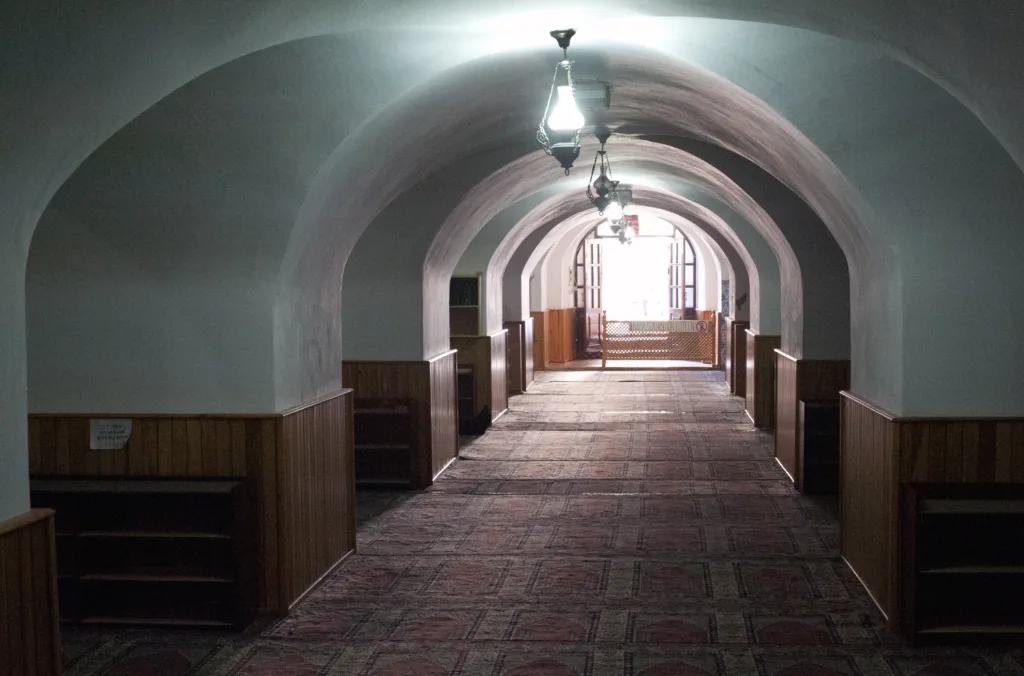
The Gül Mosque, the "Rose Mosque," stands by the Golden Horn in the Ayakapı quarter of Istanbul. It began as a Byzantine church, and in the late 15th century the Ottomans turned it into a mosque. Its tall brick walls rise from a high vaulted basement, and an Ottoman dome now crowns it. Old stories of roses, a saint and a hidden tomb still cling to it.
The mosque sits on the slope above the Golden Horn, in Fatih. The quarter takes its name from Ayakapı, the "Holy Gate," which was probably first named after the saint of this church. Upstream lie the colorful streets of Fener and Balat.
Quick facts
No record names the church for certain. Tradition calls it the church of Hagia Theodosia, a saint of Constantinople, while some scholars link it to the monastery of Christ Euergetes. The building probably dates from the 10th or 11th century. In the Middle Ages, Russian pilgrims came here to see the relics of Saint Theodosia.
After the conquest of 1453, the Ottoman navy used the basement as a store. Then, in the late 15th century, the church became a mosque, although later books give the reign of Selim II. In the 19th century, Sultan Mahmud II repaired it and added a royal loge for the sultan.

The mosque rises on a high terrace over a vaulted basement. Above it, the church keeps its cross-in-square plan and three apses at the east end. The pointed arches and the low dome, however, are Ottoman work. So, as you look up, you see two empires in one building.
The name comes with a story. On 29 May 1453, the day the city fell, the church was said to be full of roses for the saint's feast. Another tradition links the name to a holy man called Gül Baba. Local people believe his tomb lies under the small dome to the right of the mihrab (the niche that shows the direction of prayer). A late Ottoman tale even placed the last Byzantine emperor, Constantine XI, here, but nothing supports it.
Gül Mosque is a working mosque, so we plan your visit outside prayer times for Istanbul; ask us to confirm before you plan a visit. Before you go, read our guide to mosque etiquette in Istanbul for what to wear and how to behave inside.
The Gül Mosque fits well into a walk along the Golden Horn. From here, you can continue to Fener and Balat, or climb to the Zeyrek Mosque, another Byzantine church turned mosque.
Updated: October 29, 2026.
Would you like to see the Rose Mosque and its stories? We can add it to our Byzantine churches of Fatih tour or our Balat and Fener tour. Either tour can take in the Rose Mosque; pick one and give us the date.
Neighborhood
Beyond the colorful houses: a ship-shaped synagogue pulpit, an iron church from Vienna and the only…

Fener on the Golden Horn, Istanbul's historic Greek quarter: the Ecumenical Patriarchate, the red-brick Phanar College…

The Golden Horn, Istanbul's historic harbor: the Byzantine chain, Mehmed II's ships hauled overland, Leonardo da…
Open in Google Maps (opens in a new tab) Open in Apple Maps (opens in a new tab)
Gül means rose. One story says the church was full of roses for its saint's feast on 29 May 1453, the day the city fell. Another links the name to a holy man called Gül Baba.
Yes. It was a Byzantine church, probably of the 10th or 11th century. Tradition names it after Saint Theodosia, though its Byzantine name is not known for certain.
In the late 15th century. Some later books place the change in the reign of Selim II.
Yes. Local people believe the tomb under the small dome to the right of the mihrab belongs to Gül Baba.
The Gül Mosque is a working mosque, so if it is open, visit outside prayer times and dress for a mosque. Ask us to confirm before you plan a visit.
 Tour
Byzantine Istanbul Private Tour: Constantinople Beyond Hagia Sophia
 Tour
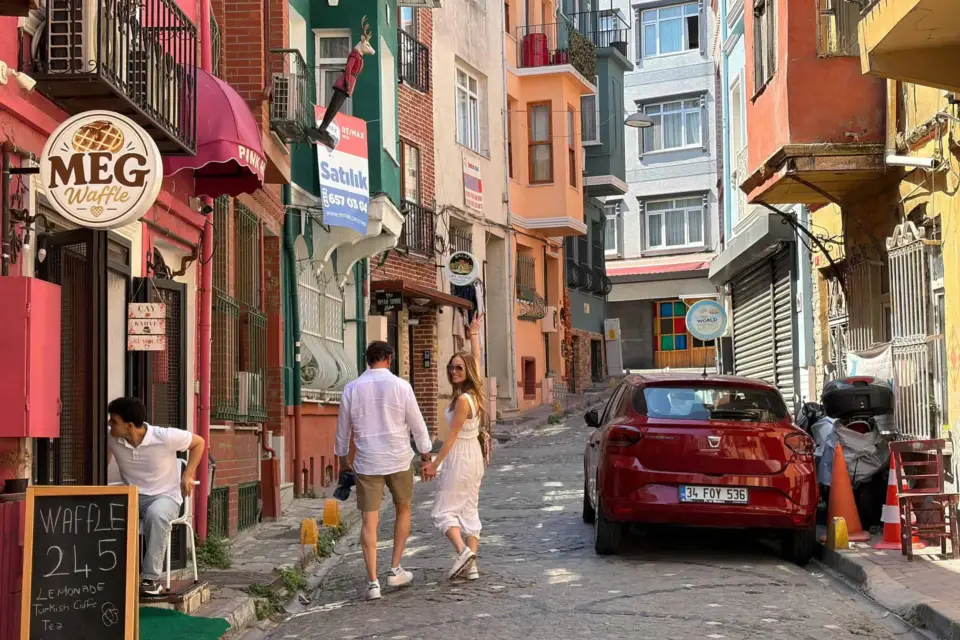
Private Balat and Fener Walking Tour in Istanbul
 Tour
Private Byzantine Churches Tour in Fatih: Hidden Istanbul
 Place
Yavuz Selim Mosque
 Place
Üç Şerefeli Mosque
 Place
Sabancı Central Mosque
 Place
Hunat Hatun Complex
 Place
Old Mosque, Edirne