Photo: Dosseman / Wikimedia Commons, CC BY-SA 4.0
Iasos
A city that grew rich on fish, a boy who rode a dolphin, and ruins running down to an Aegean gulf.
Overview
At the end of a road through olive groves north of Bodrum, a small village sits on a bay of turquoise water. Fishing boats tie up at the quay, and above them, old walls climb a rocky hill. Walk up, and you find yourself among the stones of a city that lived from the sea for three thousand years. This is Iasos, beside the village of Kıyıkışlacık. From Bodrum, join our Euromos and Milas tour.
- Good for
- Ruins by the sea, village life, a fish lunch
- Best combined with
- Labraunda, Euromos, Bodrum
The Story of Iasos
The city first stood on a small island in the gulf, which is now joined to the land by a narrow neck. Settlers from Argos founded it, and later more Greeks came with the son of Neleus, the founder of Miletus. However, archaeology tells a much older story.
Older than the Greeks
Excavations show that people lived here from the Early Bronze Age, and early Iasos looked across the sea to the Cyclades islands. Then, in the 1970s, Italian archaeologists found Mycenaean buildings, and below them two levels with Minoan pottery.
A city of fishermen
The town was small, but it grew rich from its fisheries and its trade in fish. Later, it joined the Delian League, and in the Peloponnesian War the Spartans took and plundered it. It passed to the Carian dynasty of Mausolus, then to Alexander the Great. The city emptied in the 15th or 16th century, in Ottoman times.
The Boy and the Dolphin of Iasos
Ancient writers told a lovely story about Iasos. A boy of the town, usually called Hermias, swam every day with a dolphin that came when he called. In some versions, the boy drowned, and the grieving dolphin followed him onto the beach. Either way, the people of Iasos loved the tale, so they put a boy riding a dolphin on their coins.
What to See at Iasos
The Byzantine gate
First, enter through the Byzantine gate, an arch of rough stone that leads into the site among the olive trees.

The council house and the agora
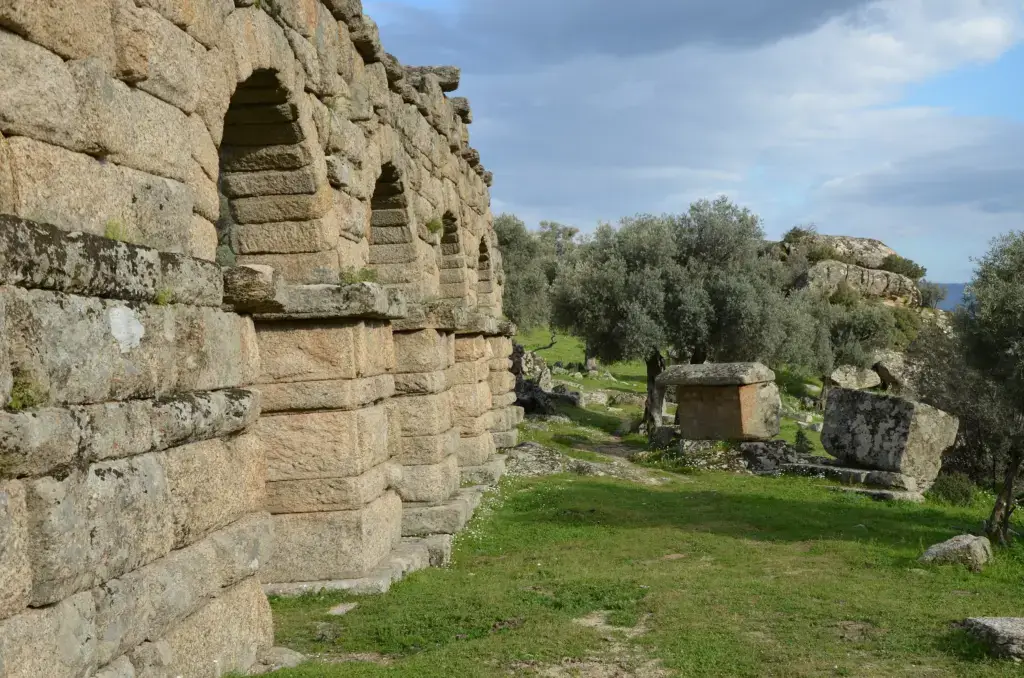
Next, find the agora and the council house, with its vaulted passages and stairways. Look for the Stoa of Artemis and the Roman villas, and climb to the walls for the view over the gulf.

The temple tomb
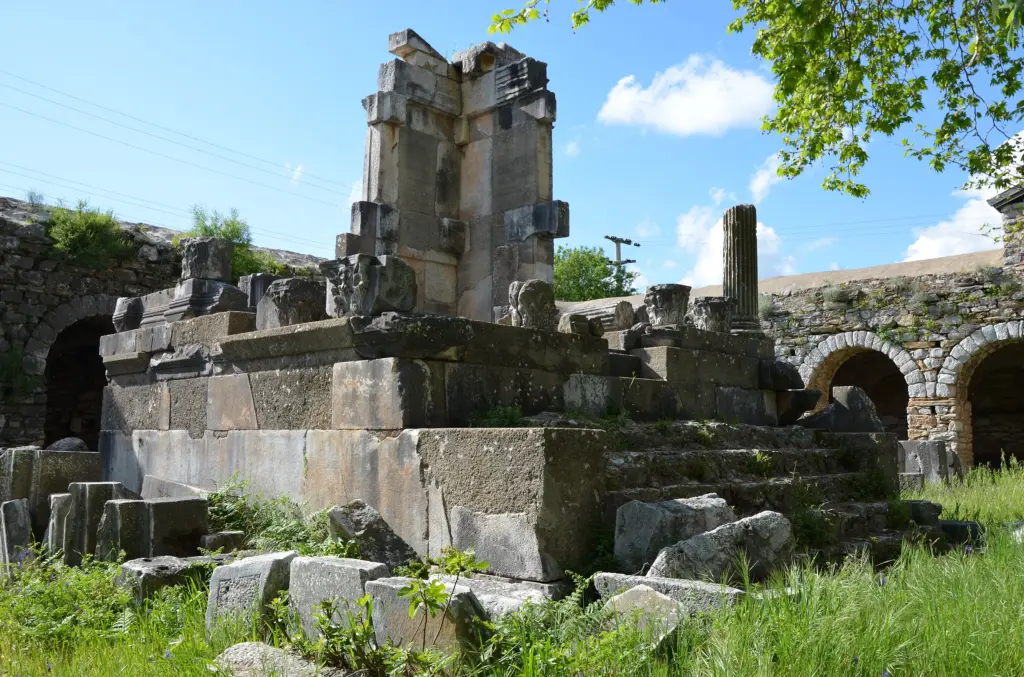
Also, do not miss the Roman tomb built like a small Corinthian temple on a very high podium. Besides, look closely at the stone: the hills nearby gave a marble of blood red and white, which the ancients prized for decoration.
The Fish Market and the Harbor of Iasos
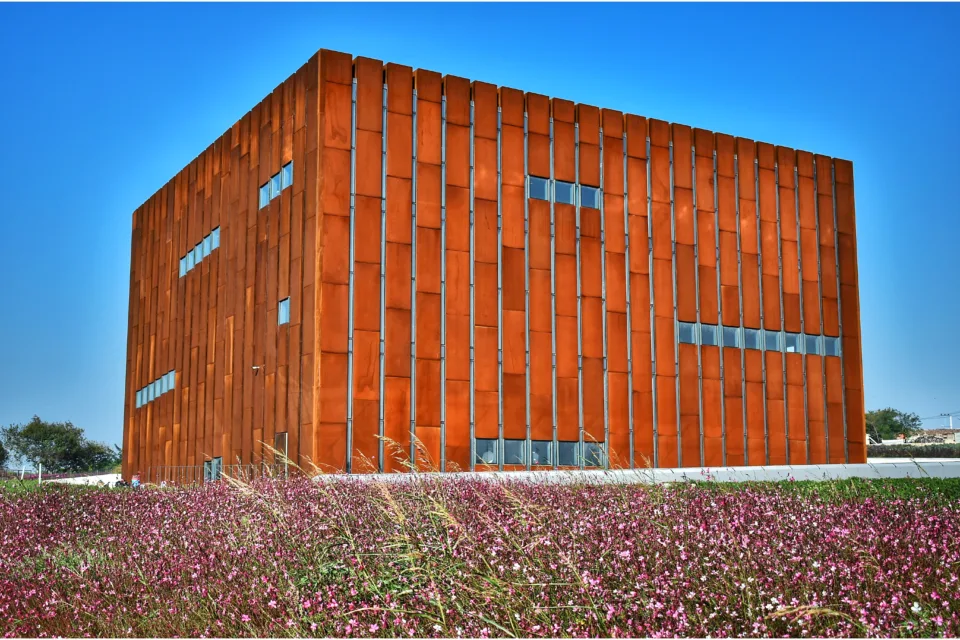
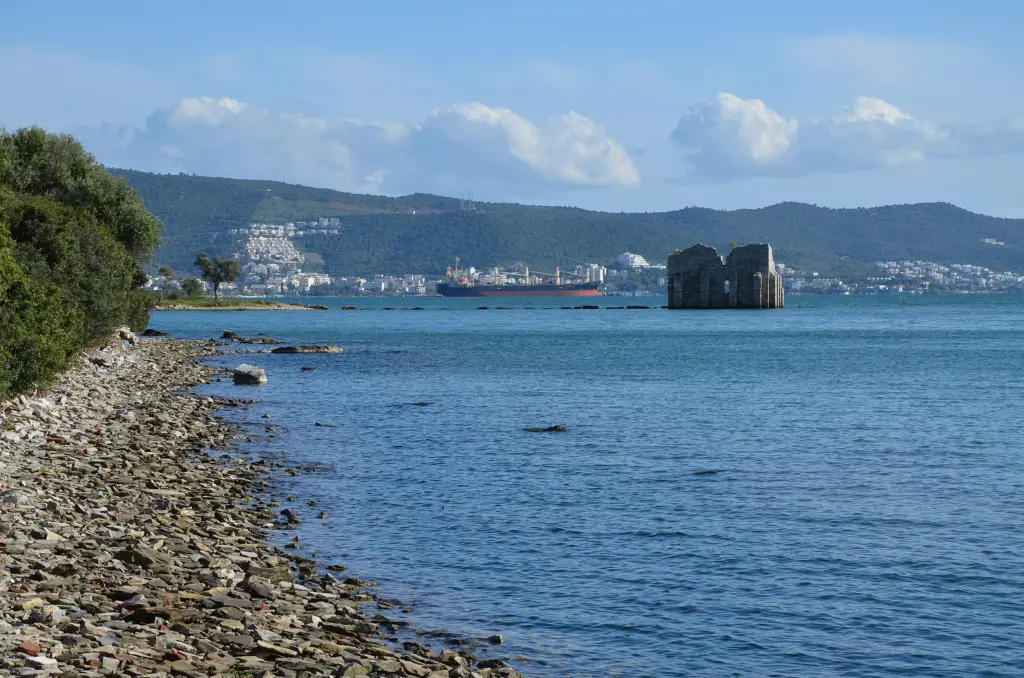
Outside the walls, the building long called the fish market turned out in the excavations to be a Roman tomb of the 2nd century AD: a temple-shaped monument set among arched porticoes in a square court. Restored, it opened in 1995 as the Fish Market Open-Air Museum. About 1 km (0.6 mile) away, in the cemetery, another Roman tomb of the 2nd century, known as the Clock Tower, has two rooms one above the other under a small dome. In the harbor, two piers of the early Roman Empire now lie under water, and they controlled the way in and out rather than breaking the waves. Then, in the Middle Byzantine period, a mole tower with two rows of loopholes was added to the small eastern harbor.
Digging Iasos
The French traveler Charles Texier studied the site in 1835. Since 1960, Italian archaeologists of the Italian School of Archaeology at Athens have dug here, first under Doro Levi, then Clelia Laviosa and Fede Berti.
Our notes for Iasos
- VillageKıyıkışlacık sits right beside the ruins.
- RainIn legend, the rain never touched a statue here.
- CoinsLook for the boy on a dolphin in museum coin cases.
- ShadeOlive trees cover much of the site.
Our suggestion Walk the ruins in the morning, then take a long fish lunch on the quay of Kıyıkışlacık, the way the people of Iasos lived from this gulf.
How to Visit Iasos
Iasos lies in the Milas district of Muğla Province, about 28 kilometers (17 miles) from Milas, across the gulf from Güllük. We arrange your visit to Iasos on a day from Bodrum.
Then combine it with the mountain sanctuary of Labraunda, the temple of Euromos and the tomb of Mausolus at the Mausoleum at Halicarnassus in Bodrum. For more of this land, see our collection on Carian heritage, or join our Iasos tour.
Because here the ruins walk straight into the sea. Climb to the old walls above the gulf, find the tomb shaped like a little temple, then sit down for fish in the village harbor, as people have done at Iasos for three thousand years.
Map
Open in Google Maps (opens in a new tab) Open in Apple Maps (opens in a new tab)
Frequently asked questions
Where is Iasos?
On the Gulf of Güllük in the Milas district of Muğla Province, beside the village of Kıyıkışlacık, about 28 kilometers (17 miles) from Milas.
Was Iasos an island?
Yes. The city first stood on a small island, which is now joined to the mainland by a narrow neck of land.
What is the legend of Iasos and the dolphin?
Ancient writers told of a boy of Iasos, usually named Hermias, who swam every day with a dolphin. The image of a boy riding a dolphin appears on the coins of the city.
Who excavates Iasos?
Italian archaeologists have dug here since 1960, first under Doro Levi, on behalf of the Italian School of Archaeology at Athens.
What is the Fish Market at Iasos?
A Roman tomb of the 2nd century AD, long thought to be a fish market; restored, it opened in 1995 as an open-air museum.