

Bursa Grand Mosque
The Bursa Grand Mosque (Ulu Cami): Bayezid I's mosque of twenty domes from 1400, with a…
Photo: Dosseman / Wikimedia Commons, CC BY-SA 4.0
Ancient Nicaea on its lake: the town of the Nicene Creed, an early Ottoman capital and the birthplace of Iznik tiles.
On the shore of a wide lake, a small farming town sits inside Roman walls. Yet this is Nicaea, where in 325 the bishops of the Christian world met and wrote the first part of the Nicene Creed. Later, the town gave its name to the celebrated tiles of the Ottoman Empire. Iznik is small, but it holds a great deal of history in a few streets. Still deciding? Read Is Iznik worth it?
Walk through a Roman gate, visit a Byzantine church that became a mosque, and end the day watching the sunset over Lake Iznik.
Iznik, written İznik in Turkish, is a district town of Bursa province. It lies in a fertile basin at the eastern end of Lake Iznik, with hills to the north and south. As the crow flies, it is only 90 kilometers (56 miles) southeast of Istanbul. By road, however, the trip is about 200 kilometers (124 miles) around the Gulf of İzmit, and Bursa is 80 kilometers (50 miles) away.

The modern name comes from the Greek Nikaia, with a prefix meaning “to”. Today the old walls still ring the town, although roads now pierce them in places.
Iznik in numbers
Antigonus, one of Alexander’s generals, founded Nicaea in 316 BC. In 325, Emperor Constantine the Great called the First Council of Nicaea here. At least 200 bishops attended, and they settled a dispute over the nature of Christ, wrote the first part of the Nicene Creed and set a common date for Easter. Then, in 787, the Second Council of Nicaea met in the town’s Hagia Sophia.
In 1331, Orhan took the city from the Byzantines, and for a short time it served as the capital of the young Ottoman state. Soon after, the Moroccan traveler Ibn Battuta stayed here. He found the town in ruins but full of gardens and orchards, producing walnuts, chestnuts and large sweet grapes.
From the 15th century, Iznik became a center of pottery and tile making. Its Iznik tiles decorated many of the mosques that Mimar Sinan designed in Istanbul. Even then, though, the town stayed small: in the 16th century it had about 2,000 people. In the 17th century, the industry declined, and when the railway bypassed Iznik in the 19th century, it became a farming town.

In the middle of town, Justinian I built a church of Holy Wisdom in the 6th century. After 1331, Orhan turned it into a mosque. Today, after a controversial rebuilding, it is the Ayasofya Mosque again, and traces of Byzantine frescoes survive inside.
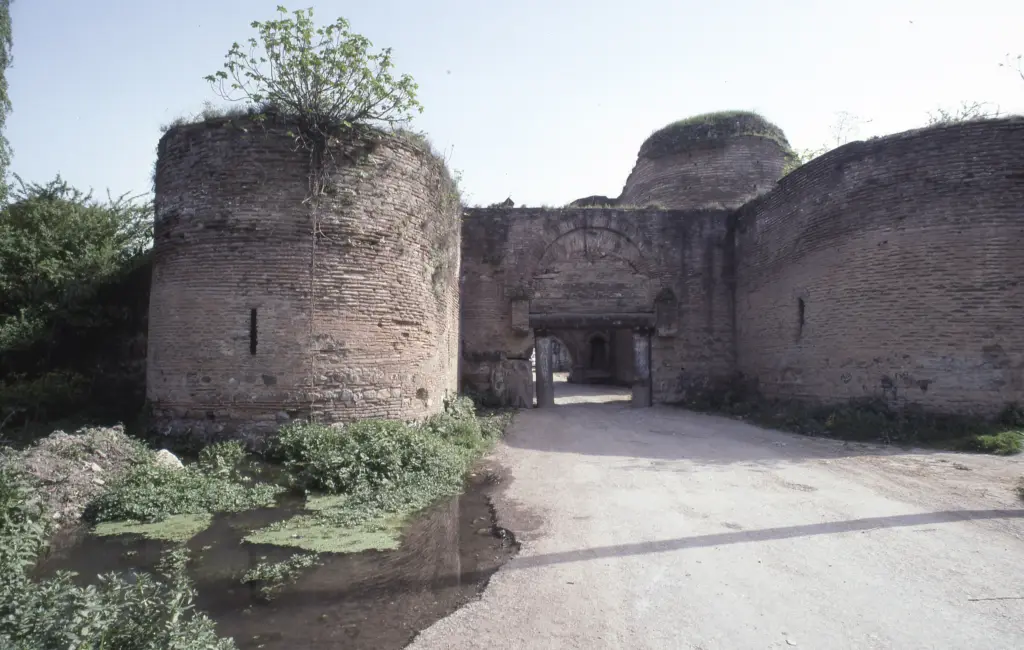
At first, 5 kilometers (3 miles) of walls about 10 meters (33 feet) high ringed the city, with more than 100 towers and a double ditch. Three great gates opened on the land sides, while the western walls rose from the lake. Today the walls are ruined, but enough survives for a fine walk.
Near the Lefke Gate, the Green Mosque was built between 1378 and 1391 for Çandarlı Kara Halil Hayreddin Pasha, the first Ottoman grand vizier. Nearby stands the small Hacı Özbek Mosque from the early Ottoman years. Look also for the Süleyman Pasha Madrasa from the mid-14th century.

Built as a public kitchen, the Nilüfer Hatun Imaret is now a museum. Elsewhere in town, slight traces remain of the kilns that once fired the famous tiles. Finally, the ruins of the Basilica of Saint Neophytos are thought to mark the meeting place of the First Council.
Since the railway passed it by, Iznik has lived mostly from farming, olives and the lake.

The lake also keeps a secret. A few meters off the shore lie the remains of an early church, the Basilica of Saint Neophytos, under the water.
The tile-making has come back to life. In the 1990s, the Iznik Foundation began to rediscover the old quartz-based recipes with scientists and master potters. Today, its workshops by the lake make tiles for historic buildings around the world, and each one takes weeks to finish. From Istanbul, see our Nicaea day trip.
Our notes for Iznik
Our suggestion Come as a day trip from Bursa or Istanbul. Walk in through the Istanbul Gate, see Hagia Sophia and the Green Mosque, eat köfte for lunch, and end at the lake shore near the sunken basilica for the sunset.
Because few small towns carry such weight in world history. Enter through a Roman gate, stand in the Hagia Sophia where the Second Council met, and watch the sun set over Lake Iznik.
The Bursa Grand Mosque (Ulu Cami): Bayezid I's mosque of twenty domes from 1400, with a…

The Green Mosque in Bursa (Yeşil Camii), built for Mehmed I from 1412: gold-glazed green tiles…

Mosque
Fifteen centuries in one building: Justinian's great church, an Ottoman mosque, a museum and a mosque…
Open in Google Maps (opens in a new tab) Open in Apple Maps (opens in a new tab)
Yes. The town stands on the site of Nicaea, founded in 316 BC, and its name comes from the Greek Nikaia.
In 325, at least 200 bishops called by Emperor Constantine wrote the first part of the Nicene Creed and set a common date for Easter.
About 90 km (56 miles) as the crow flies, but about 200 km (124 miles) by road around the Gulf of İzmit.
The historic industry declined in the 17th century, but since the 1990s workshops by the lake have made tiles again with the old quartz-based recipes.
 Journey
Istanbul, Bursa and İznik in 3 Days: A Private Tour of Early Ottoman Capitals
 Tour
The Sultanate of Women Private Tour: Hürrem, Kösem and the Harem
 Tour
Islamic Heritage of Istanbul Private Tour: Mosques, Relics and Sufi Lodges
 Tour
Hagia Sophia and Blue Mosque Private Tour
 Tour
Topkapı Palace Private Tour with the Harem
 Tour
Mimar Sinan Private Tour: The Great Mosques of Istanbul’s Master Architect
 Tour
Private İznik Day Trip from Istanbul: Nicaea, Tiles and the Lake
 Person
Mimar Sinan
