
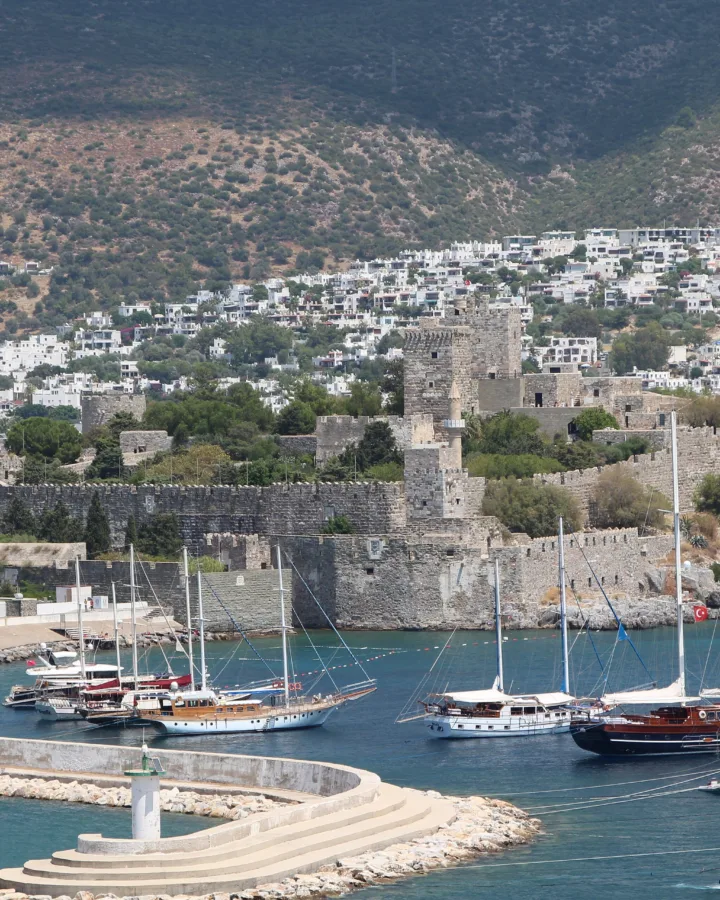
Bodrum Castle
Bodrum Castle, the Castle of St. Peter built by the Knights of St. John with stones…
Photo: Turkey Your Way
A Greek city at the end of the Datça peninsula, with twin harbors, a theater over the sea and the temple of Praxiteles' Aphrodite.
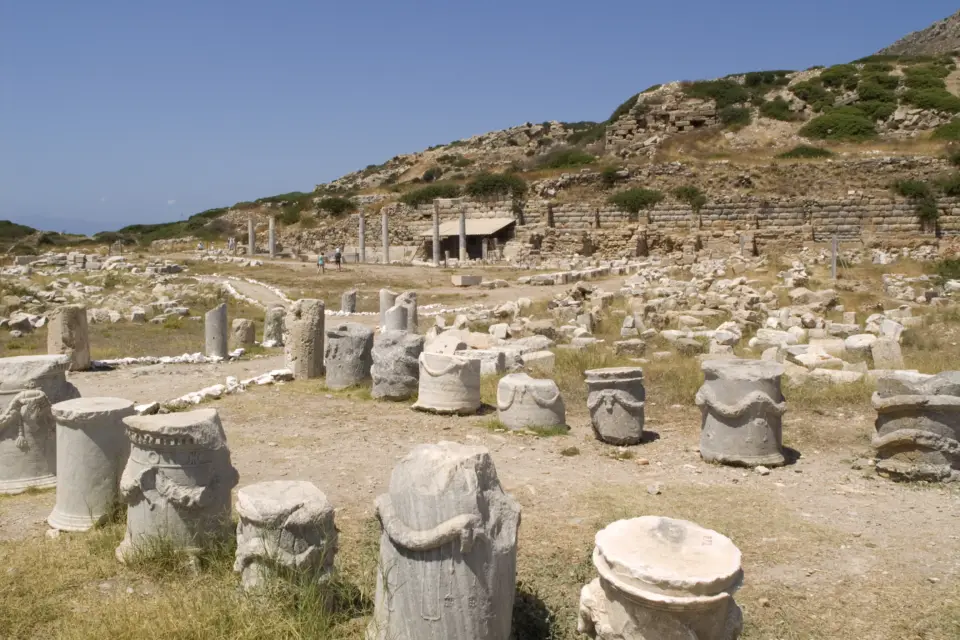
At the very tip of the Datça peninsula, a whole Greek city spills down a hillside to two ancient harbors. Marble theater seats look out over the water, and the round base of a temple stands on a terrace above the sea. This is Knidos, home of Praxiteles’ celebrated Aphrodite. For a day at the tip of the peninsula, join our Knidos day trip.
Come by road through the almond groves of the peninsula, or by boat into the old harbor, and stay for the sunset over the sea.
It was a Greek city of ancient Caria, at the site of modern Tekir, opposite the headland once called Triopion, today Cape Krio. Back then, a causeway and bridge joined the headland to the mainland and split the channel into two harbors. Today a narrow sandy isthmus links them, and two strong moles still largely enclose the larger, southern harbor.
In size, the city was nearly a mile long, and ruins still cover the whole area inside its walls. Around the acropolis, the walls survive remarkably well. Earlier, the city probably stood near today’s Datça, halfway along the peninsula.
Knidos in numbers
It was a Dorian city, by tradition founded by colonists from Sparta. Later, together with Halicarnassus, Kos and the three Rhodian cities of Lindos, Kamiros and Ialyssos, it formed the Dorian Hexapolis. There, the six cities held their assemblies and games for Apollo, Poseidon and the nymphs on the Triopian headland.
Thanks to its position, the city grew rich on trade and even founded colonies on Lipari and in the Adriatic. Later, it submitted to Persia and then to Athens, and the Romans rewarded its help against Antiochus III by leaving it free. In the Hellenistic age, it also had a medical school.
The astronomer Eudoxus came from here, and so did Sostratus, who built the famous Pharos, the lighthouse of Alexandria. Even Artemidorus, a minor character in Shakespeare’s Julius Caesar, was a Knidian.
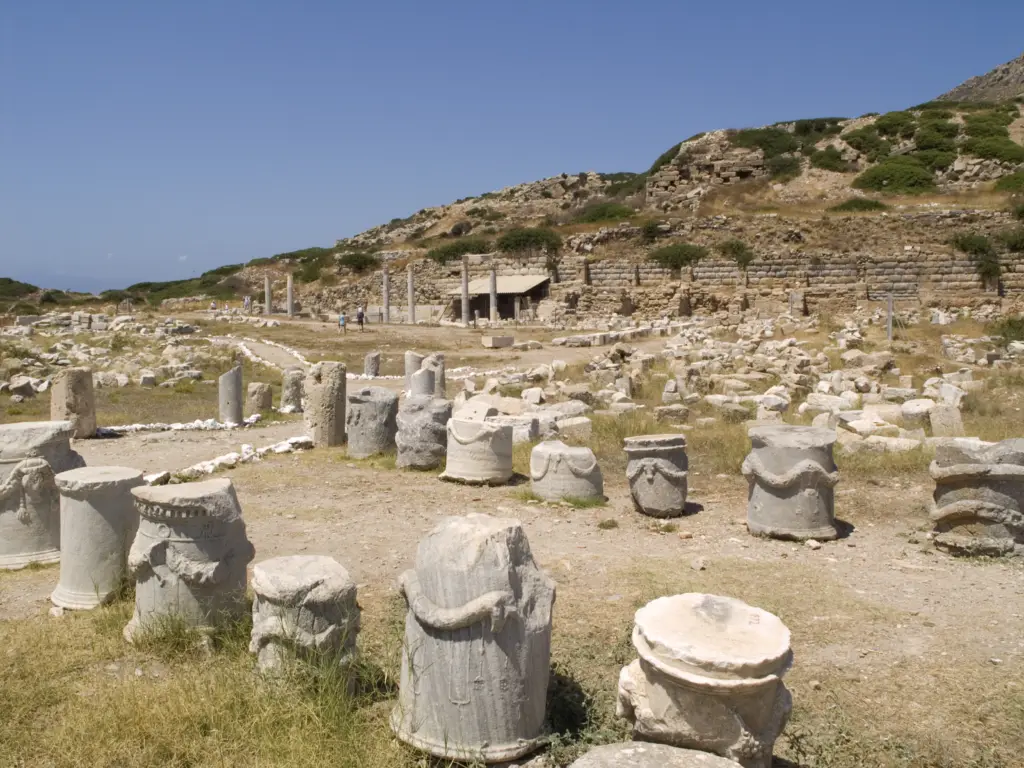
Over the years, excavators have identified the agora, a theater and a smaller odeon, along with many other buildings, so the plan of the city is clear. Much of the great theater is gone: its stones were carried off for Dolmabahçe Palace in Istanbul and for Mehmed Ali Pasha’s palace and mosque in Cairo. From the seats of the smaller theater, you look down on the twin harbors.
Besides the theaters, Knidos also had temples of Dionysus, of the Muses and of Aphrodite. For Aphrodite, Praxiteles carved his most famous statue, the Aphrodite of Knidos. Sadly, the original is lost, but late copies survive, and a well-known one is in the Vatican Museums.

In the 19th century, Charles Newton excavated here. In a temple enclosure, he found the seated Demeter of Knidos and sent it to the British Museum. About three miles southeast of the city, he also found a colossal marble lion, perhaps a memorial to the naval Battle of Cnidus. Today the Knidos Lion stands in the Great Court of the British Museum.
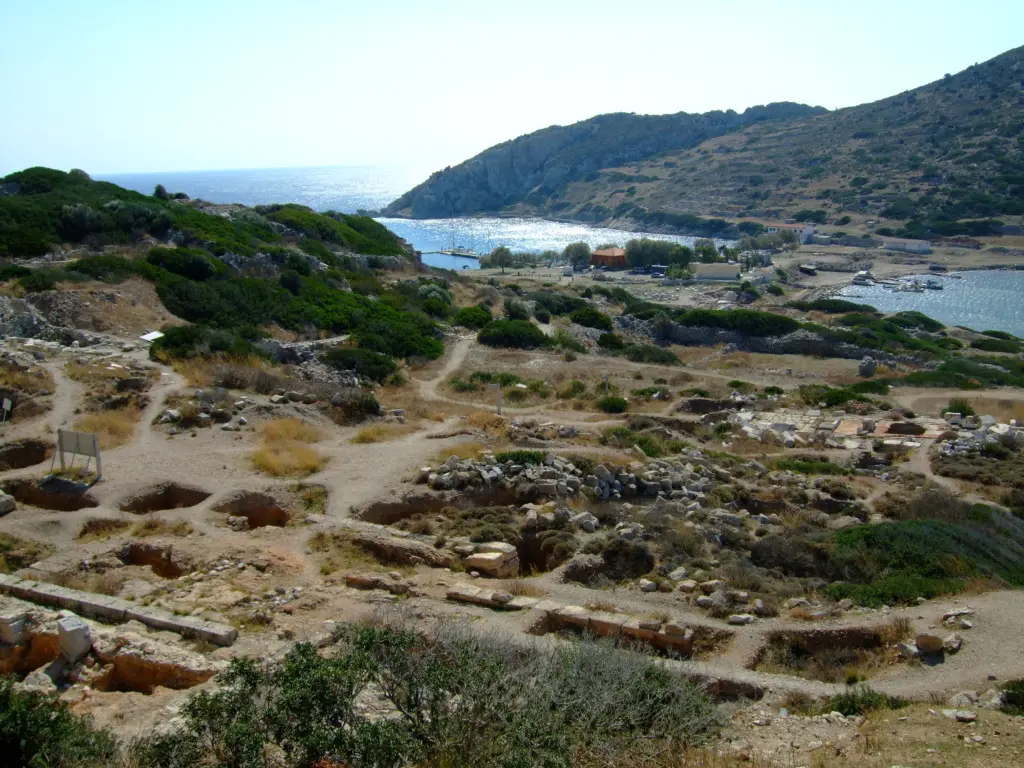
The site lies on the southern side of the Gulf of Gökova, at the end of the Datça peninsula. Today, the old harbors still shelter boats, and the ruins glow at sunset.
Our notes for Knidos
Our suggestion Arrive in the late afternoon, walk down through the terraces to the two harbors, and sit in the theater for the sunset over the open sea.
Because few ancient cities end at two harbors like this. Climb the marble seats of the theater, find the round base of Aphrodite's temple, and watch the sun go down over the sea.
Bodrum Castle, the Castle of St. Peter built by the Knights of St. John with stones…

Nature
A slender peninsula between two seas: clear bays, almond groves, the stone village of Eski Datça…
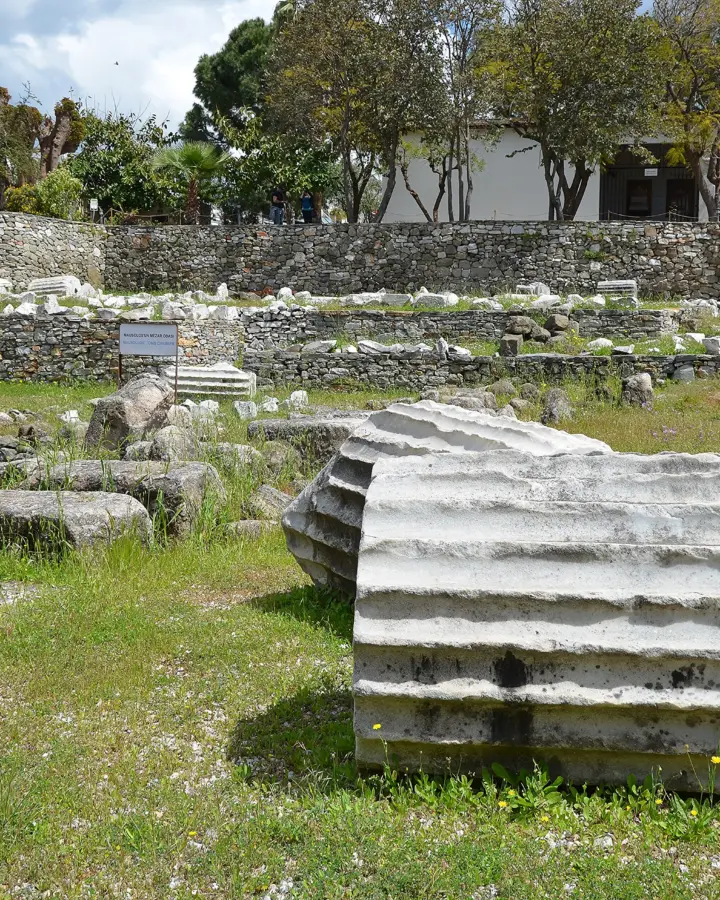
The Mausoleum at Halicarnassus in Bodrum, the tomb of King Mausolus and a Wonder of the…
Open in Google Maps (opens in a new tab) Open in Apple Maps (opens in a new tab)
At Tekir, at the western tip of the Datça peninsula in Muğla province, southwestern Turkey.
For the Aphrodite of Knidos by Praxiteles, its twin harbors, its theaters and its role in the Dorian Hexapolis.
The Demeter of Knidos and the Knidos Lion are in the British Museum; a well-known copy of Praxiteles' Aphrodite is in the Vatican Museums.
Drive west from Datça town to Tekir, or arrive by boat in the ancient harbor.
 Tour
Private Knidos Day Trip: Ancient City at the Tip of Datça
 Tour
Private Gulet Charter: Bodrum, Datça Coves and Knidos
 Tour
Private Gulet Charter: Bodrum to Marmaris by Knidos, 8 Days
 Place
Bays of the Gulf of Hisarönü
 Article
Marmaris or Fethiye: Which Harbor Town Suits You?
 Place
The Carian Trail
 Place
Akyaka
 Place
Beçin Castle
