

Neighborhood
Mardin Old Town
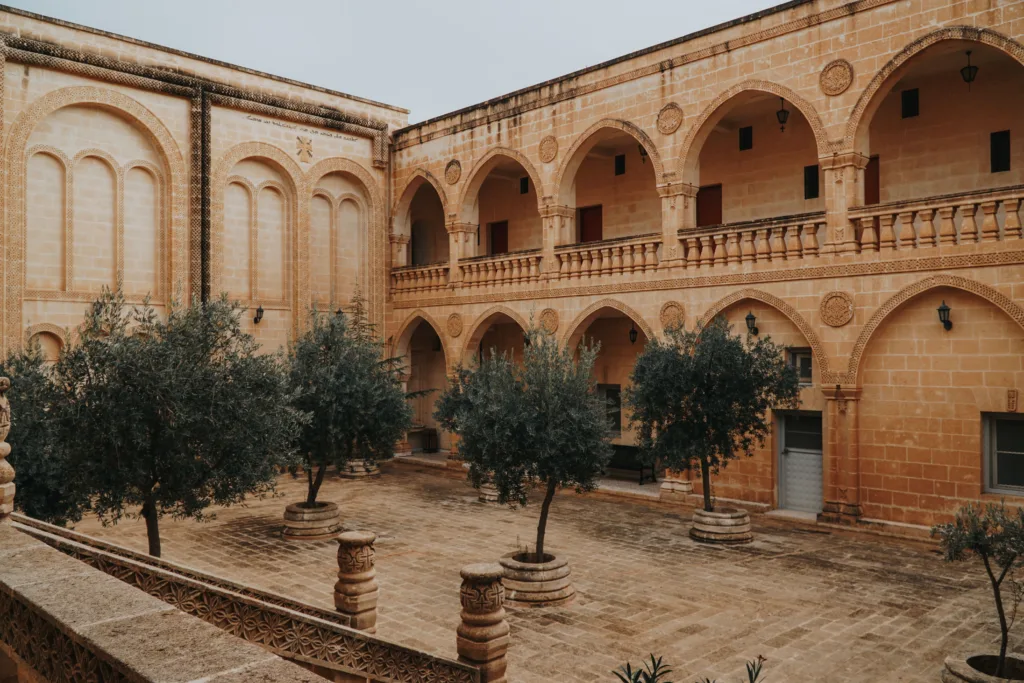
A city of honey-colored stone above the Mesopotamian plain: Artuqid madrasas, a Syriac monastery that was…
Türkiye GMT+3
Monday, November 9, 2026
Replies within 24 hours
Photo: Turkey Your Way
The Syriac Orthodox heart of Tur Abdin: a monastery that has prayed in Syriac for more than 1,600 years and still teaches the language.
Monks have prayed on this limestone plateau since the year 397. Mor Gabriel Monastery, near Midyat in southeastern Turkey, was founded in 397, and monks still live here today. Its bell towers still rise over the plateau of Tur Abdin, and the monks still sing the liturgy in Syriac.
Inside the walls you find a 6th-century church with rare Byzantine mosaics, a brick dome linked to Empress Theodora and a crypt where the community buried its bishops sitting upright. So come with time and respect, because this is a working monastery and a school, not a museum.
The monastery stands near the village of Güngören in the Midyat district of Mardin province. The plateau around it, the Tur Abdin, has been the heartland of Syriac Orthodox Christianity for centuries. Mor Gabriel is also the seat of the Metropolitan of Tur Abdin.
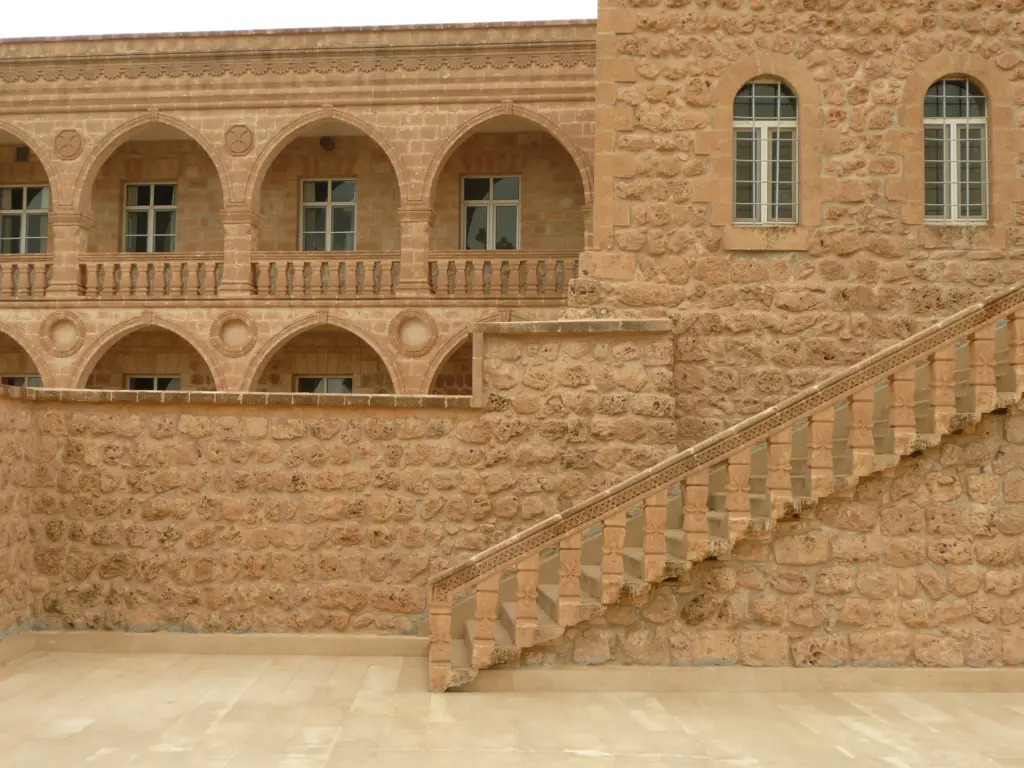
The complex has two parts: the lower historic section and the upper buildings added in the last century. Visitors are welcome, and the monastery receives tens of thousands of guests a year.
Mor Gabriel in numbers
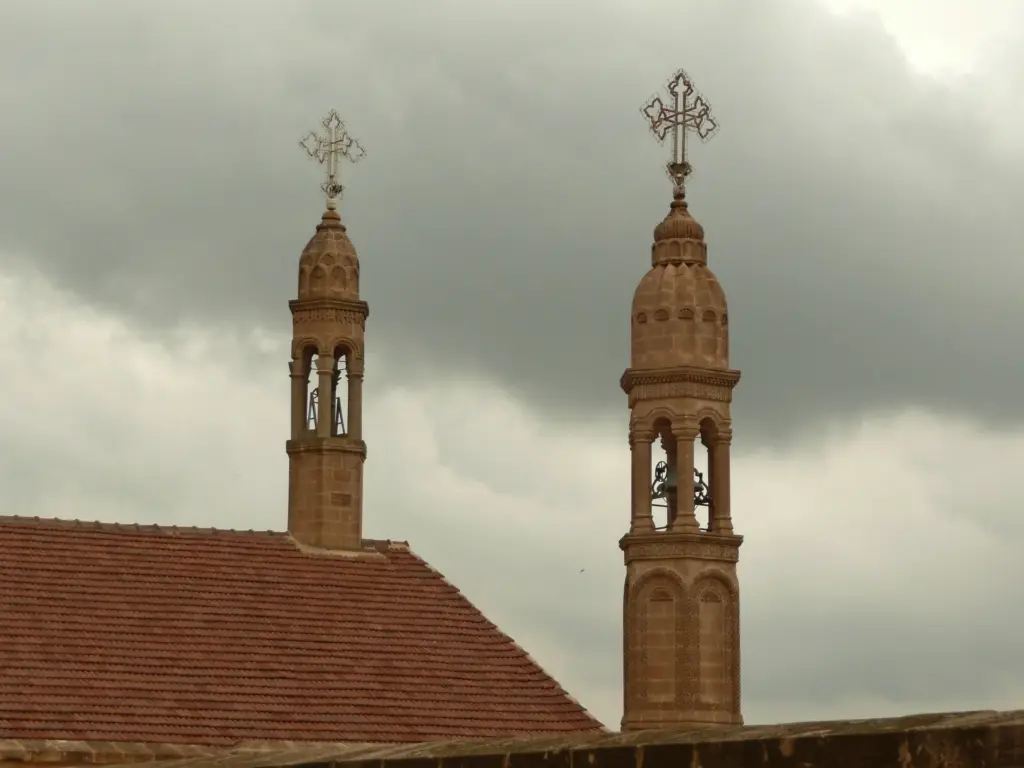
The monk Shmuel fled into these hills in the late 4th century and settled near the village of Qartmin. There his disciple Shem’un saw an angel in a vision, who told him to build a place of prayer further west. Together they founded the monastery in 397, on a site where an older, pre-Christian temple had stood.
Its fame grew quickly. Roman emperors from Arcadius and Honorius to Theodosius II and Anastasius sent gifts, and by the 6th century more than 1,000 monks lived here. Later, four patriarchs of the Syriac Orthodox Church studied at the monastery.
In the 7th century, Bishop Gabriel of Beth Qustan led the church of Tur Abdin. During the Arab conquests he agreed terms with the new rulers that protected the Christians of the region. After a plague killed 94 monks in 774, his memory grew even stronger, and from then on the monastery carried his name.
The monastery survived many attacks. Persian forces burned it in 580, raiders pillaged it in 1100, and the Tatars struck in 1296. In 1394 the armies of Tamerlane came, and more than 500 people who had hidden in a nearby cave died when his men set it on fire. Still, the local community helped rebuild the monastery in 1502.
During the Sayfo, the Assyrian genocide of 1915, the monks of Mor Gabriel were killed and the monastery was occupied. It returned to the Syriac Orthodox Church in 1919, and in 1936 the Turkish Republic registered it as a religious foundation. Between 1962 and 1971 a road, electricity and a seminary arrived.
The founders began the main church in 397 as a simple house of prayer. Then Emperor Anastasius I paid to complete it in 512. Unusually, the barrel-vaulted church runs across its width, not along its length. In the sanctuary, its mosaics show patterns and plants but no people or animals. Together with those at Saint Catherine’s Monastery on Mount Sinai, they are the only surviving 6th-century Byzantine mosaics east of Constantinople.
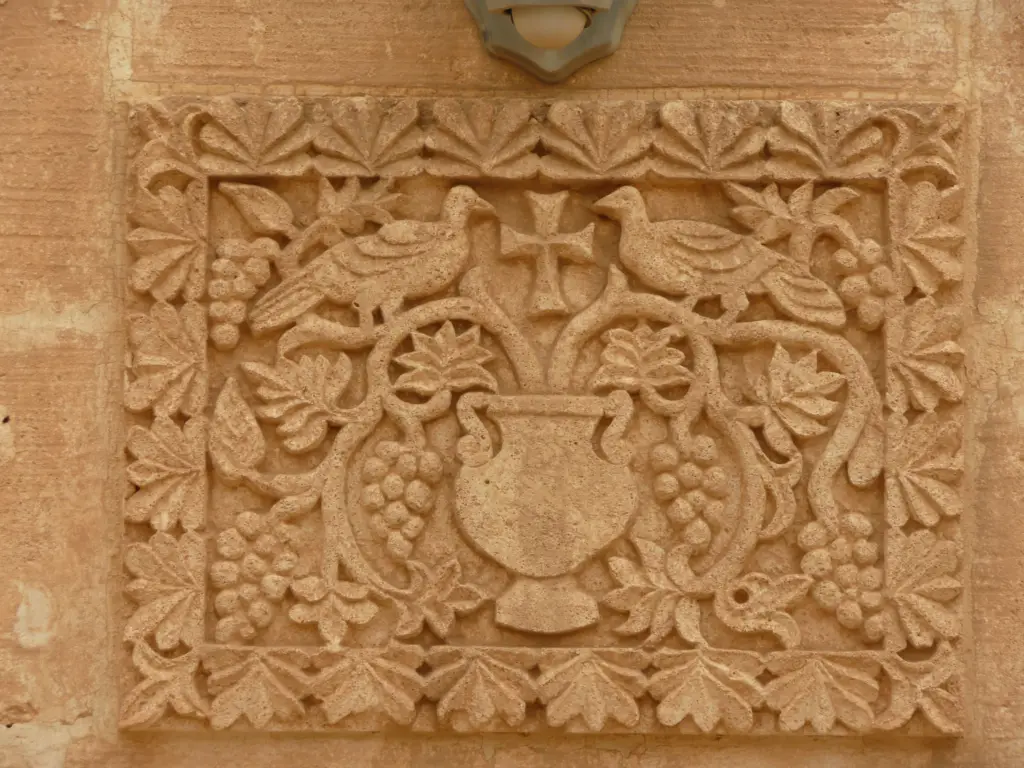
Beside the main church rises an eight-sided building with a brick dome 17 meters (56 feet) high. It probably served first as a baptistery and later as a kitchen. Tradition links it to Empress Theodora, the wife of Justinian, who supported the non-Chalcedonian churches and visited Qartmin. Her husband built Hagia Sophia in the same century.
Beth Qadisheh, the House of Saints, is the burial chamber of the monastery. Metropolitans, abbots and priests rest here in a seated position, facing east, because the faithful believed the Resurrection would come from the east. The tomb of Saint Gabriel is here too, and the chamber is honored as the resting place of the relics of 12,000 saints and martyrs.

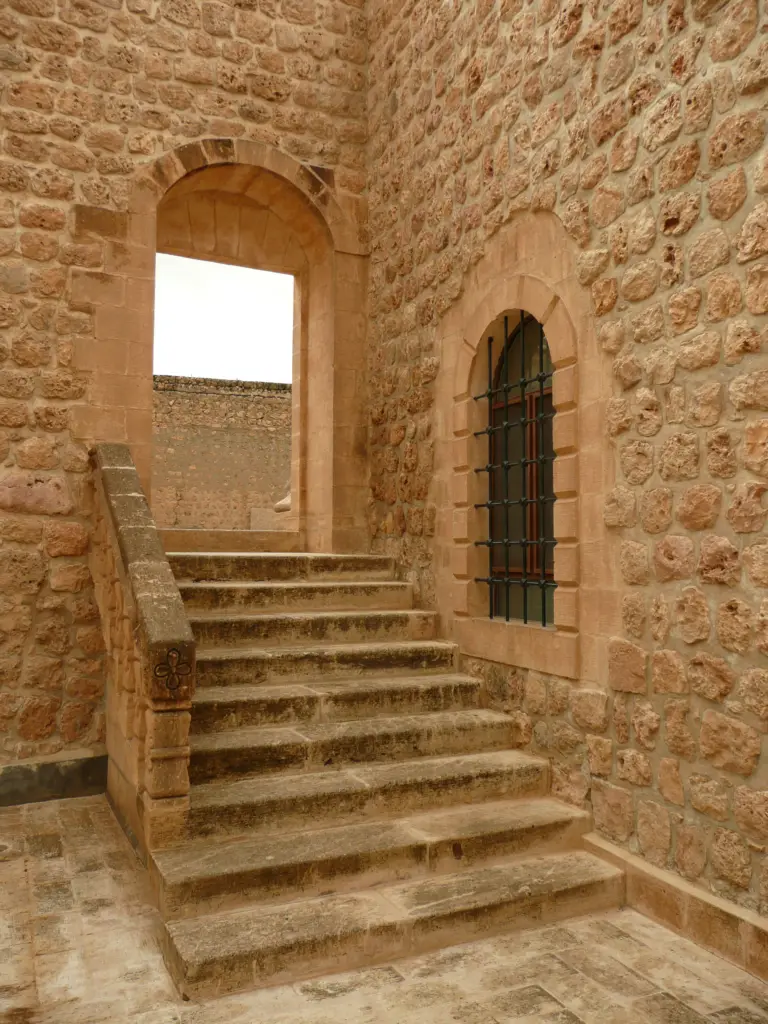
A long vaulted passage in front of the Dome of Theodora leads to this smaller church. Its first building dates from the 5th century, and it has three barrel-vaulted naves. When the main church was closed, the monks held services here instead.
Mor Gabriel is still home to a small community. Today the Metropolitan of Tur Abdin lives here with a few monks, nuns and boys who come to study the Syriac language and the church’s teachings. The monastery also remains a social center for the Christians who still live in Tur Abdin.
Our notes for Tur Abdin
Our suggestion Visit Mor Gabriel in the morning, then return to Midyat for lunch, a walk through the stone lanes and a glass of Syriac wine.
For another monastery with a long history, see Sumela Monastery on the Black Sea coast.
Our Mardin and Midyat tour ends the day here, after the old town of Mardin and the Saffron Monastery. Book it as a private day from Mardin, and we plan the drive back around your visit.
Because few places have kept the same prayer for sixteen centuries. See the mosaics Emperor Anastasius paid for, stand under the Dome of Theodora, then visit the crypt where bishops rest seated, facing east.
Neighborhood
A city of honey-colored stone above the Mesopotamian plain: Artuqid madrasas, a Syriac monastery that was…

Sumela Monastery near Trabzon: a Greek Orthodox monastery built into a cliff above the Altındere valley,…

Open in Google Maps (opens in a new tab) Open in Apple Maps (opens in a new tab)
It was founded in 397, and monks still live there.
Yes. The monastery is open to visitors.
Dress modestly, because Mor Gabriel is an active monastery.
The community uses Syriac in its liturgy, and boys still come to the monastery to study the language.
A 7th-century bishop of Tur Abdin who agreed terms with the Arab conquerors; after his death the monastery took his name.
 Tour
Mardin and Midyat Tour: Stone Cities, Saffron Monastery and the Monks of Tur Abdin
 Article
Tur Abdin: The Syriac Heartland of Southeastern Turkey
 Place
Deyrulzafaran Monastery
 Place
Mor Yakup Church, Nusaybin
 Article
Christian Heritage Sites in Turkey: From Antioch to Istanbul
 Article
Diyarbakır or Mardin: Black Walls or Golden Terraces
 Article
Mardin or Şanlıurfa: Which Southeast City to Choose
 Place
Dara
