Photo: Roman_Zacharij / Wikimedia Commons, CC BY-SA 4.0
Pinara
A cliff speckled with tombs, a perfect little theater, and the letters of a forgotten language, in the hills above the Xanthos valley.
Overview
Above the village of Minare, a narrow road climbs into the pines below Mount Babadağ. Then, through the trees, a huge round cliff appears, and its whole face is speckled with small dark doorways, row upon row. Every one is a tomb. This is Pinara, once one of the largest cities of Lycia. With a guide, join our Pinara tour.
- Good for
- Rock tombs, ruins at your own pace, the Lycian Way
- Best combined with
- Tlos, Xanthos and Letoon, Saklıkent Gorge
The Round City
The Lycians called their city Pilleñni, probably from a word for round, because it stands on a great round mass of rock. Settlers from nearby Xanthos founded it under an older name, Artymnesos. Besides, the people here honored Pandarus, the Lycian archer of the Trojan War, as one of their own heroes.
From the Lycian League to Rome
Strabo counted Pinara among the largest cities of Lycia, and in the Lycian League it held three votes, the highest number. In 334 BC, it surrendered to Alexander the Great. Later, it passed to Pergamon and then, in 133 BC, to Rome.
Earthquakes and a generous patron
However, earthquakes struck hard in AD 141 and 240. After the first, the rich Lycian benefactor Opramoas, who also built the theater of Limyra, paid to repair its public buildings. Pinara became Christian early, but in the 9th century, under repeated raids, its people left for good.

What to See at Pinara
The cliff of tombs
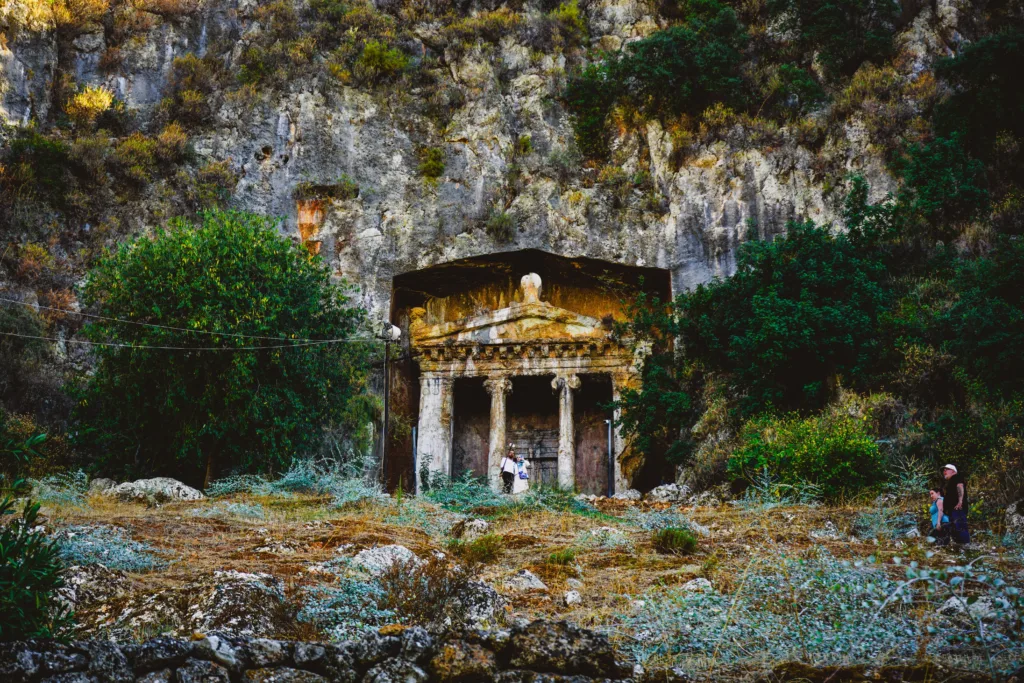
First, stand below the round cliff and look up. Hundreds of square tomb openings dot its face, cut into the sheer rock high above the ground.
The rock tombs of Pinara
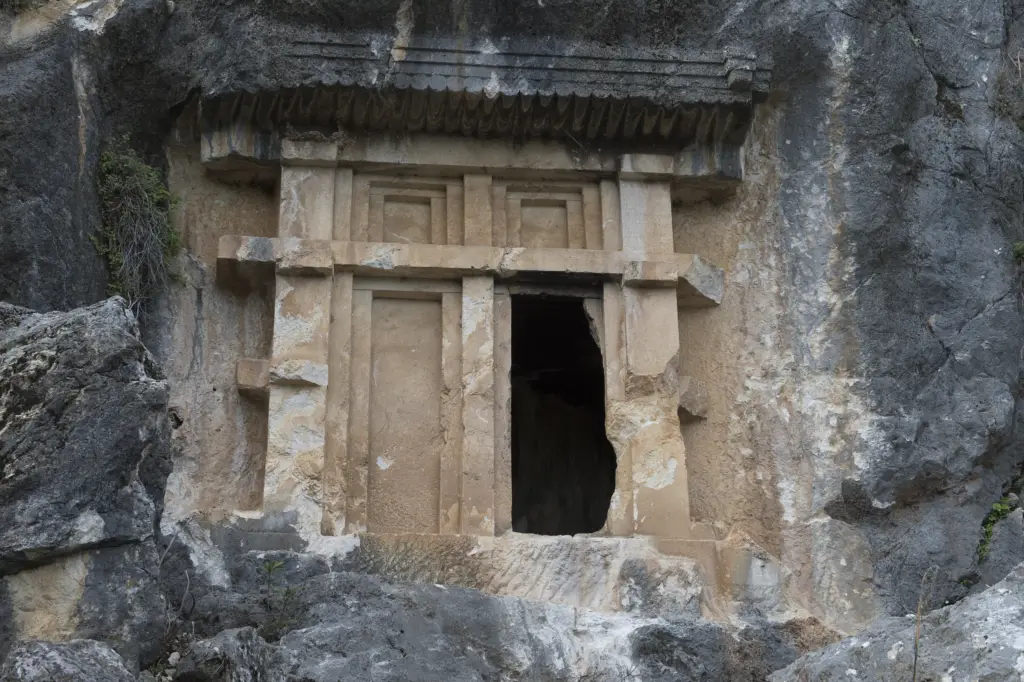
Next, walk among the tombs lower down. Many are carved to look like wooden Lycian houses, with beams and doors in stone, and some have the fronts of small temples. Look also for the so-called royal tomb, with its rich carvings.
The theater
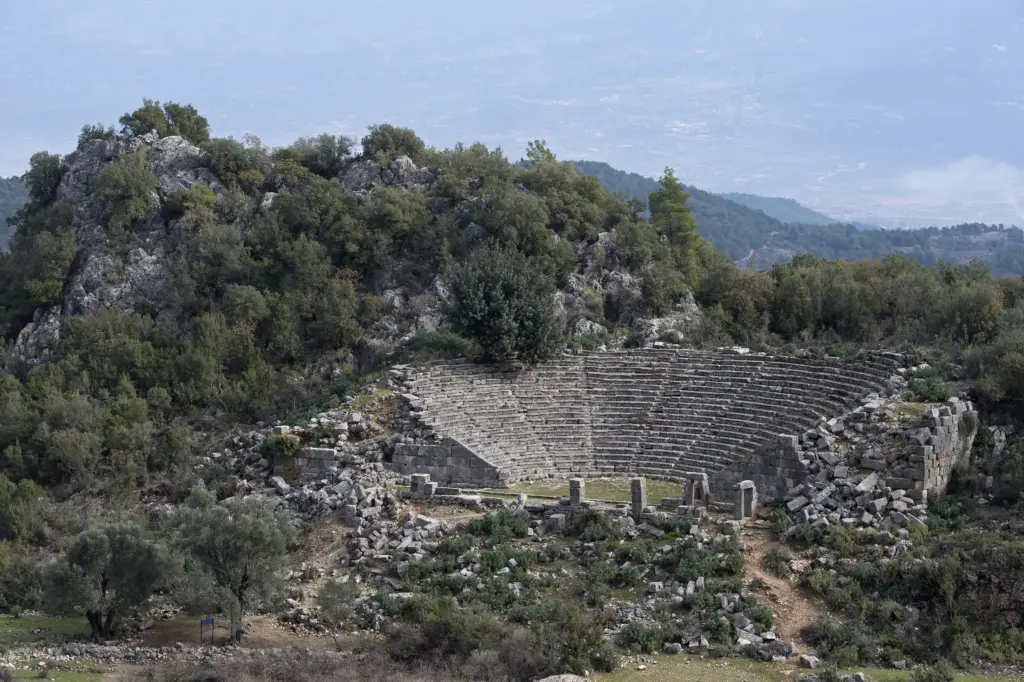
Then find the theater in a green hollow facing the acropolis. When Charles Fellows rediscovered Pinara in the 19th century, he found it in a very perfect state, with all its seats in place.
The Lost Language of Pinara
On many tombs, the inscriptions are in Lycian, a language of ancient Anatolia that later fell out of use, though Greek often appears on the same stones. For example, look for the sarcophagus of a man named Ddapssmma, still carrying its Lycian letters.
Our notes for Pinara
- VillageThe site lies above Minare, in the Seydikemer district.
- GatesSome city gates are made of just three huge stones.
- ShadePines shade much of the site.
- HeroThe city honored Pandarus, the archer of the Trojan War.
Our suggestion Come in the cool of the morning, then drive down the valley to Xanthos and the Letoon for the afternoon.

How to Visit Pinara
Pinara lies above the village of Minare in the Seydikemer district of Muğla Province. We arrange your visit to Pinara as part of a Fethiye day.
Also, combine it with the hilltop city of Tlos, the twin sites of Xanthos and the Letoon and the cold waters of Saklıkent Gorge.
Because few sights in Lycia stop you like the cliff of Pinara. Look up at its hundreds of dark doorways, then walk among pines to tombs carved like wooden houses and a theater where every seat survives.

Map
Open in Google Maps (opens in a new tab) Open in Apple Maps (opens in a new tab)
Frequently asked questions
Where is Pinara?
Above the village of Minare in the Seydikemer district of Muğla Province, at the foot of Mount Babadağ, near the west bank of the Eşen River, the ancient Xanthos.
What is Pinara famous for?
A great round cliff in the middle of the city, speckled with hundreds of rock tombs, and finely carved Lycian tombs and a well-preserved theater.
What does the name Pinara mean?
The Lycian name Pilleñni probably comes from a word for round, after the round mass of rock on which the city stands.
Who rediscovered Pinara?
The British traveler Charles Fellows, who described the cliff speckled all over with tombs in the 19th century.