Neighborhood
Kaleiçi
Antalya's walled old town above a Roman harbor: Hadrian's Gate, the Fluted Minaret, a temple that…
Photo: Needemm / Wikimedia Commons, CC BY-SA 4.0
One of Turkey's deepest and clearest lakes, ringed by pine forest and white hydromagnesite rocks, studied by NASA for the Perseverance Mars mission.
Come over the last hill near Yeşilova, and a sheet of turquoise water appears below pine-covered slopes. Along its edge, the shore is white as snow, but it is made of minerals, not sand. Before NASA’s Perseverance rover landed on Mars in 2021, scientists studied these white rocks because they resemble the crater where it was going to land. This is Lake Salda.
Lake Salda is a deep, clear lake, and today it is strictly protected. So come to look, walk and photograph, and treat the white shore with care. For ten days with a camera, see our Turkey photography tour.
Lake Salda lies in the Yeşilova district of Burdur province, in the Lakes Region of southwestern Turkey. Our Pamukkale tour from Antalya stops at the lake on the way. The town of Yeşilova is about 4 kilometers (2.5 miles) to the east, while the city of Burdur lies to the east, along the Burdur–Denizli highway.
The ministry describes it as Turkey’s deepest lake. Since 2019, the government has also protected it as a Special Environmental Protection Area.

The white color comes from hydromagnesite, a mineral that forms in the very alkaline water of the lake. Over time, microbes trap minerals and sediment and build rocks called microbialites, or stromatolites. These structures were once a major form of life on Earth. At Lake Salda, such microbial mats still grow.
Because the water carries few nutrients, very little algae grows in it. So the lake stays clear, and the light over the white bottom turns the shallows turquoise. Further out, however, the deep water looks dark blue.

In 2019, planetary scientists from the United States and Turkey studied the shoreline rocks of Lake Salda. They wanted to prepare for NASA’s Mars 2020 mission, whose Perseverance rover would search for signs of ancient life. Lake Salda is the only known lake on Earth with carbonate minerals and deltas similar to those of Jezero Crater, where the rover landed in February 2021. So when you stand on this shore, you are looking at a small piece of Mars on Earth.
For generations, people have bathed in Lake Salda for their skin. The water contains magnesium, soda and clay, and many believe it helps with acne and other skin problems. In summer, the climate is warm and dry, while winters are cold.

Around the lake, too, black pine forests cover the hills. In winter, also, large numbers of ducks gather on the water, including pochards, tufted ducks and the rare white-headed duck. The lake also has fish found nowhere else, for example a small endemic species the locals call Salda yosunbalığı. Partridges, hares, foxes and wild boars also live in the forest.
However, the lake is shrinking. In recent years, its level has dropped, and small white islands have appeared as the water fell.

Our notes for Lake Salda
Our suggestion Visit on a weekday morning, walk the boardwalks and swim only where it is allowed, since the white shores are fragile and protected.
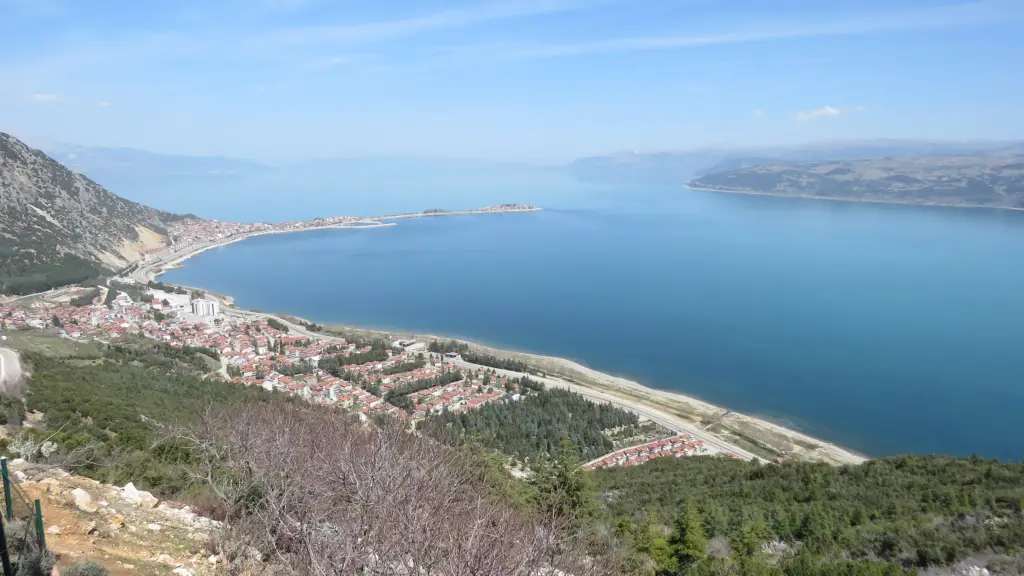
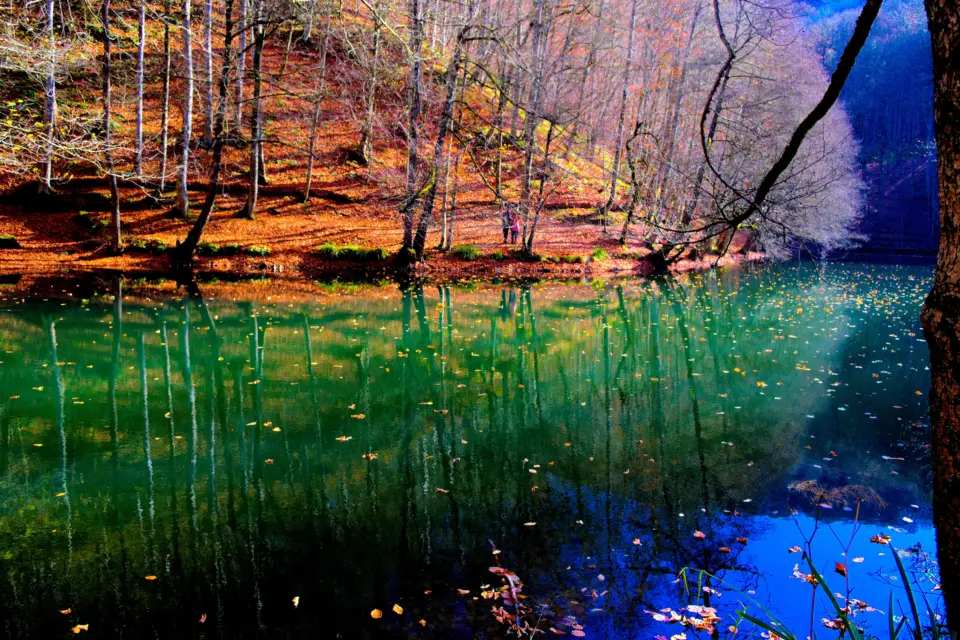
For a very different lake landscape, see the seven forest lakes of Yedigöller near Bolu, or nearby Lake Eğirdir in the Lakes Region.
Because here you can stand on a shore that NASA compared with Mars. Look at the white mineral rocks built by microbes, then watch the shallows turn turquoise over the pale bottom.
Neighborhood
Antalya's walled old town above a Roman harbor: Hadrian's Gate, the Fluted Minaret, a temple that…

Archaeological site
The white travertine terraces of Pamukkale and the Roman spa city of Hierapolis above them: how…
Nature
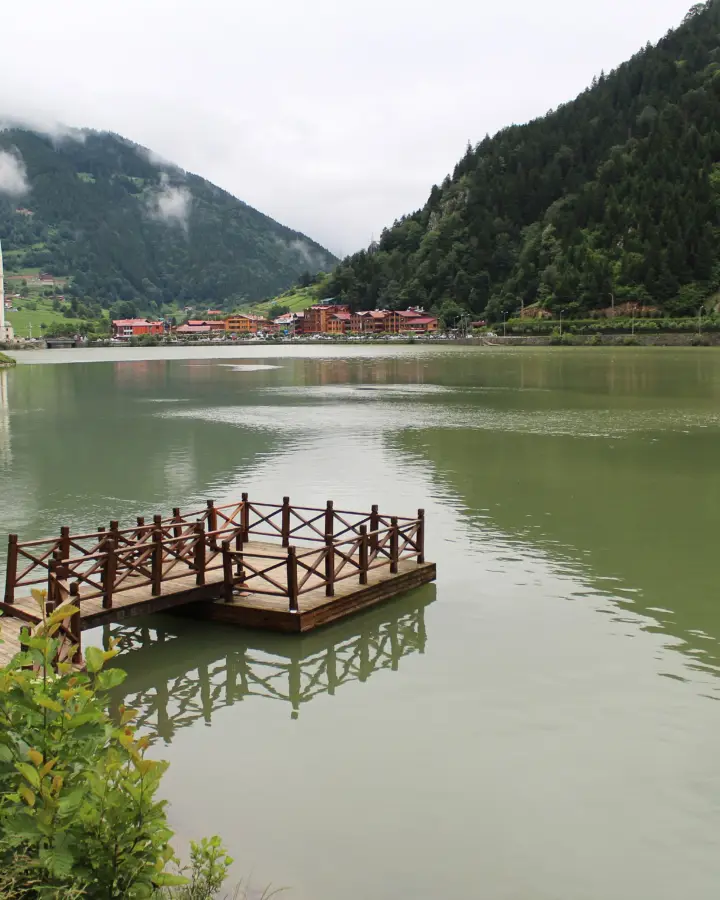
Uzungöl, the long lake in the mountains south of Trabzon: how a landslide made it, the…
Open in Google Maps (opens in a new tab) Open in Apple Maps (opens in a new tab)
Its carbonate minerals and deltas resemble those of Jezero Crater on Mars, where NASA's Perseverance rover landed in 2021.
It is made of hydromagnesite, a white mineral that forms in the very alkaline water, partly built up by microbes.
In the Yeşilova district of Burdur province in southwestern Turkey, just west of the town of Yeşilova.
Estimates of its greatest depth range from 184 to 196 meters (604 to 643 feet).
Yes. Since 2019 it has been a Special Environmental Protection Area, so visitors should follow the marked paths and rules.