
Photo: zolakoma / Wikimedia Commons, CC BY 2.0
Sultanhanı Caravanserai
A Seljuk fortress for camels and merchants: one of the largest medieval caravanserais in Turkey, halfway between Konya and Cappadocia.
Overview
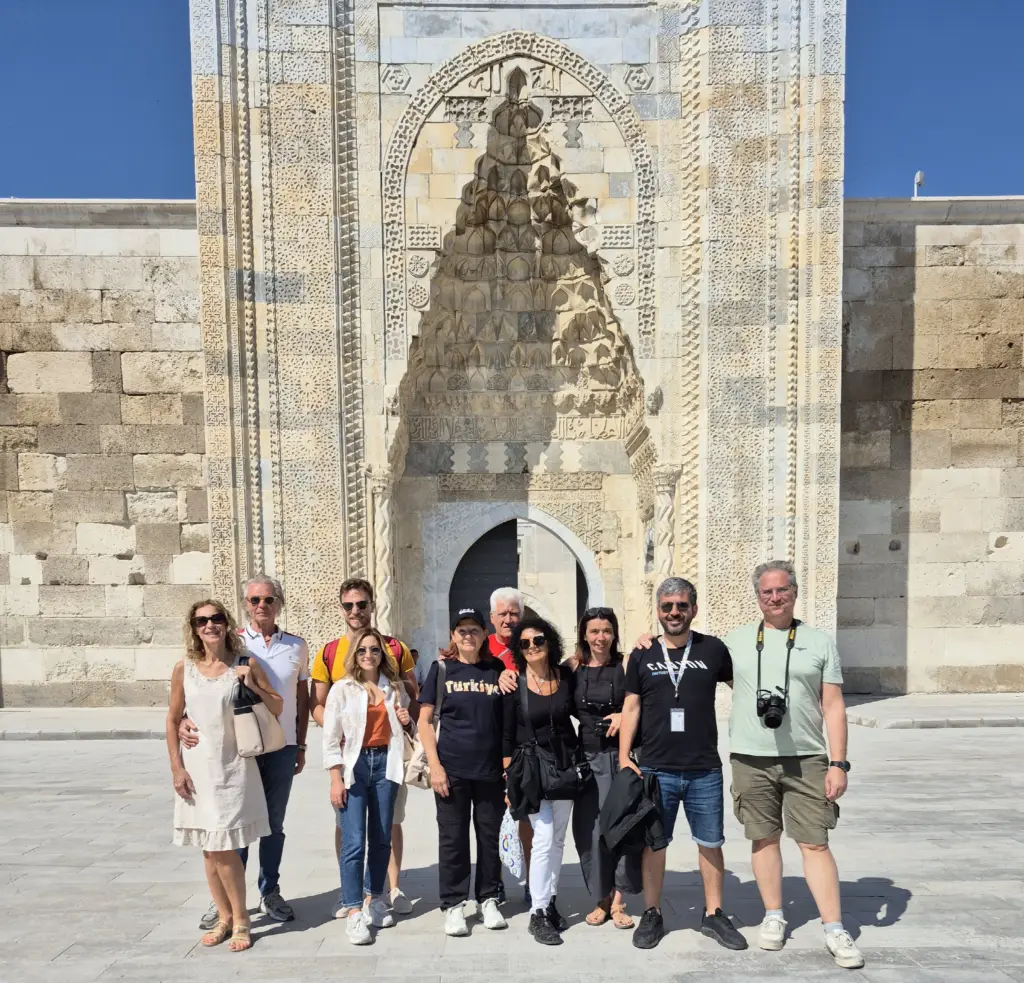
On the long, flat road from Konya to Cappadocia, the steppe runs to the horizon in every direction. Suddenly, a stone wall rises beside the highway, and in its middle stands a marble gate carved like lace. On a bright June morning, we lined up our guests in front of it for a photo, tiny against the stone. This is the Sultanhanı Caravanserai, built by the Seljuk sultan Kayqubad I in 1229.
- Good for
- History lovers, road trips, photographers
- Best combined with
- Konya, Cappadocia, Ihlara Valley
A Silk Road Inn
In the 13th century, the Seljuk sultans of Konya built a chain of fortified inns along their trade roads. Along the roads, caravans of camels could stop at them and sleep safely behind high walls. Better still, pious endowments paid for the stay, so merchants got food, fodder for their animals and a bed for free.
Sultan Kayqubad I built this one in 1229, on the Uzun Yolu, the Long Road from Konya to Aksaray and on toward Persia. Later, a fire damaged it. In 1278, the Seljuk sultan Gıyaseddin Keyhüsrev enlarged it. It covers about 4,680 m2 (50,400 sq ft).
What to See at the Sultanhanı Caravanserai
The marble gate
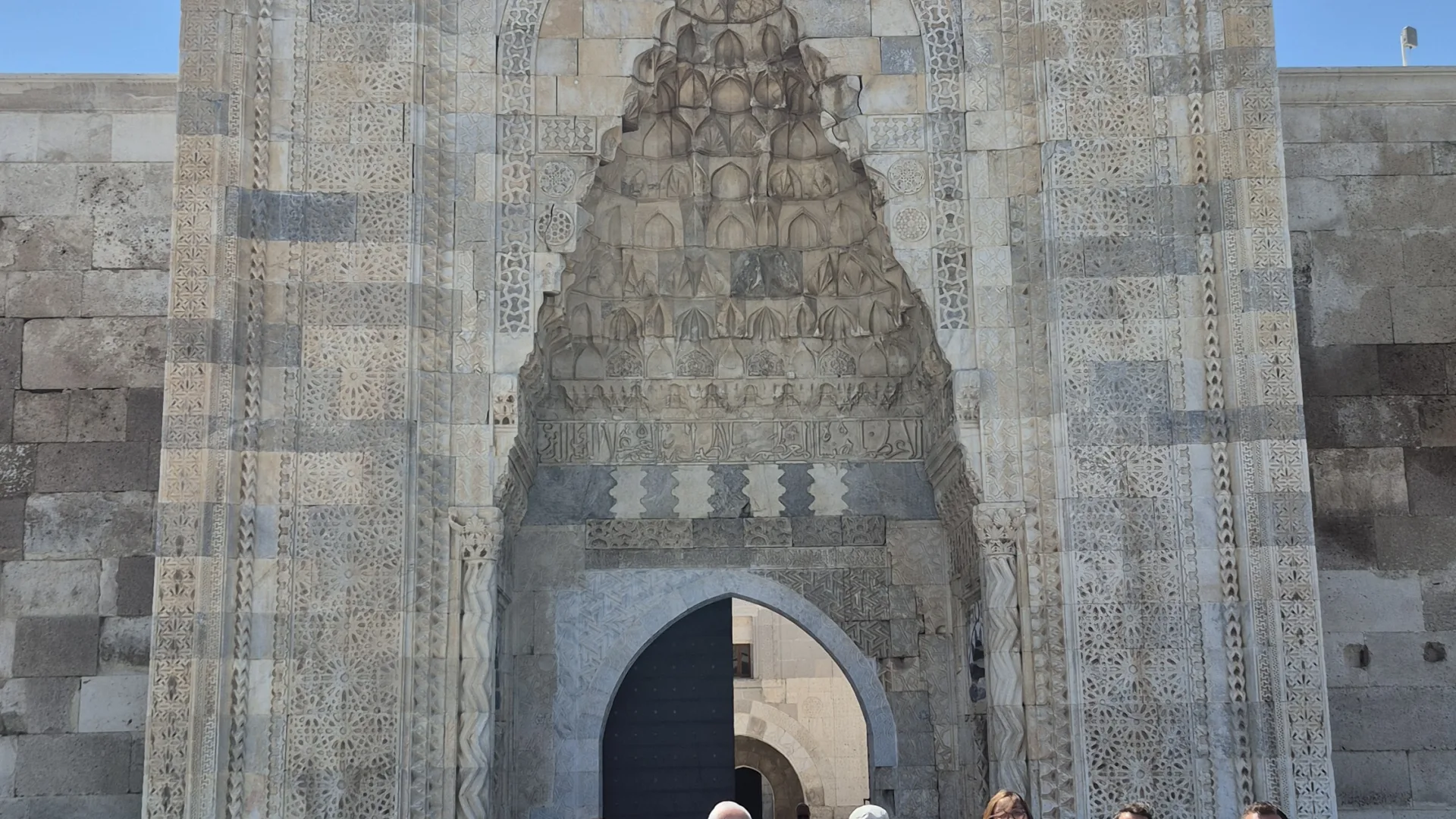
First, stand in front of the gate. Carved in marble, it projects from the east front of the building. Above the door, a deep niche of muqarnas, carved stone stalactites, hangs like a honeycomb, framed by bands of geometric plaiting.

The summer courtyard
Next, walk through into the open courtyard, 50 m (164 ft) by 62 m (203 ft). Caravans used it in summer, while stables with rooms above lined its arcades. Right in the middle stands a small kiosk mosque raised on four carved arches.

The winter hall
Finally, cross to the far side. A second carved archway leads into the covered hall used in winter. Inside, a long barrel vault runs into the dark, and at its center, a small dome opens to the sky to let in air and light.

Our notes for the Sultanhanı Caravanserai
- TimingMorning light falls on the east-facing gate.
- PhotosStep back across the square to fit the whole gate in one frame.
- RouteIt sits right on the main Konya–Aksaray road.
- CombinePair it with Ihlara Valley on the way to Cappadocia.
Our suggestion Make it the leg-stretcher on the drive between Konya and Cappadocia: an hour here breaks the journey and tells the story of the Silk Road better than any museum.
Inside the Sultanhanı Caravanserai
First, look just below the pointed arch of the gate. There, a short prayer reads Elminnetül Lillah, “Power belongs to God.” Then, inside the summer courtyard, find the arcades where carts once stood, and on the left the rooms and halls for travelers, two baths and the storerooms. So the caravanserai worked like a small town for one night.
Compare the inner portal of the winter hall with the outer gate. Its strong geometric stars and rosettes were copied almost exactly at the Karatay Han. Inside the hall, four rows of eight piers split the space into five aisles, and the wider middle aisle rises to a dome on an eight-sided drum. Small slit windows and the lantern of the dome give the only light. Our Turkey tour in 21 days stops here between Konya and Cappadocia.
How to Visit the Sultanhanı Caravanserai
The caravanserai stands in the town of Sultanhanı, about 42 km (26 miles) west of Aksaray, right beside the road to Konya. Our private Cappadocia tour from Antalya stops here on the way from Konya to Göreme. Our Cappadocia to Konya tour stops here on the way. Check opening hours before you go.

We stop here on our journeys between Konya and Cappadocia, for example after the Konya Mevlana tour. Further on, walk the Ihlara Valley, and if you need a driver for the road, see our intercity transfers. The same sultan also built the Red Tower of Alanya. For a smaller but richly carved cousin, see the Ağzıkara Han near Aksaray. Riding your own bike? Read our guide to motorcycle touring in Turkey.
Because the Silk Road still has a front door. Stop on the drive to Cappadocia, stand under the marble gate, and walk the courtyard where caravans slept for free.
Map
Open in Google Maps (opens in a new tab) Open in Apple Maps (opens in a new tab)
Gallery
Frequently asked questions
Where is Sultanhanı Caravanserai?
In the town of Sultanhanı, about 42 km (26 miles) west of Aksaray on the main road between Konya and Cappadocia.
When was Sultanhanı Caravanserai built?
In 1229, under the Seljuk sultan Kayqubad I. After a fire, it was restored and enlarged in 1278.
What was a caravanserai?
A fortified inn on a trade route. Merchants, their animals and their goods spent the night safely inside, and the Seljuk endowments gave them food, fodder and lodging for free.
How long should I stop there?
About 45 minutes to an hour is enough to see the gate, the courtyard, the kiosk mosque and the great covered hall.
How do I get to Sultanhanı by public transport?
Buses run every hour from the center of Aksaray to the town of Sultanhanı, about 42 km (26 miles) to the west.

You may also like
-
 Tour
Private Cappadocia to Konya Tour via Sultanhanı
-
 Journey
Cappadocia from Antalya in 3 Days: A Private Tour via Konya
-
 Journey
Pamukkale to Cappadocia in 3 Days: A Private Tour by Road via Konya
-
 Article
Motorcycle Touring in Turkey: A Rider’s Guide
-
 Place
Ihlara Valley
-
 Place
Ağzıkara Han
-
 Place
Güzelyurt
-
 Place
Hunat Hatun Complex