Photo: Urmen19 / Wikimedia Commons, CC BY-SA 4.0
Ebru: The Turkish Art of Marbling and Where to Try It
Ebru, the Turkish art of marbling: colors floated on water and lifted onto paper, on UNESCO's intangible heritage list since 2014, with roots in Üsküdar and a first workshop in Istanbul.
Drop paint onto water, and it floats. Comb it, and it swirls. Lay a sheet of paper on top, and the pattern lifts off, never to be repeated. That is ebru (the art of paper marbling), the Turkish art of marbling, and an hour at an ebru table in Istanbul is a slow, absorbing hour in a busy city.
What is ebru, the Turkish art of marbling?
First, ebru painters sprinkle and brush colors onto a tray of thickened water. The colors come from natural pigments, mixed with a few drops of ox gall, so they spread and float instead of sinking. Next, with fine tools, the artist pulls the colors into waves, combs, flowers and leaves. Then a sheet of paper goes onto the surface, takes the pattern and comes away as a finished piece. Because the water never holds the same pattern twice, every sheet is unique.
The basic patterns have their own names. In battal ebru, the colors stay just as they were sprinkled. Gelgit ebru, the “come and go” pattern, starts from a battal tray. Then the artist draws a fine stylus across the whole surface in straight lines, one way and then the other. A comb pulled through the colors gives taraklı ebru, the combed pattern.
Also, for centuries, bookbinders used marbled sheets to decorate their books. Today ebru also hangs on walls as art in its own right.
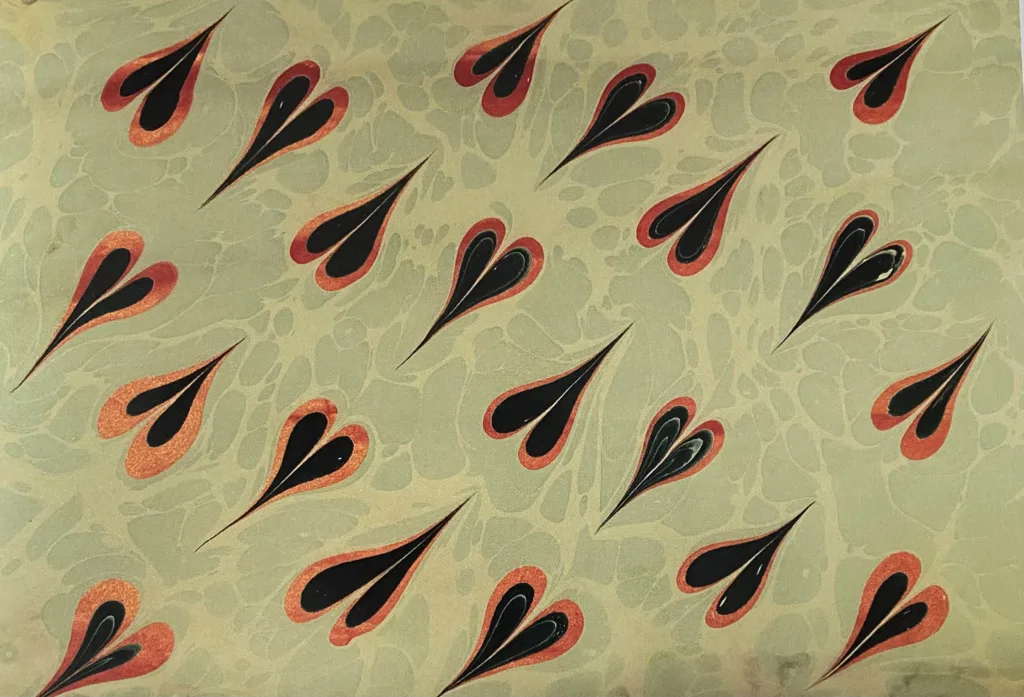
Ebru on the UNESCO list
In 2014, UNESCO inscribed Ebru, Turkish art of marbling on its Representative List of the Intangible Cultural Heritage of Humanity. The skills still pass from master to apprentice, by watching and practicing at the tray, and learning the basics takes at least two years.
Üsküdar and the ebru masters
However, modern Turkish ebru has its home on the Asian side of Istanbul. In Sultantepe, above Üsküdar, stands the Özbekler Tekkesi, the dervish lodge of the Uzbeks. In 1903 Necmeddin Okyay, born in Üsküdar in 1883, began learning ebru there from the lodge’s sheikh, Edhem Efendi. Okyay became one of the great masters of the art, and flower patterns such as tulips and carnations are still called Necmeddin ebru after him. His pupil Mustafa Düzgünman (1920–1990) carried it on and added the daisy. Long before them, Mehmed Efendi, a preacher of Hagia Sophia who died in 1773, gave his name to the hatip ebru, with its hearts and stars.
Try the Turkish art of marbling in Istanbul
You need no experience for a first session. A master prepares the tray and the colors and shows you the first moves. Then you sprinkle the paint yourself and pull it into a simple pattern. So you start with simple waves and combs. The best moment is lifting the paper: you only see what you made when the sheet comes off the water.
A session usually lasts two to three hours, and you take your sheets home once they are dry. It fits well into a guided day, after the bazaars or between two museums.
Our notes for ebru
- What it isTurkish paper marbling, colors floated on thickened water
- UNESCOIntangible heritage list since 2014
- Where it grewThe Özbekler Tekkesi in Üsküdar, Istanbul
- First sessionTwo to three hours, no experience needed
Where else can you see traditional arts in Istanbul?
So, after an ebru session, see the other book arts of the Ottoman court. First, at the Sakıp Sabancı Museum in Emirgan, five centuries of Ottoman calligraphy hang beside paintings of old Istanbul. Then, in the old city, the Turkish and Islamic Arts Museum holds a renowned carpet collection. Also, read our guide to miniatures in Istanbul and Istanbul for art lovers.
Would you like to try ebru on your trip? Let us know how many of you want to try the water and the colors, and when, and we will book the master in Üsküdar. Start with our craft workshops, or pair it with a guide in Istanbul. Our ebru and calligraphy workshop brings both arts together in one private session.
Frequently asked questions
What is ebru?
The Turkish art of marbling: colors are floated on thickened water, shaped into patterns and lifted onto paper.
Is ebru on the UNESCO list?
Yes. Ebru, Turkish art of marbling, was inscribed on the Representative List of the Intangible Cultural Heritage of Humanity in 2014.
Can I try ebru in Istanbul without experience?
Yes. A master prepares the tray and colors and shows you the first moves; a session takes two to three hours.
Who were the great ebru masters of Istanbul?
Necmeddin Okyay, who learned at the Özbekler Tekkesi in Üsküdar from 1903, and his pupil Mustafa Düzgünman.
Where can you see Ottoman calligraphy in Istanbul?
At the Sakıp Sabancı Museum in Emirgan, where five centuries of Ottoman calligraphy hang beside paintings of old Istanbul.
What is Turkish marbling called?
Ebru. Painters float colors on a tray of thickened water, pull them into patterns and lift them onto a sheet of paper.