Heraclitus of Ephesus
The weeping philosopher of Ephesus, who said you cannot step into the same river twice.

“No man ever steps in the same river twice.” Millions of people know the line, yet few know where it was written: in Ephesus, on the Aegean coast of Turkey, around 500 BC. Its author gave up a royal title, left his only book in the Temple of Artemis and became known as the weeping philosopher. So this is Heraclitus of Ephesus, the thinker of fire, change and the unity of opposites.
Who Was Heraclitus?
To begin with, the son of Blyson came from Ephesus, then a port on the Cayster River. In his lifetime, the city first lived under Croesus of Lydia and then under the Persian Empire. Later, when Darius crushed the Ionian Revolt in 494 BC, the Persians spared Ephesus, while they sacked nearby Miletus, the home of earlier philosophers such as Thales.
Very little is certain about his life. By tradition, he gave up the hereditary title of king to his younger brother. Thus, he probably came from an aristocratic Ephesian family, with little sympathy for democracy.
Heraclitus in numbers
- c. 500 BCactive in Ephesus
- 1book, placed in the Temple of Artemis by tradition
The Ideas of Heraclitus
Everything flows
Above everything else, he saw the world as constant change. Things are always becoming, never simply being. For this reason, he said that you cannot step into the same river twice, because new waters keep flowing.

Fire and the logos
Like the philosophers of Miletus before him, he looked for one basic element of the world. While Thales chose water, he chose fire. Besides that, he spoke of the logos, a kind of reason or divine law that gives the world its order.
The unity of opposites
Finally, he taught that opposites belong together, and that harmony and justice grow out of strife. Because his sayings were short, playful and hard to read, ancient writers called him “the obscure”.
Heraclitus in Ephesus
The book in the Temple of Artemis
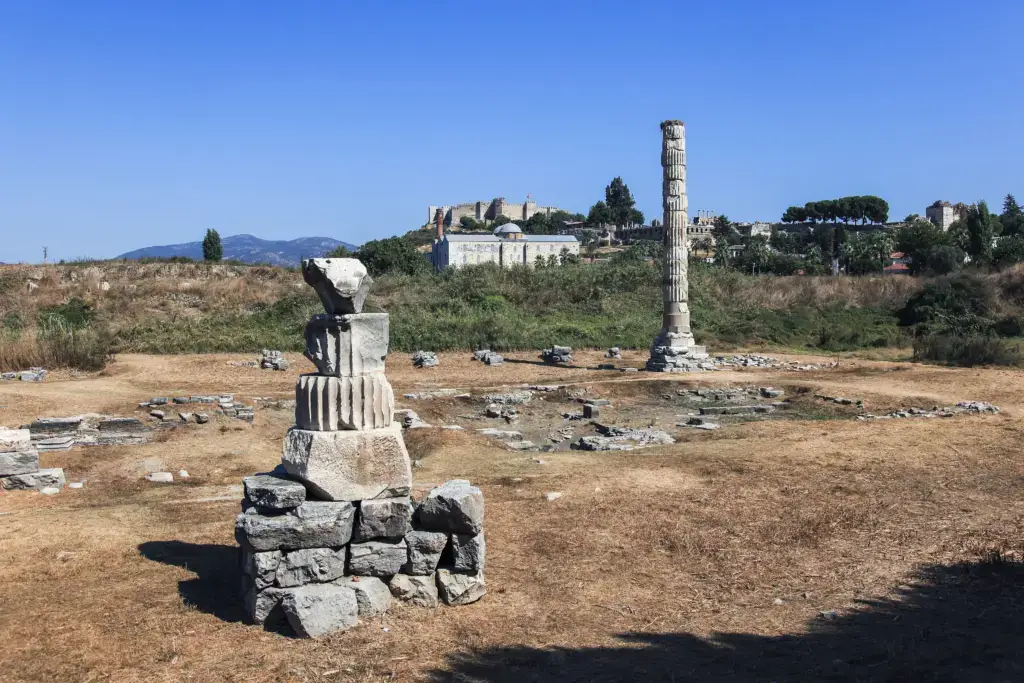
He wrote a single book, and about 100 fragments survive in quotations by later authors. Tradition says he placed the book as an offering in the Temple of Artemis, one of the Seven Wonders. The story goes that the grumpy philosopher preferred to play knucklebones with the boys in the temple rather than take part in the city’s politics.
The weeping philosopher
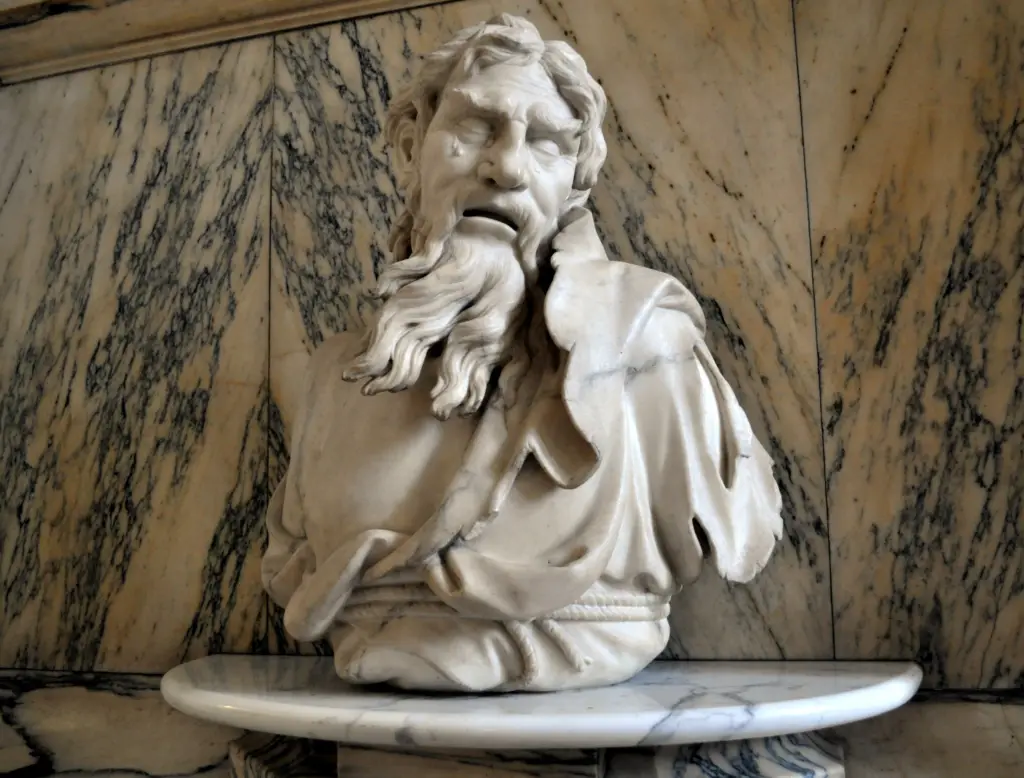
Ancient writers described him as proud and gloomy. Later, artists loved to paint him weeping beside Democritus, the laughing philosopher, as two answers to the folly of the world.

Following Heraclitus Today
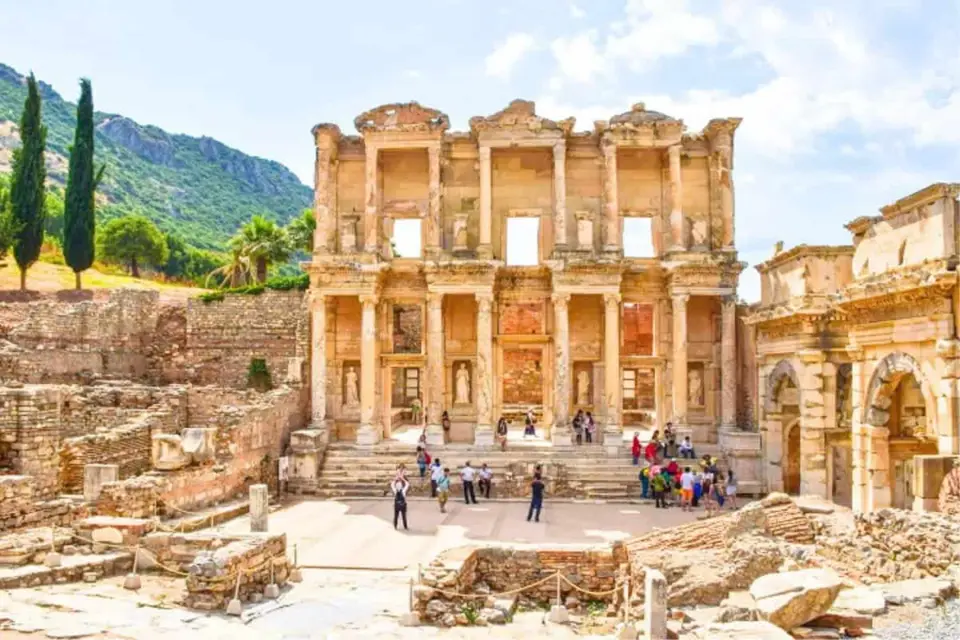
First, walk the marble streets of Ephesus, the city he both criticized and could not leave. Then stand by the last column of the Temple of Artemis in Selçuk. Afterward, continue south to Miletus, where Greek philosophy began. For more thinkers of Anatolia, read about Diogenes of Sinope and Herodotus.
To see the city he wrote in, join our Ephesus day tour from Istanbul by plane. Tell us your dates, and we book the flights around your stay.