Hürrem Sultan
Known in Europe as Roxelana, she rose from the harem to marry Suleiman the Magnificent and left buildings across Istanbul.

In the garden of the Süleymaniye Mosque, two tombs stand side by side. The larger one holds Suleiman the Magnificent. The smaller one, however, lined with İznik tiles of flowering trees, belongs to the woman he freed from slavery and married against centuries of custom: Hürrem Sultan.
Europeans called her Roxelana. She arrived in Istanbul as a captive, became the mother of a sultan and paid for mosques, baths and soup kitchens from Istanbul to Jerusalem. Several of the buildings she funded still stand, so you can follow her story through the old city.
Who Was Hürrem Sultan?
Nobody knows her birth name for certain. She came from Ruthenia, then part of the Polish Crown, and a 17th-century poem names her father as an Orthodox priest from Rohatyn, in today’s Ukraine. Crimean Tatars captured her in a slave raid, probably between 1512 and 1520, then sold her on to Constantinople.
After that, she entered the imperial harem as a young girl. Her name, Hürrem, means “the joyful one” in Persian. Around 1520, when Suleiman became sultan, she became his favorite, and their first son, Mehmed, was born in 1521.
The first Haseki Sultan
Until then, Ottoman sultans did not marry their concubines, and each concubine could bear only one son. Suleiman broke both rules. Hürrem gave him at least six children, and he freed and married her, probably in the 1530s. She was the first consort to hold the title Haseki Sultan, so later royal wives followed the path she opened.
Venetian envoys and the ambassador Ogier Ghiselin de Busbecq wrote about her, and Busbecq gave her the name Roxelana. Hürrem also wrote love letters to Suleiman while he was away on campaign, and seven of them survive.
Hürrem Sultan through time
- c. 1505Born, probably in Ruthenia
- 1521Her first son, Mehmed, is born
- 1530sSuleiman frees and marries her
- 1539Sinan completes the Haseki Sultan Mosque
- 1543Prince Mehmed dies at the age of 21
- 1558Dies in Istanbul on 15 April
Hürrem Sultan’s Family and the Places They Left
Her children also shaped the skyline of Istanbul. When Prince Mehmed died in 1543, the grieving sultan ordered the Şehzade Mosque in his memory. It became the first great imperial work of Mimar Sinan. Later, their youngest son gave his name to the neighborhood of Cihangir.
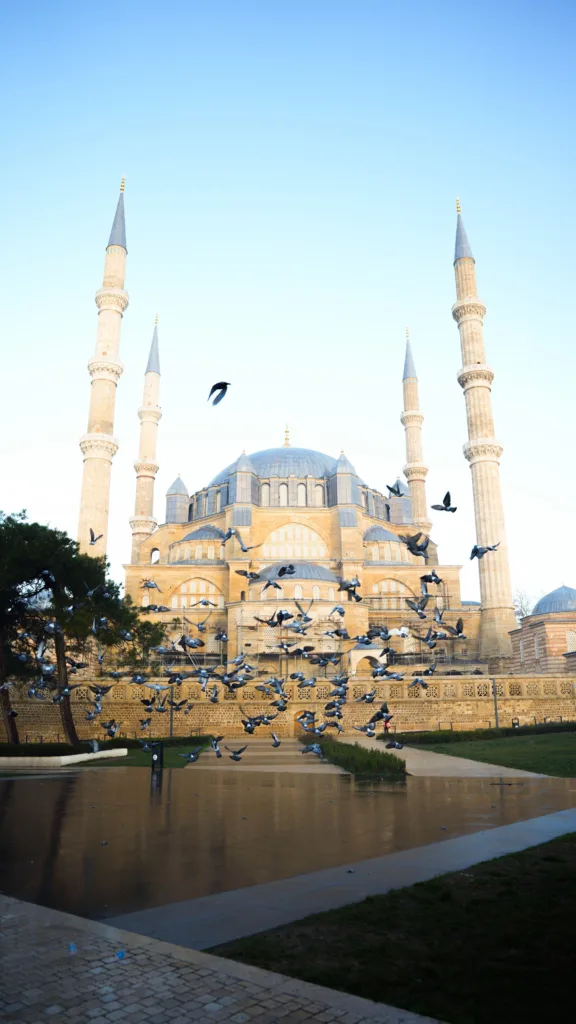
Her daughter, Mihrimah, married the grand vizier Rüstem Pasha in 1539. His tiled mosque above the market, the Rüstem Pasha Mosque, is famous for its İznik-tiled interior. Later, her son became Sultan Selim II, and he commissioned the Selimiye Mosque in Edirne, Sinan’s masterpiece.
Rivalry and the death of Mustafa
Hürrem’s rise, however, caused jealousy in the palace and anger in the city. Suleiman’s eldest son, Mustafa, was the son of another consort, and in 1553 the sultan ordered his execution. Some contemporaries blamed Hürrem and Rüstem Pasha for turning Suleiman against him. Historians still debate how much influence she really had, so treat the darker stories as accusations, not proven facts.
What Hürrem Sultan Built
Like other royal women, Hürrem also funded charitable foundations. They paid for prayer, learning and food for the poor, while their shops and baths earned the income to keep them running.
The Haseki Sultan Complex
In the district of Aksaray, Sinan designed a mosque for her between 1537 and 1539, then added a madrasa, a soup kitchen and a women’s hospital. It was his first complex in Istanbul as chief architect, so his career in the capital began with her commission.
The Hürrem Sultan Hamam

Between Hagia Sophia and the Blue Mosque in Sultanahmet stands the double Turkish bath Sinan built in her name in the 1550s. Its men’s and women’s sections lie on the same axis, which was especially new in Ottoman bath design. The income went to her foundations.
A soup kitchen in Jerusalem
Her foundations also reached the holy cities. In Jerusalem, for example, her great soup kitchen fed the poor, and its endowment deed lists dozens of villages and estates on the road from Jaffa. So her charity stretched far beyond Istanbul.
The Tomb of Hürrem Sultan

Hürrem Sultan died in Istanbul on 15 April 1558. Sinan built her an octagonal tomb in the garden behind the Süleymaniye, and eight years later Suleiman was buried beside her. Step inside, because the walls are covered with İznik tiles of flowering trees, a garden of paradise in blue, turquoise and red.

Visiting the places of Hürrem Sultan
Today you can still see most of her world in one day. Start at the Süleymaniye and its tombs, then walk down to the Rüstem Pasha Mosque near the Spice Bazaar. In the afternoon, continue to Sultanahmet for the bathhouse beside Hagia Sophia. The Süleymaniye and the hamam (a Turkish bath) both lie within the UNESCO World Heritage Site of the Historic Areas of Istanbul. Millions also know this story from the television series Magnificent Century.
Our Ottoman tombs tour ends at the Süleymaniye, at the tombs of Hürrem and Suleiman, and our Sultanate of Women tour follows her and the women who ruled from the Harem. Book either one as a private day, and we build it around her story.
Where to find her today
- Hürrem Sultan HamamıSinan’s double bathhouse between Hagia Sophia and the Blue Mosque, restored and open again as a hamam.
- HasekiThe neighborhood around her mosque complex in Fatih still carries her title, Haseki, and a hospital still stands there.
- Her tilesInside her tomb, look for the İznik tiles with blossoming trees.
Our suggestion Visit her bathhouse in Sultanahmet, still working, and then her tomb in the garden of the Süleymaniye, beside the sultan.

You may also like
-
 Tour
The Sultanate of Women Private Tour: Hürrem, Kösem and the Harem
-
 Tour
Topkapı Palace Private Tour with the Harem
-
 Tour
Mimar Sinan Private Tour: The Great Mosques of Istanbul’s Master Architect
-
 Place
Rüstem Pasha Mosque
-
 Place
Şehzade Mosque
-
 Place
Selimiye Mosque
-
 Person
Mimar Sinan
-
 Person
Suleiman the Magnificent