Photo: Turkey Your Way
Ahlat
A forest of carved stones by Lake Van: the Seljuk cemetery, red tomb towers and the ruins of a city once called the Dome of Islam.
Overview
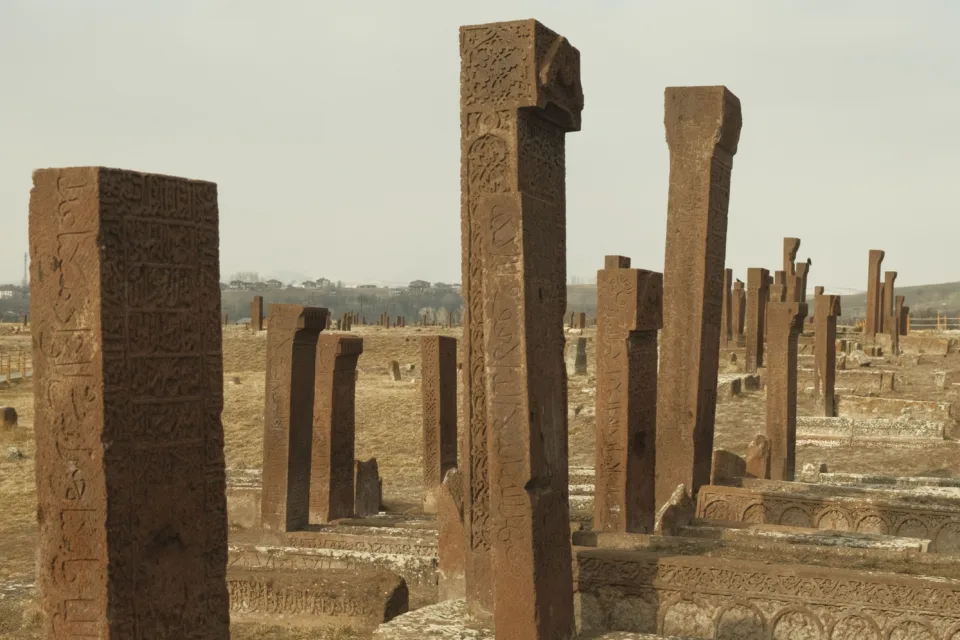
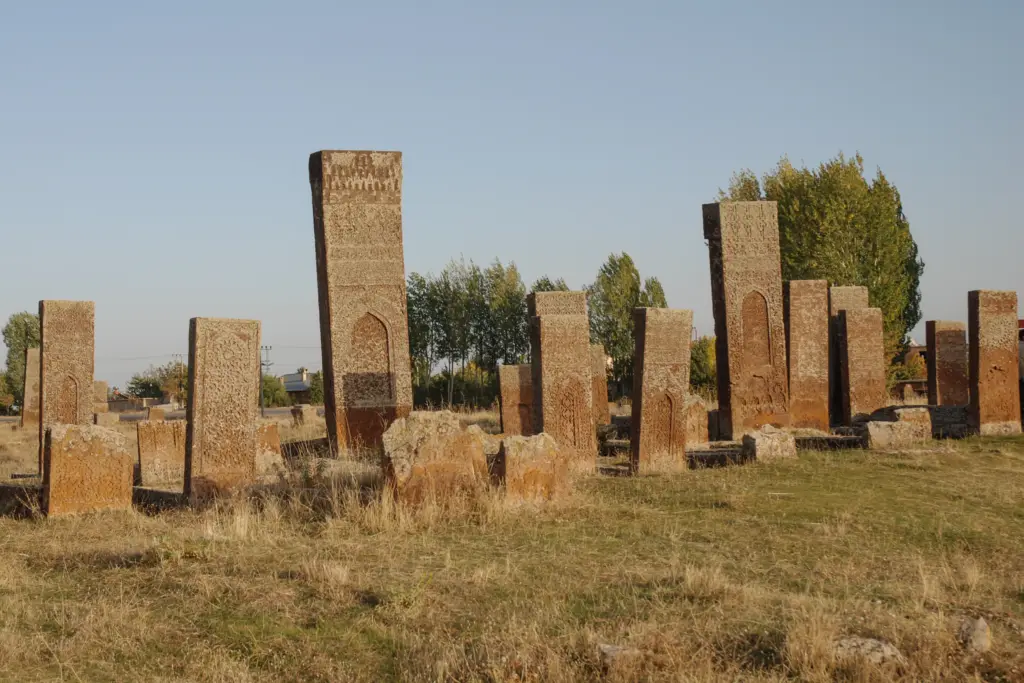
On the northwestern shore of Lake Van, a wide plain of dry grass stretches toward the water. Across it, then, stand hundreds of tall stones, some taller than a person, leaning at all angles and covered with carving as fine as lace. Here and there, too, red stone towers with pointed roofs rise among them. This is the Seljuk cemetery of Ahlat, with about 9,000 tombstones.
- Good for
- Seljuk art, photography, eastern Turkey road trips
- Best combined with
- Lake Van, Akdamar Island
The Story of Ahlat
To begin with, Ahlat, Khlat in Armenian, was once a great city on the shore of Lake Van, with strong walls and three gates. Besides, medieval travelers wrote that its people spoke three languages, Arabic, Persian and Armenian, and some said its name meant “mixture”.
Many rulers
Over the centuries, Armenian princes, Arab emirs and Kurdish dynasties ruled the city in turn. Then, in 1071, Alp Arslan took it on his way to the battle of Manzikert. From the early 12th century, a dynasty known as the Ahlatshahs made Ahlat their capital, and this was its golden age.
Ruin and decline
However, disaster came in the 13th century. First, Jalal al-Din took and sacked the city in 1230, then the Mongols took it in 1243, and earthquakes in 1246 and 1275–76 left much of it in ruins. Ahlat became Ottoman, but it never regained its old size.
The Seljuk Cemetery
Most of all, the great treasure of Ahlat is its cemetery, famous for its many tombstones of the Ahlatshah period. For this reason, Turkey has placed them, together with the citadel, on its tentative list for UNESCO World Heritage.
The carving
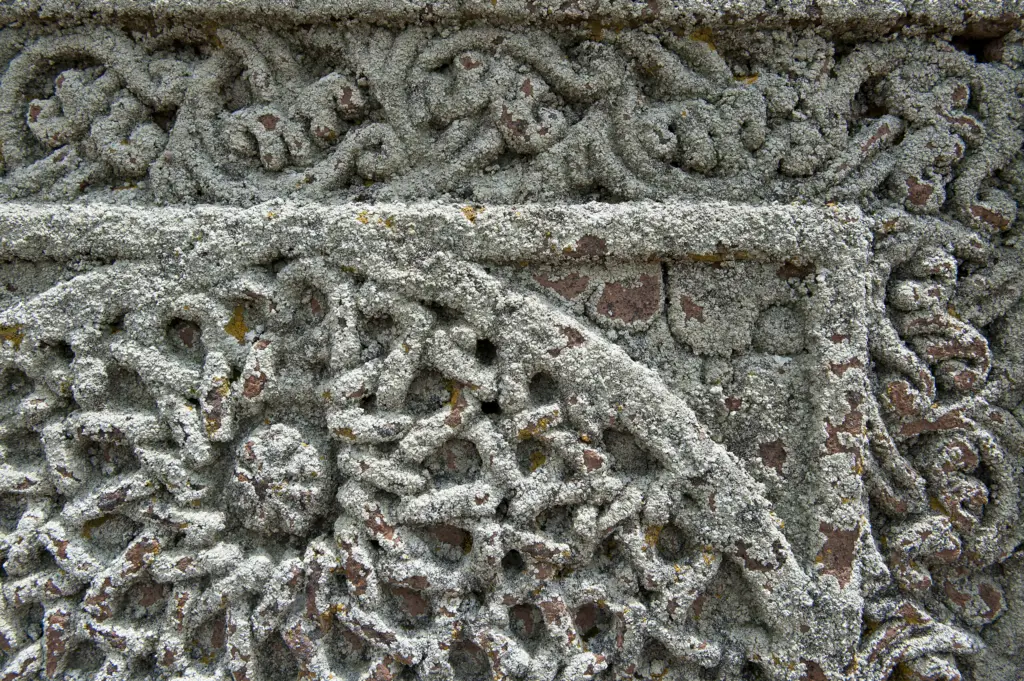
So look closely at the stones. Their faces, for example, are covered with interlaced patterns, niches and inscriptions, carved deep into the reddish stone. To walk it with a guide who reads the carving, join our Ahlat tour.
The Tomb Towers of Ahlat
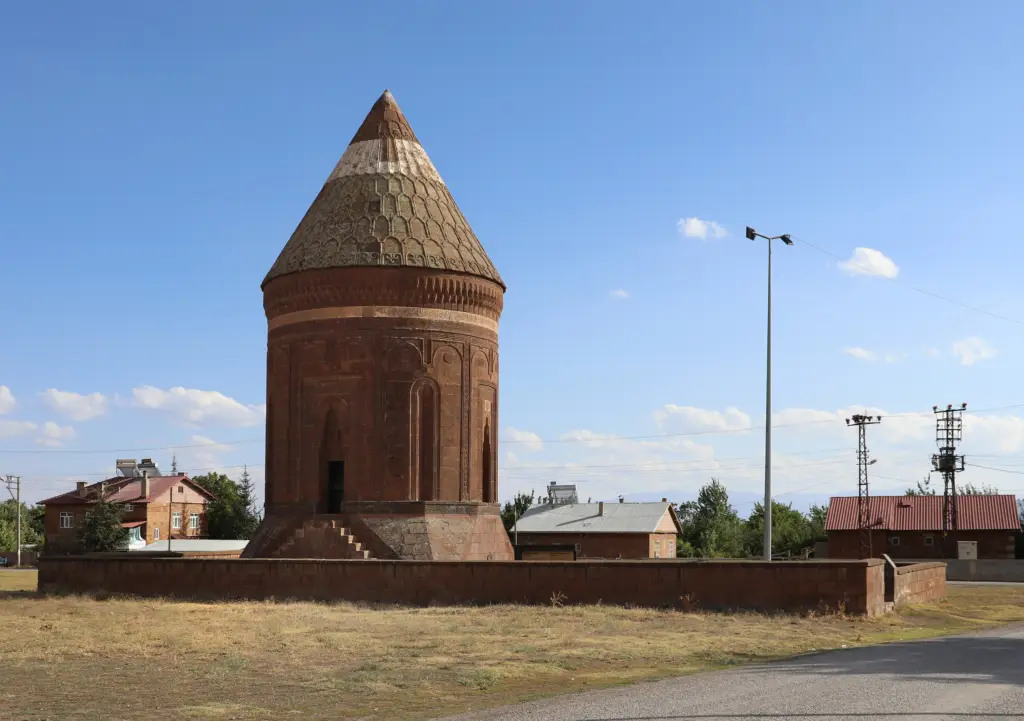
The Great Tomb of Usta Şagirt
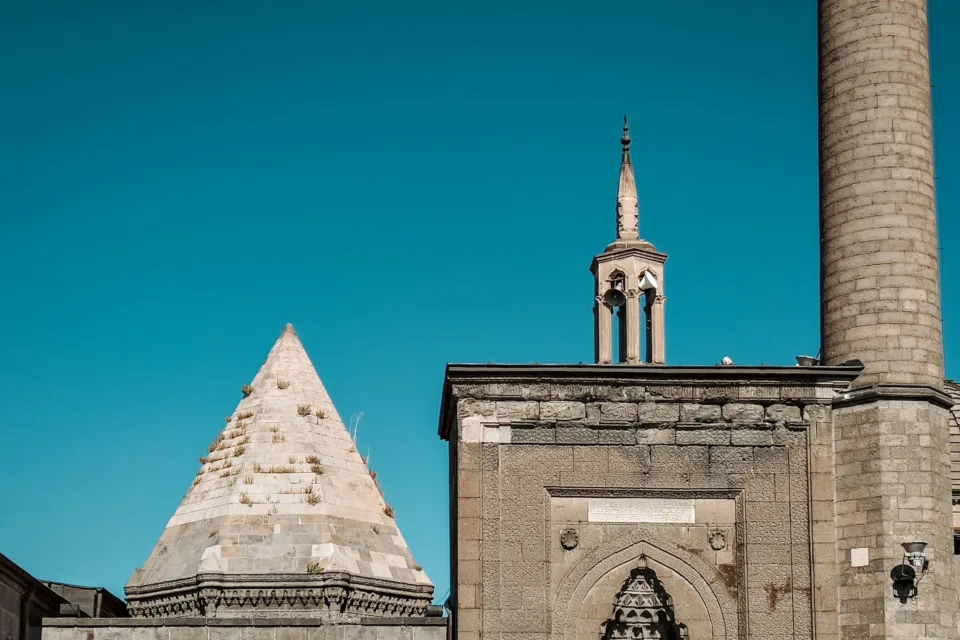
First, find the Great Tomb, a round tower with a conical stone roof, built in the last quarter of the 13th century and known by the name of Usta Şagirt.
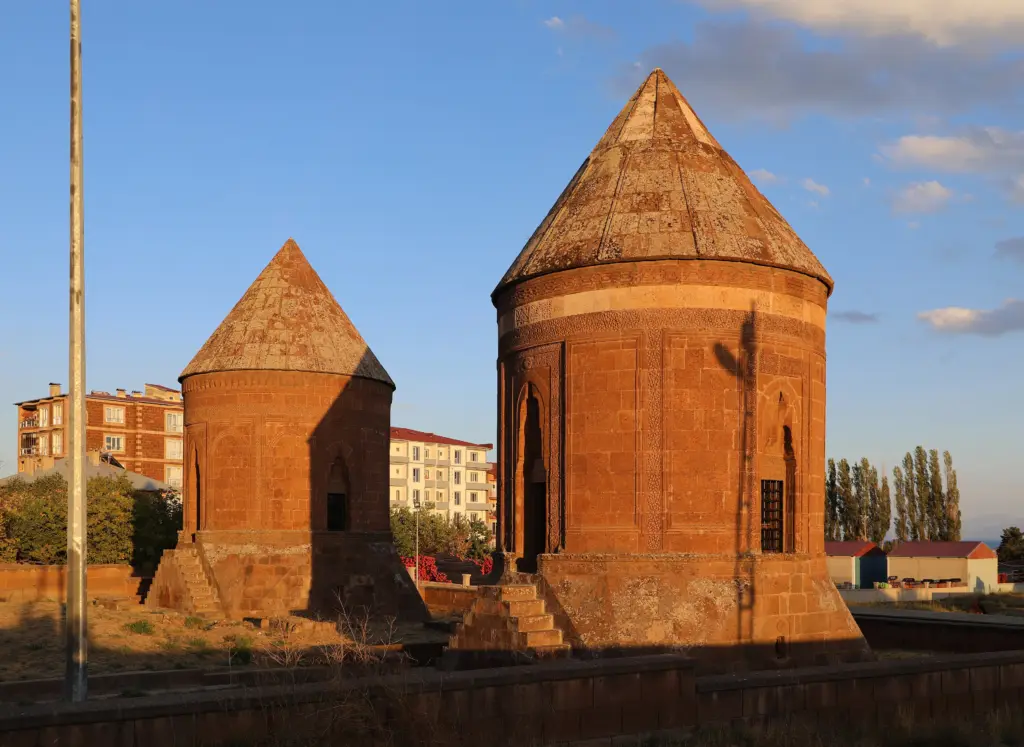
The Twin Tombs
Next, visit the Çifte Kümbet, the Twin Tombs, two red towers standing side by side, built around 1279 to 1281. In the evening light, the red stone seems to glow.
The tomb of Emir Bayındır
Finally, look for the tomb of Emir Bayındır, whose upper story opens in a ring of columns and arches, beside a small mosque.

Tips for visiting Ahlat
Our notes for Ahlat
- LightThe red stone glows at sunset.
- PotatoesAhlat is known across Turkey for its potatoes.
- CavesOld cave dwellings lie near the town.
Our suggestion Walk the cemetery in the late afternoon, when the red stone glows. The Ahlat Museum has been closed since July 2025 for landscaping work.
Nine Thousand Stones and Their Carvers
The cemetery spreads over about 210,000 m² (52 acres) and holds about 9,000 tombstones, from the early 12th to the 16th century. So give yourself time, because the field is far larger than it looks from the road. Also, look for names: researchers have found the signatures of 32 craftsmen on the stones. Then look for the double-headed dragon, one of the motifs carved among the knots and muqarnas niches.
People lived here long before the Seljuks, too, because settlement at Ahlat goes back to about 900 BC. So the town fits a longer story of Lake Van, and our Lost Kingdoms of Eastern Anatolia journey stops here on its way around the lake. However, plan around the Ahlat Museum: it has been closed since July 21, 2025, for landscaping work, while the cemetery itself stays open.
How to Visit Ahlat
Ahlat lies on the northwestern shore of Lake Van, in Bitlis Province.
Then follow the shore of Lake Van to the Armenian church on Akdamar Island.
Because few places in Turkey move travelers like the stones of Ahlat. Walk among hundreds of tall carved tombstones at sunset, with the red tomb towers glowing and Lake Van beyond.

Map
Open in Google Maps (opens in a new tab) Open in Apple Maps (opens in a new tab)
Frequently asked questions
Where is Ahlat?
On the northwestern shore of Lake Van, in Bitlis Province in eastern Turkey.
What is the Seljuk cemetery of Ahlat?
A vast medieval cemetery of tall tombstones carved with interlaced patterns and inscriptions, mostly from the Seljuk and Ahlatshah periods, together with conical tomb towers.
Is Ahlat a UNESCO site?
The tombstones of Ahlat and its citadel are on Turkey's tentative list for UNESCO World Heritage.
What else is there near Ahlat?
Lake Van itself, the crater lake on Mount Nemrut, and Akdamar Island with its Armenian church on the southern shore.
How many tombstones are in the Ahlat cemetery?
About 9,000, spread over 210,000 m² (52 acres), dating from the early 12th to the 16th century.