Ishak Pasha Palace
The Ishak Pasha Palace above Doğubayazıt: a 99-year Ottoman-era palace with Seljuk gates, Persian lions and…
Türkiye GMT+3
Monday, November 9, 2026
Replies within 24 hours
Photo: W. Bulach / Wikimedia Commons, CC BY-SA 4.0
An inland sea of salty, alkaline water at 1,640 meters (5,380 feet), with the 10th-century church of Akdamar Island and the city of Van on its shores.
High on the plateau of eastern Turkey, a sea of deep blue water stretches toward snowy volcanoes. Its water is so salty and alkaline that it rarely freezes, even when winter nights fall far below zero. On a small island near its southern shore, a 10th-century church of rose-colored stone wears Bible stories carved all over its walls. This is Lake Van, the largest lake in Turkey.
Lake Van is so big that it feels like an inland sea. So plan at least two days: one for the city of Van and its fortress, and one for a boat trip to Akdamar Island. In between, try the famous Van breakfast.
Lake Van lies in the provinces of Van and Bitlis in Eastern Anatolia, at 1,640 meters (5,380 feet) above sea level. It covers 3,755 square kilometers (1,450 square miles) and measures 119 kilometers (74 miles) across at its widest point. Its greatest known depth is 451 meters (1,480 feet).
The lake has no outlet. In prehistoric times, lava from a volcano blocked its old exit to the river system of the Euphrates. Today it is therefore one of the few lakes of its size in the world without an outflow, and it holds 38% of the surface water of Turkey.

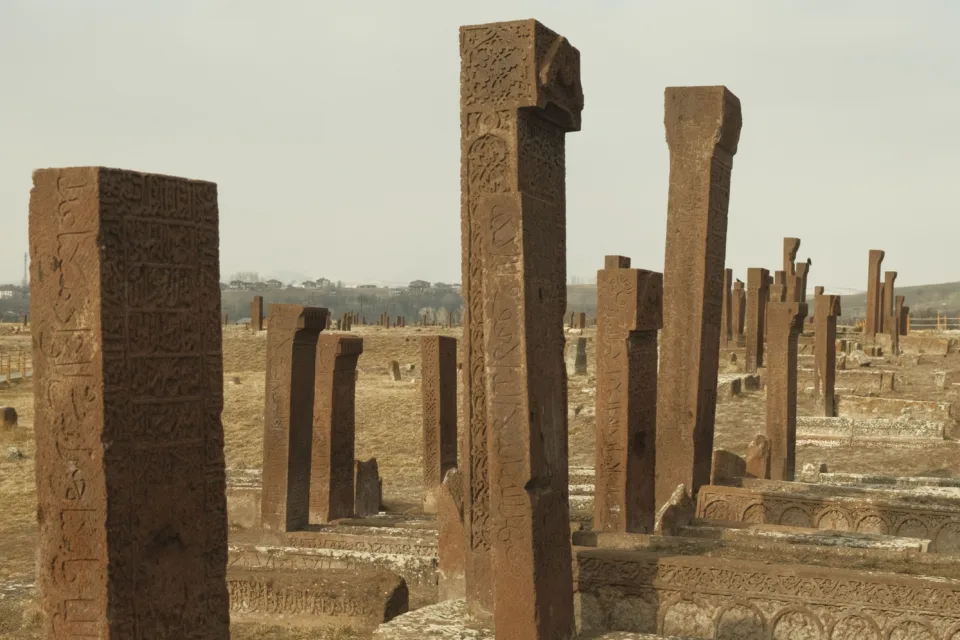
The water of Lake Van is strongly alkaline, with a pH of about 9.7, and rich in sodium carbonate. So salt works along the shore extract minerals from it for use in detergents. To the north rises the volcano Süphan, while a second volcano, also called Nemrut, stands near the western tip. However, it is a different mountain from Mount Nemrut with its stone heads, far to the southwest. Back on the shore, our Ahlat tour walks the Seljuk cemetery of Ahlat and the tombs around it.
For a long time, therefore, scientists knew only one fish that could live in this water, the pearl mullet, or inci kefali in Turkish. Each spring, the fish swim up the freshwater streams to spawn, and the local catch follows the spring floods.
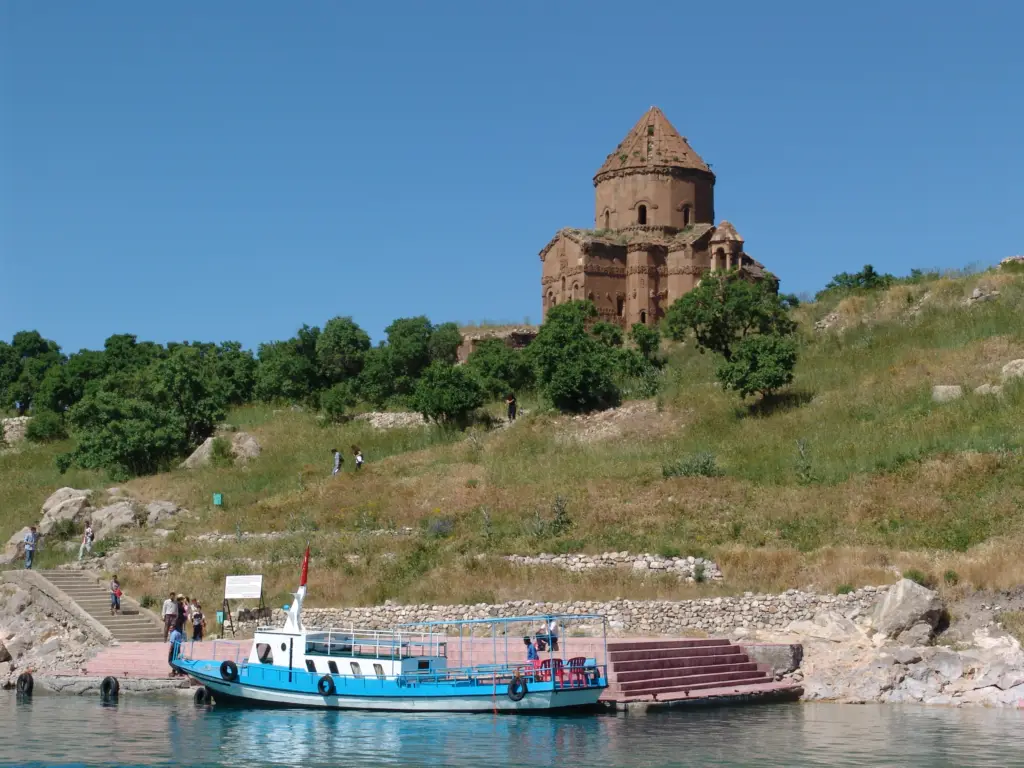
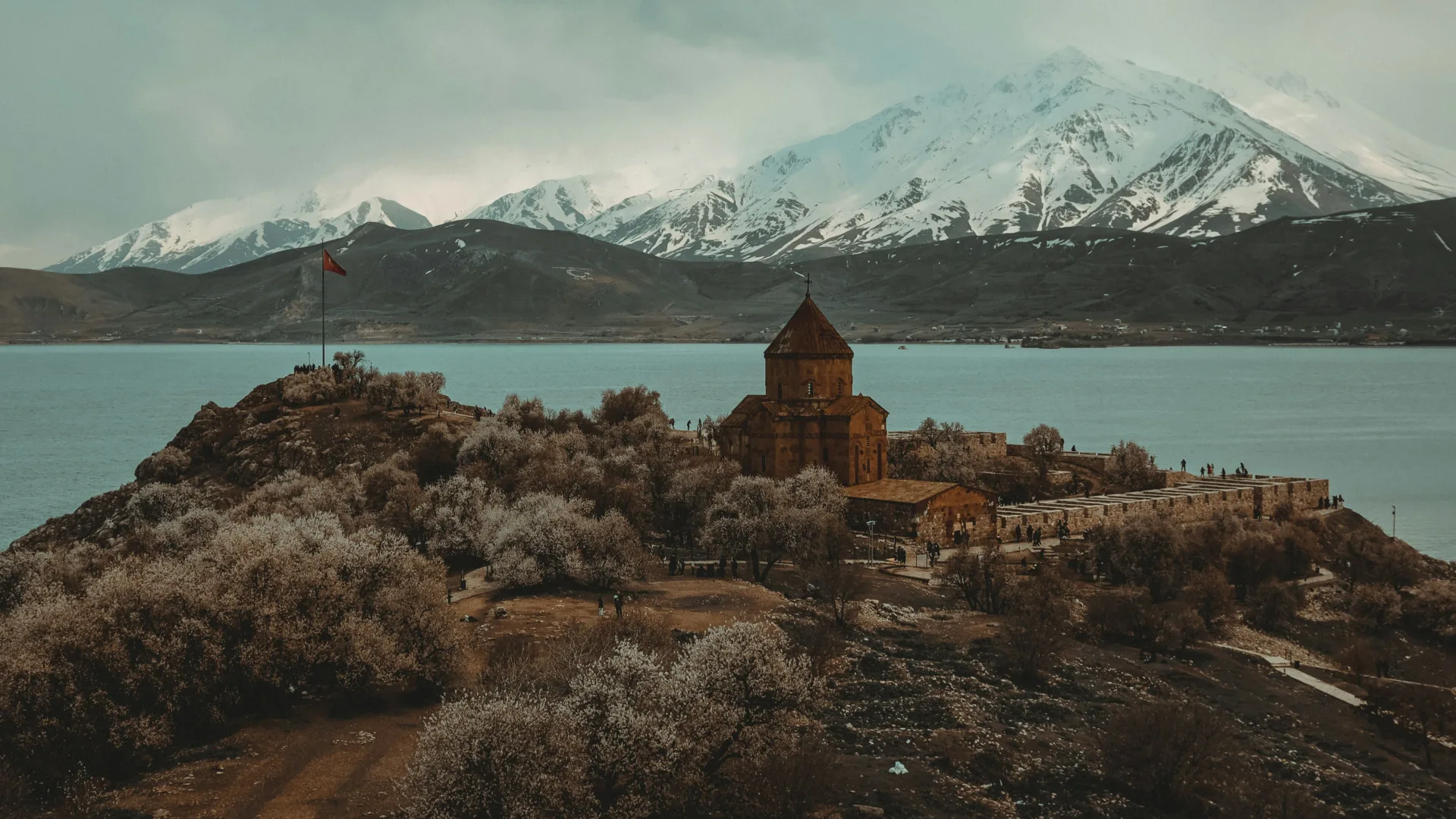
Off the southern shore, Akdamar Island holds the Cathedral of the Holy Cross. At first, King Gagik I of the Armenian kingdom of Vaspurakan chose the island as one of his residences. Then the architect-monk Manuel raised the church in pink volcanic stone between 915 and 921. From 1113 to 1895, it was also the seat of the Armenian Catholicos of Aghtamar.

The church is especially famous for the reliefs on its outer walls. Scenes from Eden, with Adam, Eve and the serpent, run around the building in bands of stone, together with many animals. After 1915, the monastery was abandoned and fell into ruin. That year began the Armenian genocide of 1915–16, the Ottoman government’s destruction of its Armenian population. Later, in 1951, the Turkish writer Yaşar Kemal learned of plans to demolish it and helped to save it. After a restoration from 2005 to 2006, it reopened as a museum, and since 2010 a liturgy has also been held there. Our Van Akdamar tour crosses to the island by boat from Gevaş.
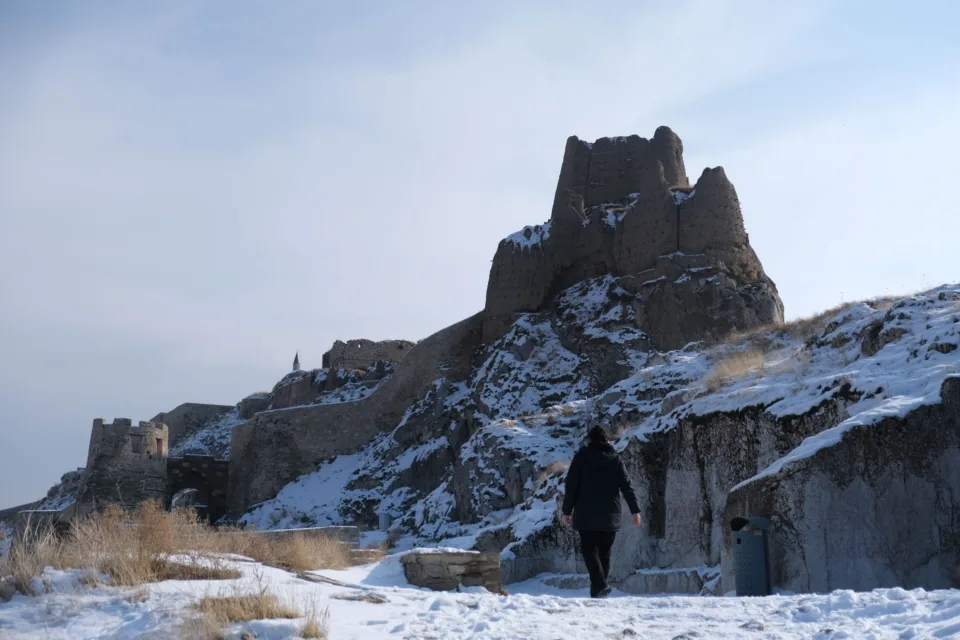
On the eastern shore, by contrast, the city of Van grew below a long rock crowned by a fortress. From the top, the rock and its walls also look out over the plain and the lake. The region is also home to the rare white Van cats, some with eyes of two different colors and a love of water.
Van is also known across Turkey for its generous breakfasts. So go hungry, and take your time over the many small plates.
Our notes for the lake
Our suggestion Plan at least two days: one for Akdamar and the southern shore, one for Van Castle and a long Van breakfast.
Because here a royal church of pink stone stands on an island in a sea of soda. Take the boat to Akdamar, walk around the carved walls of the Holy Cross, then watch the light change over the lake and the volcanoes.
The Ishak Pasha Palace above Doğubayazıt: a 99-year Ottoman-era palace with Seljuk gates, Persian lions and…
Nature
Mount Ararat, Turkey's highest peak: the volcano of Noah's Ark, the first ascent, the 1840 disaster,…

Mount Nemrut in Adıyaman: the mountaintop tomb-sanctuary of King Antiochus I of Commagene, with giant stone…
Open in Google Maps (opens in a new tab) Open in Apple Maps (opens in a new tab)
It is the largest lake in Turkey, covering 3,755 km² (1,450 sq mi), with a greatest known depth of 451 m (1,480 ft).
The water is very salty and alkaline, so it feels unusual, and it rarely freezes even in winter. Follow local advice before swimming.
Boats leave from the southern shore of the lake to the island and its Church of the Holy Cross.
Built between 915 and 921, it is covered with carved reliefs of Bible scenes and animals on its outer walls.
A rare local breed of white cats, some with eyes of two different colors, known for their love of water.