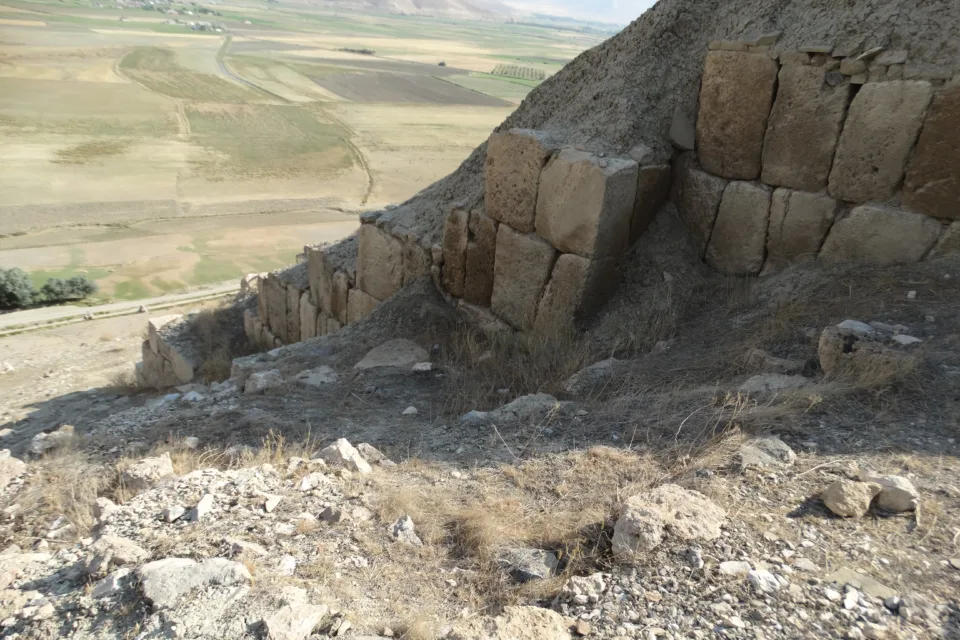
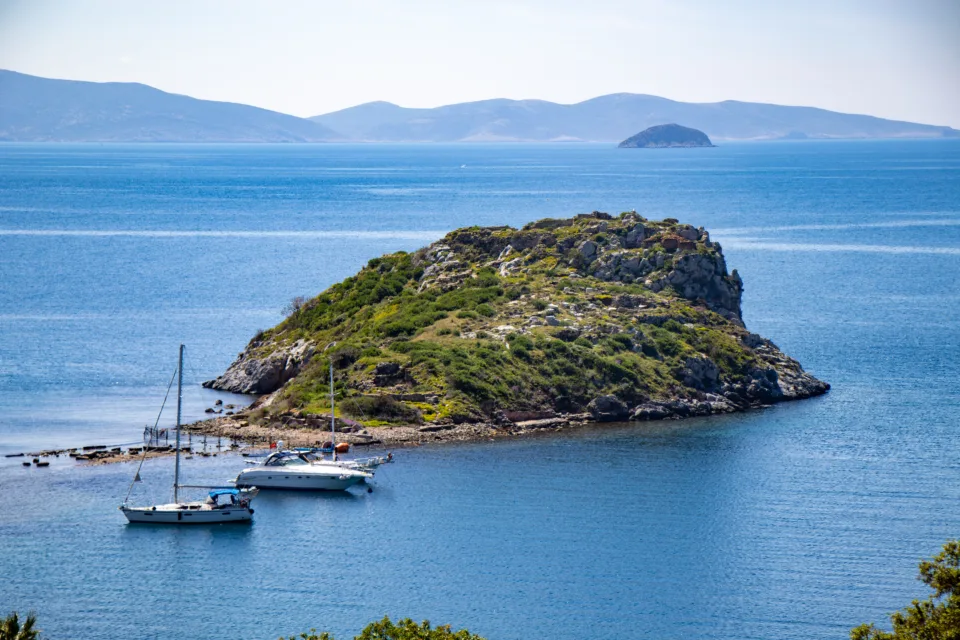
Photo: Dosseman / Wikimedia Commons, CC BY-SA 4.0
Anemurium
A Roman harbor city on Anamur Point, with an odeon, baths, churches and about 350 tombs on the hillside above the sea.
Overview
Anemurium is a Roman harbor city on Anamur Point, near the town of Anamur on the Mersin coast. In antiquity, it was one of the main ports of western Rough Cilicia, on the sea route of the eastern Mediterranean. Its old name was used to mean "windy place." Today, many of its buildings still stand up to their roofs, and its tombs climb the hillside above the sea.
Where Anemurium stands
The ruins lie in Ören, about 10 km (6 miles) from the center of Anamur. They spread south of the Sultansuyu stream to Anamur Point, the southernmost tip of Türkiye on the Mediterranean. Cyprus lies across the water, so the town grew into a trading post. On the high headland stands the acropolis, while the lower city fills the flat land by the shore.
Quick facts
- Good for: Roman baths, an odeon with mosaics, a hillside of tombs, sea views
- Best combined with: Mamure Castle, Alanya
History of Anemurium
A harbor of Rough Cilicia
Because a harbor list names it, the town already existed in the 4th century BC. Later, in the 1st century AD, it belonged to the kingdom of Commagene, and King Antiochus IV struck coins here. Its walls of local blue limestone, 1.5 km (1 mile) long, date from that time. Under Rome, ships stopped here on the way to Cyprus, while a road ran inland to Germaniopolis. So most of the buildings you see today are Roman.
From Rome to the last townspeople
This rich period ended in AD 260, when a Persian army took the city. In the 5th century, it passed to the Isaurians, and under Emperor Zeno it prospered again into the 6th century. Then, after Arab raids in the 7th century, its people left for good.
Much later, in the 19th century, the British naval officer Francis Beaufort made the ruins known. Surveys began in the 1960s, and excavation and restoration went on until the end of 1998. The finds range from fishing tools and coins to razors, make-up, earrings and gold belt buckles.
What to See at Anemurium
The necropolis of Anemurium
West of the city, on the mountain slope, lies the largest necropolis of the region. About 350 tombs stand here, built between the 1st and 4th centuries AD. Many of them still keep their roofs, so you walk among small houses of the dead. Some have barrel vaults, while others carry domes or stand like little temples.
The odeon and the theater

In the lower city, the odeon dates from the 2nd century AD. Its seats rise in a half circle, and blue and white mosaics cover the floor of its vaulted gallery. It probably served as a council house as well. Just north of it, the theater faced east to the sea. Its seats have gone, but parts of its outer walls still stand.
Baths, churches and aqueducts
The city had five baths and four churches. West of the theater, the public bath rises on two floors and stands up to its roof. On its north side, a stair leads to the upper floor, where mosaics decorate the changing rooms. Nearby, the apse of the basilica stands to roof height on top of the city wall. To the north, two rows of aqueducts brought water into the city. One church mosaic, a leopard and a young goat on either side of a palm tree, is now on show in the Anamur Museum.
Visiting Anemurium
Getting to Anemurium
From Anamur, take the road toward Gazipaşa. After about the 4th kilometer, a side road of 2 km (1.2 miles) leads down to the site on the sea side. You can get there by taxi, by hire car or with your own driver. The site has a car park and restrooms, and entry is by ticket. Hours are longer in summer than in winter. We arrange your entry to Anemurium and pair it with Mamure Castle.
Before you go
On our day from Alanya, Anemurium comes first, in the late morning. Your guide walks you past the odeon and the baths, and then up toward the necropolis. The walking stays easy, but both sites lie open to the sun. So bring a hat, sunscreen and comfortable shoes, and come in spring or autumn if you can. After lunch by the sea, the day goes on to Mamure Castle, on the shore east of Anamur. For the start of the coast road, see our Alanya guide and our Alanya city and castle tour.
Updated: October 26, 2026.
Seeing Anemurium with Us
Would you like to walk through a Roman city where the tombs still keep their roofs? Our Anamur tour starts at Anemurium in the morning. After lunch by the sea, you reach the towers of Mamure Castle. The roofed tombs come first and the towers of Mamure after; send us your date in Anamur.
Map
Open in Google Maps (opens in a new tab) Open in Apple Maps (opens in a new tab)
Frequently asked questions
Where is Anemurium?
It lies in Ören, about 10 km (6 miles) from the center of Anamur on the Mersin coast, on Anamur Point. From Anamur, take the road toward Gazipaşa, then a 2 km (1.2-mile) side road down to the site.
Is Anemurium open, and do we need tickets?
Entry needs a ticket, and hours are longer in summer than in winter. Ask us to confirm the hours; we pair Anemurium with Mamure Castle.
What should we see at Anemurium?
About 350 tombs climb the slope west of the city, and many still keep their roofs. In the lower city, look for the odeon with its blue and white mosaics and the public bath that stands up to its roof on two floors.
When should we visit Anemurium?
Come in spring or autumn if you can, because the site lies open to the sun. Bring a hat, sunscreen and comfortable shoes.
Which of your tours visits Anemurium?
Our Anamur tour starts at Anemurium in the morning. After lunch by the sea, it goes on to Mamure Castle.