Karatepe-Aslantaş
Karatepe-Aslantaş in Osmaniye Province: a Neo-Hittite fortress of the 8th century BC whose gates still hold…
Photo: Turkey Your Way
Kastabala-Hierapolis, a Roman city of Cilicia near Osmaniye, with a colonnaded street, a theater and a medieval castle on its rock.
Kastabala, or Kastabala-Hierapolis, was one of the important cities of ancient Cilicia. Its ruins lie 12 km (7.5 miles) north-northwest of Osmaniye, near the Ceyhan river. Here, a colonnaded street runs through the old center, past a theater, a bath and two churches. Above it all, a medieval castle stands on a rocky hill. Entry to the site is free.
Don't confuse it with Karatepe-Aslantaş, the Late Hittite site with two great gates farther north. Kastabala lies on the road to the Karatepe Museum, so our tour visits both in one day.
The site sits on the road from Cevdetiye to the Karatepe Museum, among the villages of Kesmeburun, Bahçe and Kazmaca. From its slopes, the city looks over a small plain near the Ceyhan, the ancient Pyramos. Its land once took in the whole fertile plain between the Ceyhan in the south, Karatepe in the north and the Kırmıtlı bird sanctuary in the west.
Quick facts
Kastabala was the cult center of the goddess Artemis Perasia, and ancient writers knew her sanctuary here. The city first appears on coins struck under the Seleucid king Antiochus IV Epiphanes. Because of the goddess, he gave it the name Hierapolis, the "holy city."
People lived on this spot long before that, though. Since 2009, a team from Karadeniz Technical University has dug the site. Their finds reach back to the Late Neolithic and Early Chalcolithic, and forward to the 15th century AD.
Most of what stands in the city today is Roman. The first phase of its public buildings dates from the Severan dynasty. In the 2nd century AD, the city had no wall at all. Then, in the late 4th century AD, it gained its first defenses. Much later, people still lived here between the 13th and 15th centuries. The castle on the rock is medieval as well.
Running through the center, the colonnaded street forms the main axis of the city, so it makes the natural route for your walk. Around it, the town followed a grid plan set on a slope. To make flat ground, the builders raised terraces on walls and vaults.
Along the grid, each public building took its own plot. As you walk, you pass the theater, a bath and shops. The plan holds two churches as well, one to the north and one to the south.

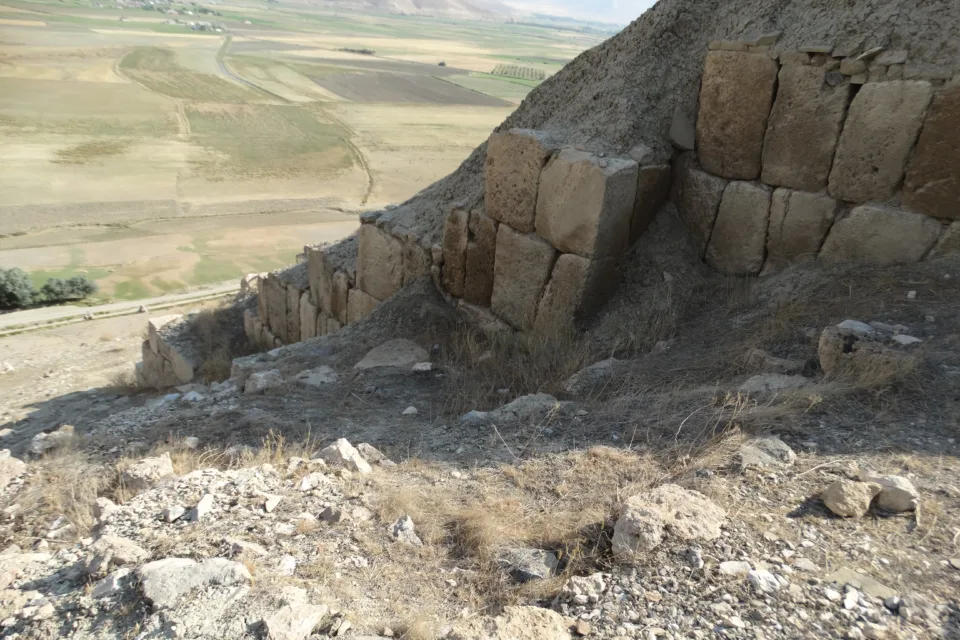
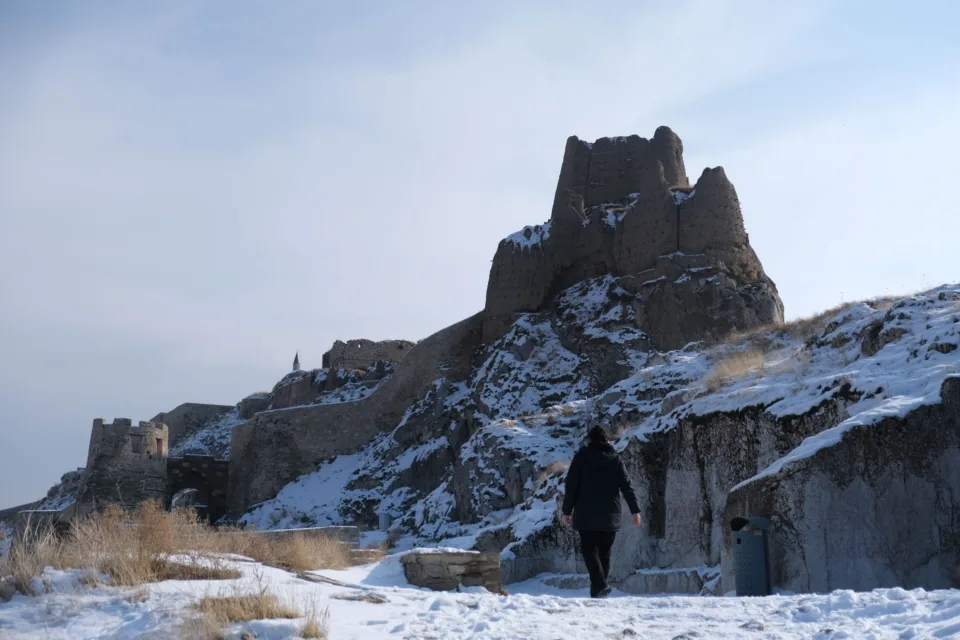
The medieval castle rises on a rocky hill that was easy to defend. At its northeast foot, a passage cut through the rock linked the western and eastern housing areas of the city.
On the rocky slopes to the east, north and south, the city's tombs line the hillsides. The city's water came by open channels from Karagedik, in today's Düziçi district.
An asphalt road leads to the site, about 12 km (7.5 miles) from Osmaniye. Without a car, you can take a village dolmuş (a shared minibus on a set route) toward Bahçe, Kesmeburun or Karatepe. The site has a car park and restrooms, and the Osmaniye Museum is its contact office for visitor questions. We arrange your entry to Kastabala and pair it with Karatepe-Aslantaş on the same day.
From Kastabala, the road runs on to Karatepe-Aslantaş, in Kadirli district, inside its own national park. There, a fortress of the 8th century BC kept two great gates of the Late Hittite period. On their carved walls, texts appear both in the Phoenician alphabet and in Luwian hieroglyphs. Digs began at Karatepe in 1947, and the site later opened as Türkiye's first open-air museum. So one day takes you from gates of the 8th century BC to the streets of a Roman city.
On our day from Adana, Kastabala comes first. Your driver takes you to the site, and then you walk the colonnaded street with your guide, past the theater, the bath and the shops. After lunch, the day continues north to the gates of Karatepe-Aslantaş. The walking stays easy. For another Cilician city on the coast, see Tarsus, and for the wider region, our Mediterranean guide.
Updated: October 26, 2026.
Would you like to walk a Roman street below a medieval castle? Our Karatepe and Kastabala tour starts at Kastabala in the morning. Then, it ends at the carved gates of Karatepe-Aslantaş. The Roman street in the morning and the carved gates after lunch: write to us with your date.
Karatepe-Aslantaş in Osmaniye Province: a Neo-Hittite fortress of the 8th century BC whose gates still hold…
Open in Google Maps (opens in a new tab) Open in Apple Maps (opens in a new tab)
The ruins lie 12 km (7.5 miles) north-northwest of Osmaniye, near the Ceyhan river, on the road from Cevdetiye to the Karatepe Museum. An asphalt road leads to the site.
Yes. The site has a car park and restrooms. Ask us to confirm the hours; we pair Kastabala with Karatepe-Aslantaş.
A colonnaded street runs through the old center, past a theater, a bath, shops and two churches. A medieval castle stands above it all on a rocky hill.
No. Karatepe-Aslantaş is a Late Hittite site with two great gates, farther north on the same road, so the two fit into one day.
Our Karatepe and Kastabala tour starts at Kastabala in the morning. After lunch, it ends at the carved gates of Karatepe-Aslantaş.