
Photo: Bollweevil / Wikimedia Commons, CC BY-SA 3.0
Column of Constantine
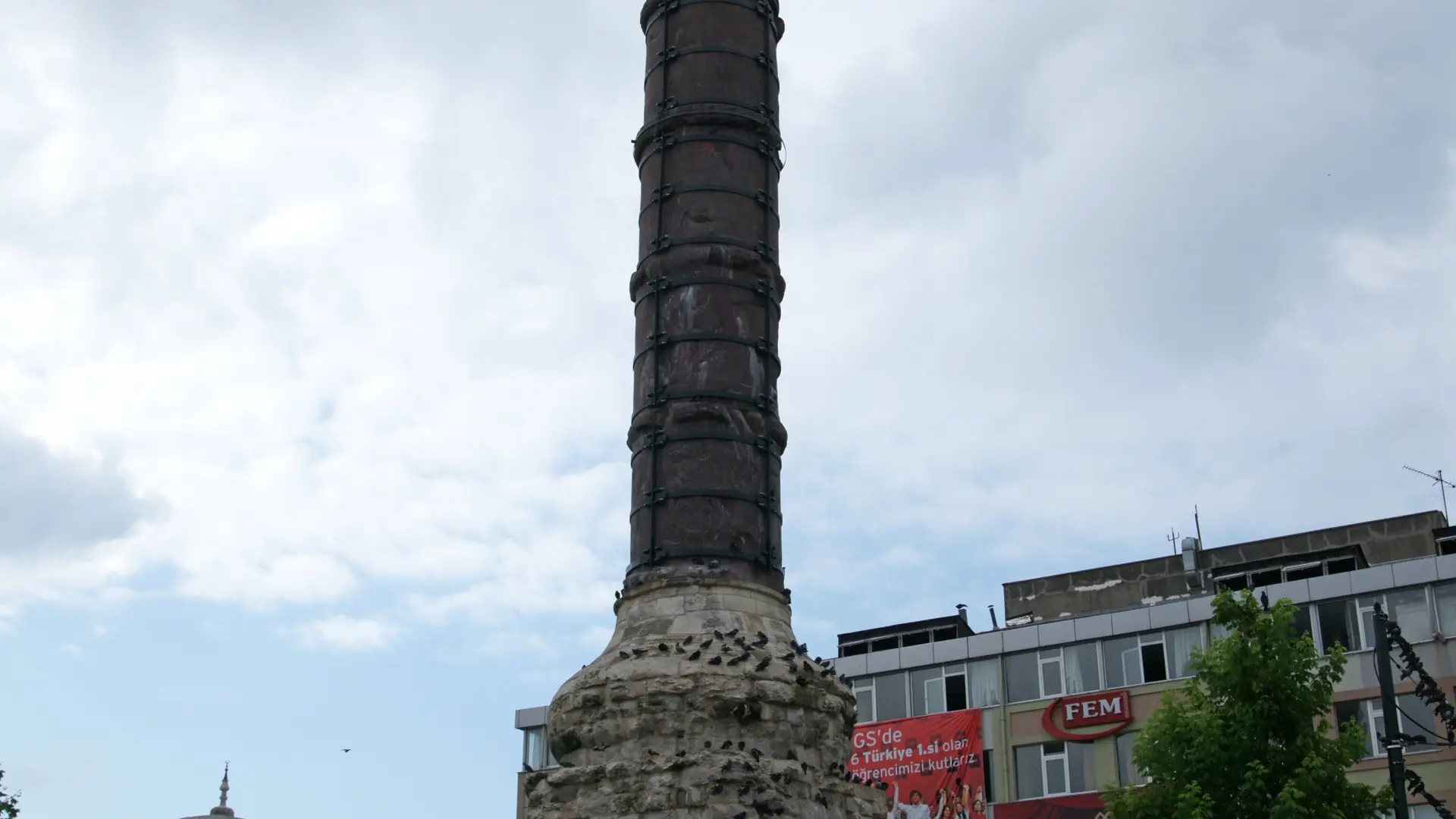
The oldest monument of Constantine's city: purple stone drums, iron hoops and pigeons on the old main street of Constantinople.
Overview
Between Sultanahmet and the Grand Bazaar, the tram stops beside a tall, dark column bound with iron rings. Pigeons crowd its stone base, beside the tram stop. Yet this column marks the birth of a city. It is the Column of Constantine, raised when the Roman emperor Constantine the Great made Byzantium his new capital, Constantinople, in the year 330.

- Good for
- History lovers, a quick stop on the way to the Grand Bazaar
- Best combined with
- The Grand Bazaar, the Hippodrome, the Çemberlitaş Hamam
The Column of Constantine on the Old Main Street
To begin with, the column stands on Çemberlitaş Square, on the second-highest of the city’s seven hills. In Roman times, this was the oval Forum of Constantine, halfway along the Mese, the great avenue that ran from the palace to the city walls. Today, Divanyolu and the tram line follow roughly the same route. With a guide, join our Roman Istanbul tour. Our seven hills of Istanbul tour stops here.
The column in numbers
- 330the column is dedicated
- 1985listed with historic Istanbul by UNESCO
History of the Column of Constantine
A bronze emperor in the sky
First, the column was finished around 328 and dedicated on May 11, 330, with both Christian and pagan ceremonies. It was made of huge drums of porphyry, the purple stone of emperors, with bronze laurel wreaths hiding the joints. On top stood a bronze statue of Constantine with a crown of sun rays, so the whole monument rose to almost 50 meters (164 feet).
Storms, crusaders and fire
In 1106, however, a storm threw down the statue and three drums. Later, Emperor Manuel I placed a cross on top instead, and in 1204 the crusaders carried off the bronze wreaths. Around 1515, the Ottomans added iron hoops to hold the cracked stone together, so the Turks called it Çemberlitaş, the hooped stone. In 1779, a fire blackened it, and it became known as the Burnt Column. Sultan Abdülhamid I repaired it and added the masonry base you see today.
Visiting the Column of Constantine
Today, the column stands right beside the Çemberlitaş stop of the T1 tram. Then look closely at the base: the original Roman platform lies about 2.5 meters (8 feet) below today’s street. On the same square stands the Çemberlitaş Hamam, built by Nurbanu Sultan in 1584.
On the Second Hill, Near the Grand Bazaar
The column stands on Çemberlitaş Hill, the second of the seven hills of the historic peninsula, which it shares with the Çorlulu Ali Paşa Madrasa and the Nuruosmaniye Mosque. From here, the Grand Bazaar is only a short walk away, with its 2,486 shops along 62 streets, 18 hans and 2 bedestens. The Çemberlitaş stop sits on the T1 tram line, which runs from Kabataş to Bağcılar, so the column is easy to reach from Sultanahmet or from the ferries at Eminönü.
Our notes for Çemberlitaş
- MorningDivanyolu is golden at sunrise.
- TramThe T1 stops right beside the column.
- HamamThe historic Çemberlitaş Hamam stands on the same square, for a traditional bath.
- NextThe Grand Bazaar is about five minutes away on foot.
Our suggestion Walk from the Hippodrome along Divanyolu in the early morning, stop at the column, then continue to the Grand Bazaar as its gates open.
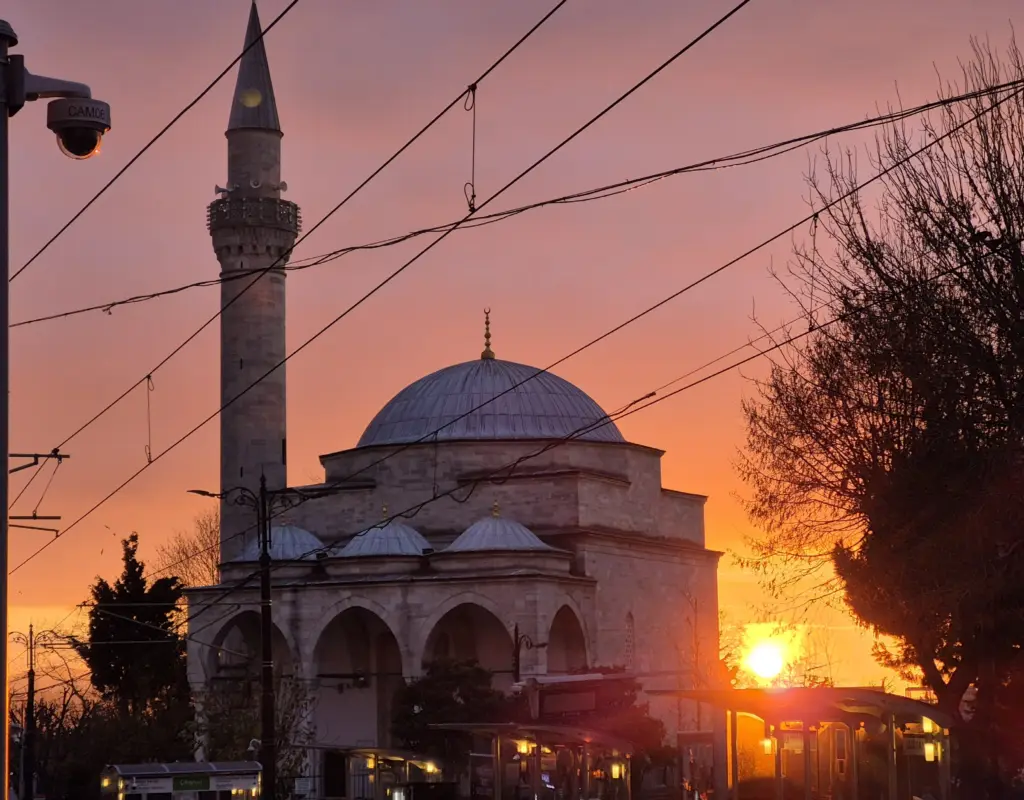
We stop here on our walks from Sultanahmet to the Grand Bazaar. For the Roman city around it, see the Hippodrome of Constantinople, and for a historic bath on the square, read our guide to the Turkish bath. Just around the corner, finally, the Byzantine Şerefiye Cistern hides under Piyer Loti Street.
Because this is where Constantinople was born. Stand at the foot of the column on the old main street, look up at the purple drums, and imagine a bronze emperor gleaming in the sun above the forum.
Map
Open in Google Maps (opens in a new tab) Open in Apple Maps (opens in a new tab)
Gallery
Frequently asked questions
How old is the Column of Constantine?
It was completed around 328 and dedicated on May 11, 330, when Constantine made the city his new capital.
Why is it called Çemberlitaş?
It means hooped stone, after the iron hoops added around 1515 to hold the cracked drums together.
Why is it called the Burnt Column?
A fire in 1779 left black scorch marks on the stone, so it became known as the Burnt Column.
Where is the Column of Constantine?
On Çemberlitaş Square, beside the T1 tram stop of the same name, between Sultanahmet and the Grand Bazaar.
Which hill is the Column of Constantine on?
Çemberlitaş Hill, the second of Istanbul's seven hills, which it shares with the Nuruosmaniye Mosque and the Çorlulu Ali Paşa Madrasa.

You may also like
-
 Tour
Private Seven Hills of Istanbul Tour
-
 Tour
Private Istanbul Cisterns Tour: Şerefiye and Binbirdirek
-
 Tour
Private Roman Istanbul Tour: Hippodrome, Column and Aqueduct
-
 Article
Turkish Bath in Istanbul: How a Hammam Works
-
 Place
Çemberlitaş Hamam
-
 Place
Grand Bazaar
-
 Place
Hippodrome of Constantinople
-
 Place
Şerefiye Cistern