Photo: Focaajans / Wikimedia Commons, CC BY-SA 4.0
Foça
The town of seals: master sailors who founded Marseille, a castle of Genoese alum traders, and coves protected for one of the rarest seals on earth.
Overview
North of İzmir, the road leaves the olive groves and drops to a small town wrapped around two bays. Below, fishing boats tie up at the quay. Old stone houses line the water, and castle walls rise from the rocks. Out among the islands, the endangered Mediterranean monk seal still finds shelter. This is Foça, ancient Phocaea, the town of seals. From İzmir, join our Foça day trip.
- Good for
- A seaside town, boat trips, history
- Best combined with
- Pergamon, Cunda Island, İzmir
Phocaea, the Town of Seals
To begin with, the ancient name Phocaea is linked to the seals, phoca, that lived on the islands nearby, and the city even put a seal on its coins. Aeolian Greeks settled here in the 11th century BC. Ionians made it one of the great cities of their coast.
The sailors who founded Marseille
Most famously, the Phocaeans were master sailors. Later, they founded colonies all around the Mediterranean and the Black Sea: Massalia, today’s Marseille, Amisos, today’s Samsun, Lampsakos on the Dardanelles, and Elea in Italy. Besides, they were among the first people in Ionia to mint coins of electrum, a natural mix of gold and silver.
Genoese alum and a castle
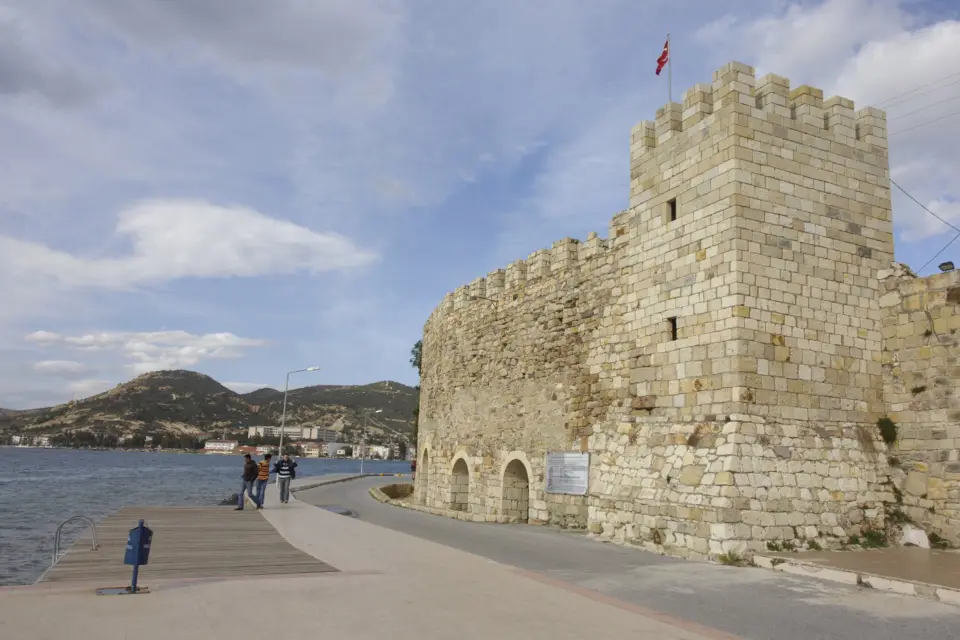
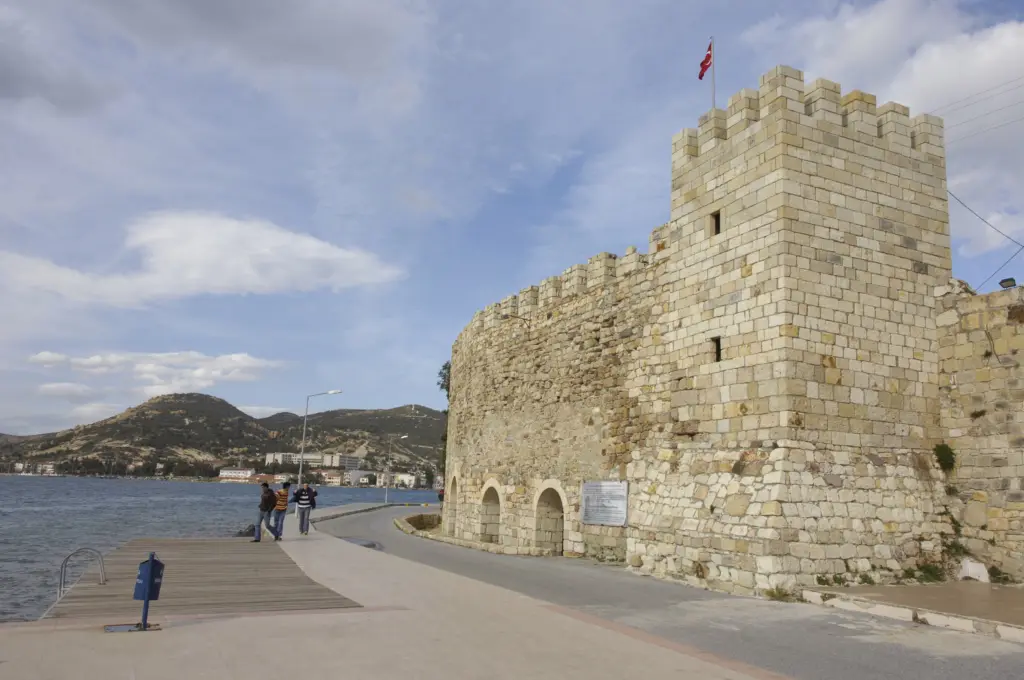
Then, in the Middle Ages, Phocaea grew rich again from alum, a mineral prized for dyeing cloth. For example, in 1267, the Byzantines granted its mines to the Genoese brothers Benedetto and Manuele Zaccaria, and the Genoese held the town for many years. Today, their castle still guards the smaller bay.
Phocaea and Nea Fokaia
Later still, until the early 20th century, most people here were Greek. After the massacre of Phocaea, the survivors left, and many founded the new town of Nea Fokaia in Halkidiki, Greece.
What to See in Foça
The two bays and the castle
First, walk around the two bays: Büyükdeniz, the Great Sea, and the smaller Küçükdeniz inside it, where the castle stands. Follow the path along the walls at sunset.
The boat tours
Next, take one of the boat tours from the town center. After all, much of the coast between Foça and Yenifoça is strictly protected, so new building is not allowed, and the small coves stay wild.
Taş Kule
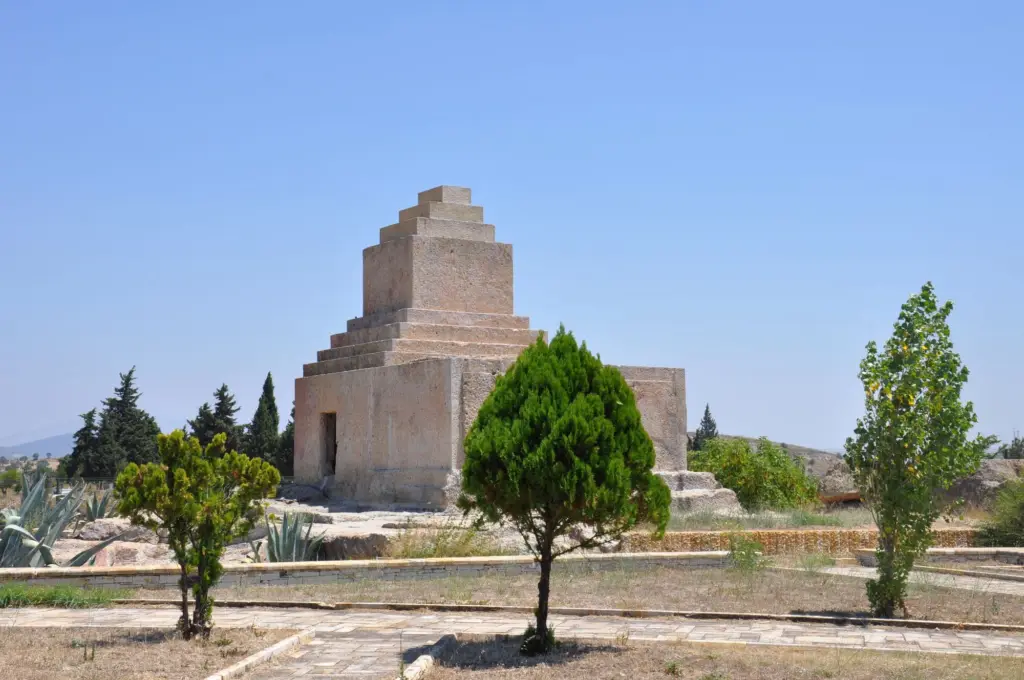
Also, drive about 7 kilometers (4 miles) east to Taş Kule, a strange tomb of the Persian period carved from a single rock. It rises two stories, about 4.5 meters (15 feet), with the sarcophagus on top, and scholars know no exact parallel for it anywhere.
The Monk Seals of Foça
Finally, the seals. Foça is one of three marine protected areas in Turkey for the Mediterranean monk seal, a heavily endangered sea mammal. So if you are lucky enough to see one from a boat, keep your distance and stay quiet.
Tips for visiting Foça
Our notes for Foça
- NameLocals call it Eski Foça, Old Foça.
- SealsRare; never approach them.
- CovesBest seen by boat.
Our suggestion Take a morning boat tour along the protected coves, then have a long fish lunch on Küçükdeniz below the castle.
Because Foça still feels like an old Aegean harbor. Walk along the little bay below the castle, take a boat to the protected coves where the monk seals live, and eat fish where Phocaean sailors once set out for Marseille.
Map
Open in Google Maps (opens in a new tab) Open in Apple Maps (opens in a new tab)
Frequently asked questions
Where is Foça?
On the Aegean coast about 69 kilometers (43 miles) northwest of central İzmir. Locals often call it Eski Foça, Old Foça, to tell it apart from Yenifoça, 20 kilometers (12 miles) away.
Why is it called Foça?
From ancient Phocaea, a name linked to the seals, phoca, that lived on the nearby islands. A seal even appears on its ancient coins.
Can you see monk seals at Foça?
Foça is one of three marine protected areas in Turkey for the endangered Mediterranean monk seal. Sightings are rare, so treat any as a gift and keep your distance.
What is Taş Kule?
A tomb carved from the rock in the Persian period, about 7 kilometers (4 miles) east of Foça, with a two-story form and a sarcophagus on top.