

Archaeological site
Derinkuyu Underground City
One of the deepest underground cities open to visitors in Cappadocia: rolling stone doors, air shafts,…
Photo: Turkey Your Way
Rock-cut churches, chapels and dining halls of a Byzantine monastery, painted with frescoes from the 10th and 11th centuries.
A short walk from the town of Göreme, a small valley of rock cones hides a whole monastery: the Göreme Open-Air Museum. There, monks carved churches, chapels, kitchens and dining halls into the soft stone, then painted the walls with saints and scenes from the life of Christ.
The Göreme Open-Air Museum gathers the best of these rock-cut churches in one walk. Most date from the 10th and 11th centuries, and many keep their painted walls. Come early in the morning.
The museum lies on the edge of Göreme in Nevşehir province, in the heart of Cappadocia. It belongs to the UNESCO World Heritage Site of Göreme National Park and the Rock Sites of Cappadocia, listed in 1985. Entry is by ticket, and the Dark Church needs a separate ticket. For more rock churches, join our tour of the rock churches of Güllüdere and Çavuşin.
Inside the fence, a loop path leads past the churches and chapels. Most are small, so you step in, look up and then move on. Then save time for the Tokalı Church just outside the gate.
The Göreme Open-Air Museum in numbers

Millions of years ago, volcanic ash covered this region, then hardened into tuff, a stone soft enough to carve by hand. In the 4th century, small communities of hermits began to settle here, following the teachings of Saint Basil of Caesarea, one of the Cappadocian Fathers. Later, monks carved whole monasteries into the valleys.
Byzantine painters decorated these churches mainly between the 9th and 11th centuries, after the end of the Iconoclast period. Because the region was remote, some painters followed the Gospel of James rather than only the four canonical Gospels. So you may see scenes from the childhood of Mary that you will not find in many Western churches.
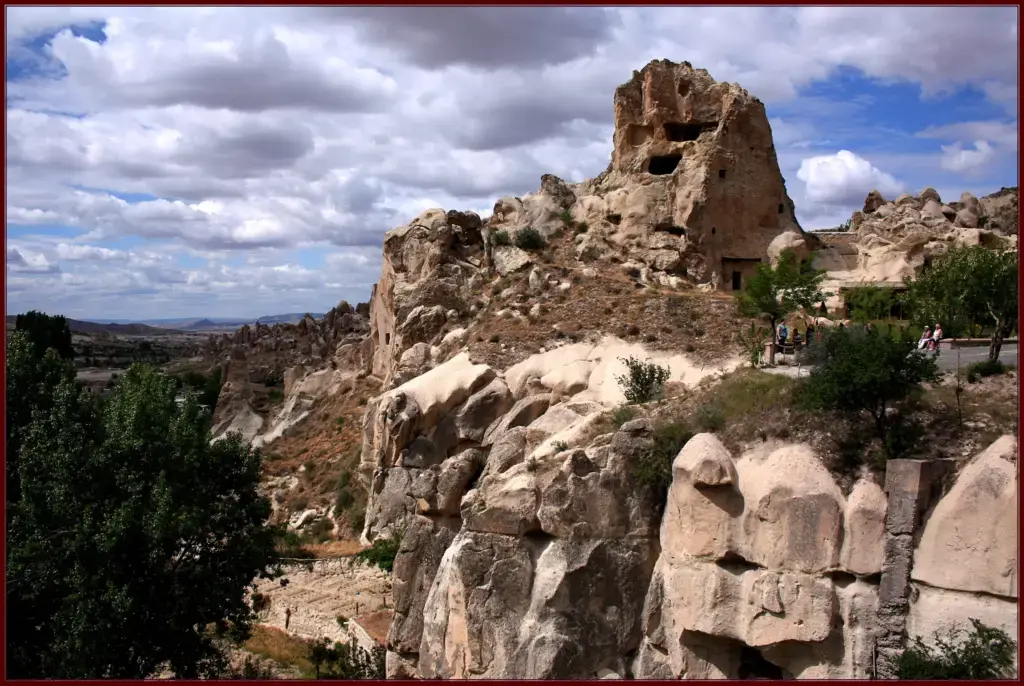
The Dark Church dates from the late 11th or early 12th century. Only one small window in the narthex lets in light, so little light reached its frescoes over the centuries. That is why its scenes from the life of Christ, from the Nativity to the Ascension, have kept their vivid colors. It has its own entrance and needs a separate ticket, but it is worth it.
The Apple Church (Elmalı Kilise) may take its name from the reddish orb in the hand of the Archangel Michael in its dome. Another story links it to an apple tree that once grew nearby. Close by, the Church of St. Barbara, built later in the 11th century, honors a martyr whose father imprisoned her for her faith.
The Snake Church (Yılanlı Kilise), by contrast, is a simple barrel-vaulted hall. Its name comes from a fresco of Saint George and Saint Theodore slaying a dragon, painted here as a snake. In the Church with Sandals (Çarıklı Kilise), look for two footprints below the Ascension scene, which give the church its name.

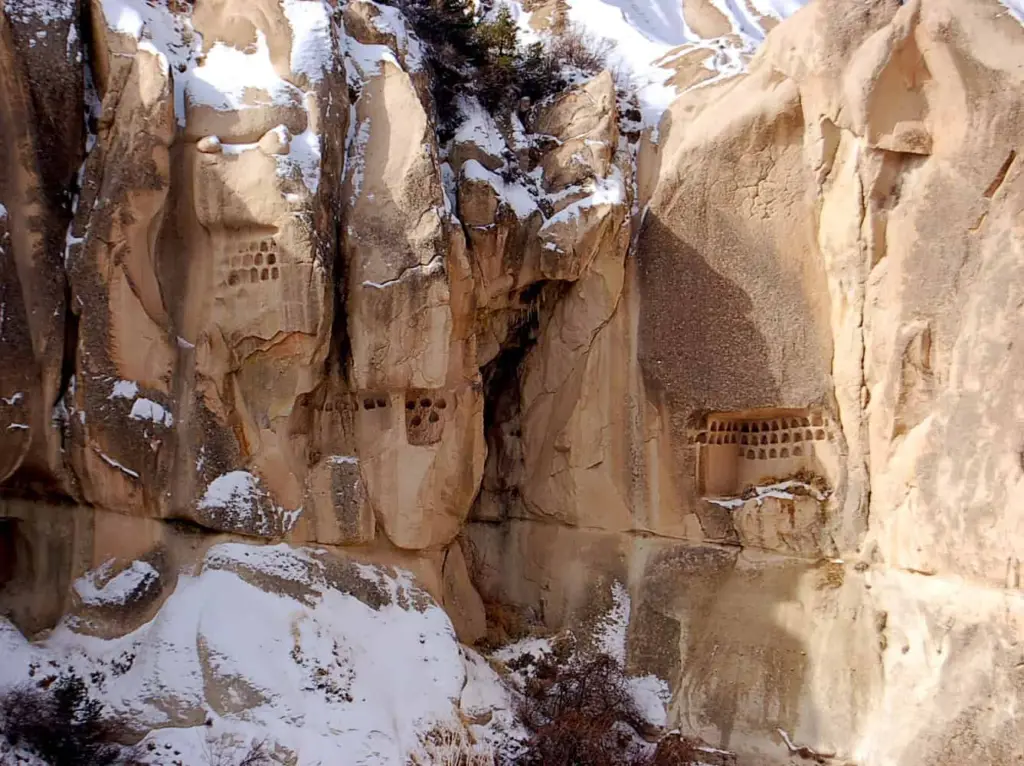
Between the churches, look also for the dining halls of the monks. Long tables and benches are carved straight out of the rock. Near the entrance, the tall rock of the nunnery also rises with rooms on several levels.

Finally, just outside the main gate, stands the Tokalı Church, the “Buckle Church”. It has four parts: an Old Church from the 10th century, a larger New Church added soon after, a side chapel and a lower church. Inside, its deep blue backgrounds glow above scenes from the life of Christ.

The town of Göreme grew up around these valleys, so many of its families lived in carved houses until the 20th century. Today the same cones hold cave hotels, and at dawn the balloons rise over the museum valley.
The restaurants of Göreme are only a short walk away. Try testi kebabı, for example, meat and vegetables cooked in a sealed clay pot, or mantı, small dumplings with yogurt. To cook the dishes of the region with a local family, book our Cappadocia cooking class. Our North Cappadocia tour starts its day at the museum.
Our notes for the Göreme Open-Air Museum
Our suggestion Be at the gate when it opens and go straight to the Dark Church, which has its own entrance and ticket. Then do the valley churches, and on the way back down to town stop at the Tokalı Church, which your main ticket already covers.

Because here the Byzantine painters are still at work on the walls. Walk from cone to cone, step into the Dark Church where the colors survived in the shadows, and finish at the Tokalı Church, whose blue backgrounds glow like stained glass.
Archaeological site
One of the deepest underground cities open to visitors in Cappadocia: rolling stone doors, air shafts,…
Neighborhood
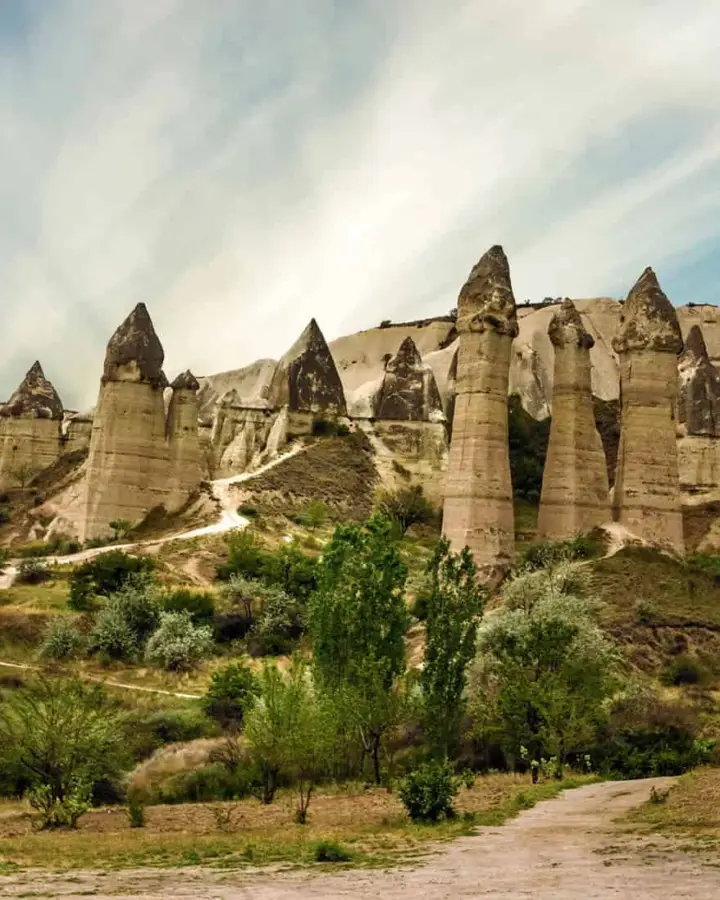
The heart of Cappadocia: balloons at dawn, fairy chimneys, painted rock churches, pigeon valleys, underground cities…
Archaeological site
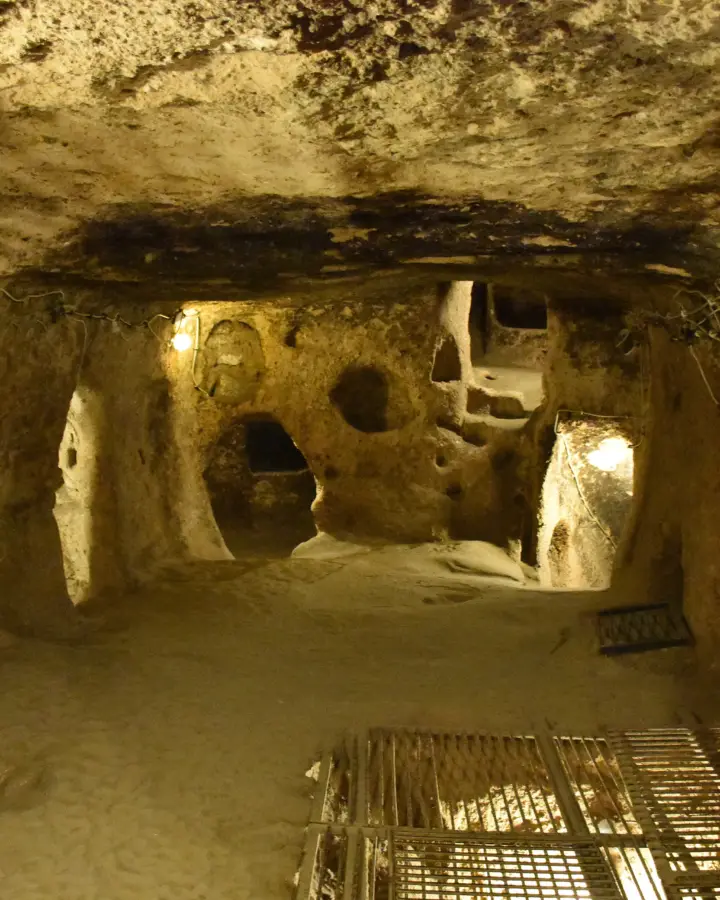
The wide, low underground city under the village of Kaymaklı: four open floors of stables, a…

Open in Google Maps (opens in a new tab) Open in Apple Maps (opens in a new tab)
A Byzantine monastic complex of rock-cut churches, chapels and dining halls on the edge of Göreme, many painted with frescoes from the 10th and 11th centuries.
Yes. Very little light ever reached it, so its frescoes kept their colors.
Just outside the main gate of the Göreme Open-Air Museum, and the main ticket covers it.
Yes. It belongs to the World Heritage Site of Göreme National Park and the Rock Sites of Cappadocia, listed in 1985.
It is a short walk or taxi ride from the center of Göreme.
 Tour
Rock Churches of Güllüdere and Çavuşin: Private Tour
 Journey
Istanbul and Cappadocia in 4 Days: A Private Tour with a Flight
 Journey
Cappadocia, Ephesus and Pamukkale in 5 Days: A Private Tour
 Journey
Cappadocia from Antalya in 3 Days: A Private Tour via Konya
 Journey
Pamukkale to Cappadocia in 3 Days: A Private Tour by Road via Konya
 Journey
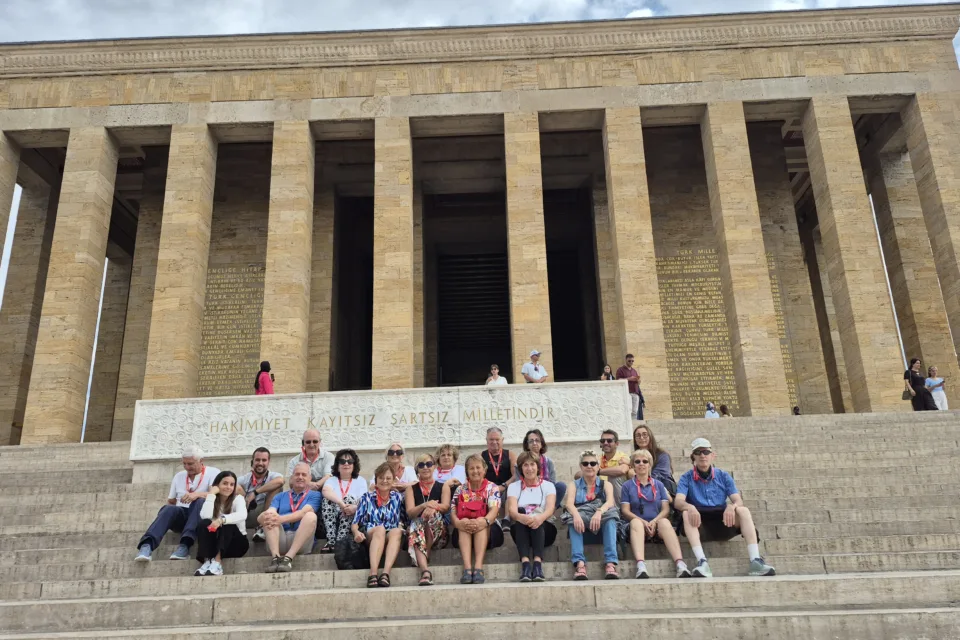
Ankara and Cappadocia in 3 Days: A Private Tour by Road
 Tour
Cappadocia Day Trip from Istanbul by Plane
 Tour
North Cappadocia Private Tour: Göreme, Paşabağ, Zelve and Avanos
