

Sumela Monastery
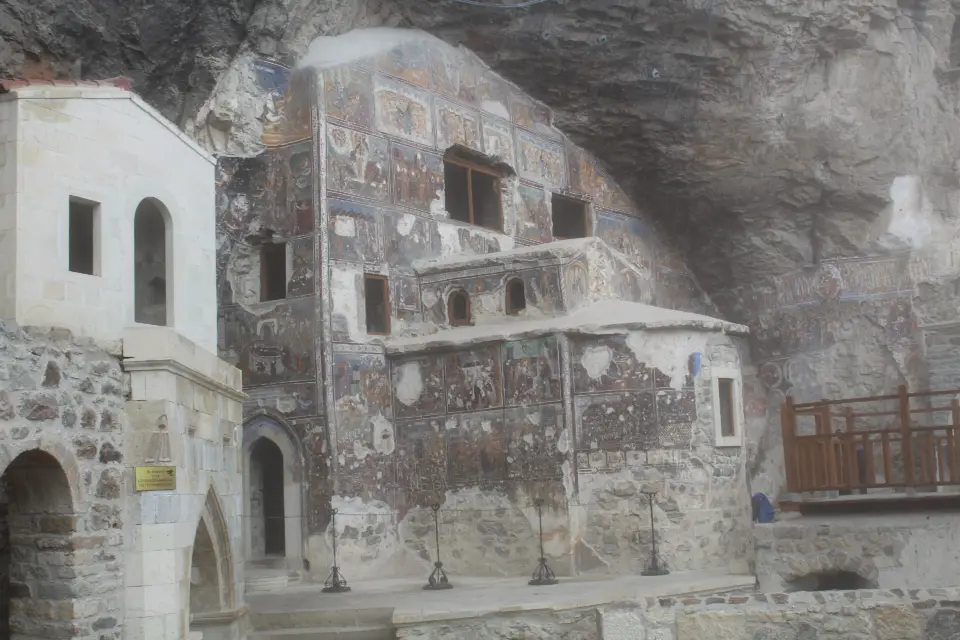
Sumela Monastery near Trabzon: a Greek Orthodox monastery built into a cliff above the Altındere valley,…
Türkiye GMT+3
Monday, November 9, 2026
Replies within 24 hours
Photo: Turkey Your Way
The great church of the Empire of Trebizond, with frescoes over 700 years old above the Black Sea.
On a green rise above the Black Sea, west of old Trabzon, a honey-colored stone church stands among palm trees, with deep porches and a tall dome. Inside, saints and scenes from the Gospels still glow on the vaults after more than 700 years. So this is the Hagia Sophia of Trabzon, the great church of the Empire of Trebizond and one of the finest examples of late Byzantine art.
To begin with, after the Fourth Crusade took Constantinople in 1204, Trabzon became the capital of its own Greek state, the Empire of Trebizond. Emperor Manuel I built the Hagia Sophia in the mid-13th century, west of the walled town, near the shore.
Then, in 1461, Mehmed II conquered Trabzon. Afterward, the church became a mosque and a pious foundation, and plaster later covered its frescoes.

Much later, during the First World War, Russian forces occupied Trabzon, and scholars such as Fyodor Uspensky studied the church for the first time. Then, between 1957 and 1961, the Russell Trust of the University of Edinburgh cleaned off the plaster and uncovered the surviving frescoes. However, some parts are badly worn, and the frescoes of the south narthex are lost. In 1966, the building became a museum, and since 2013 it has served as a mosque again.
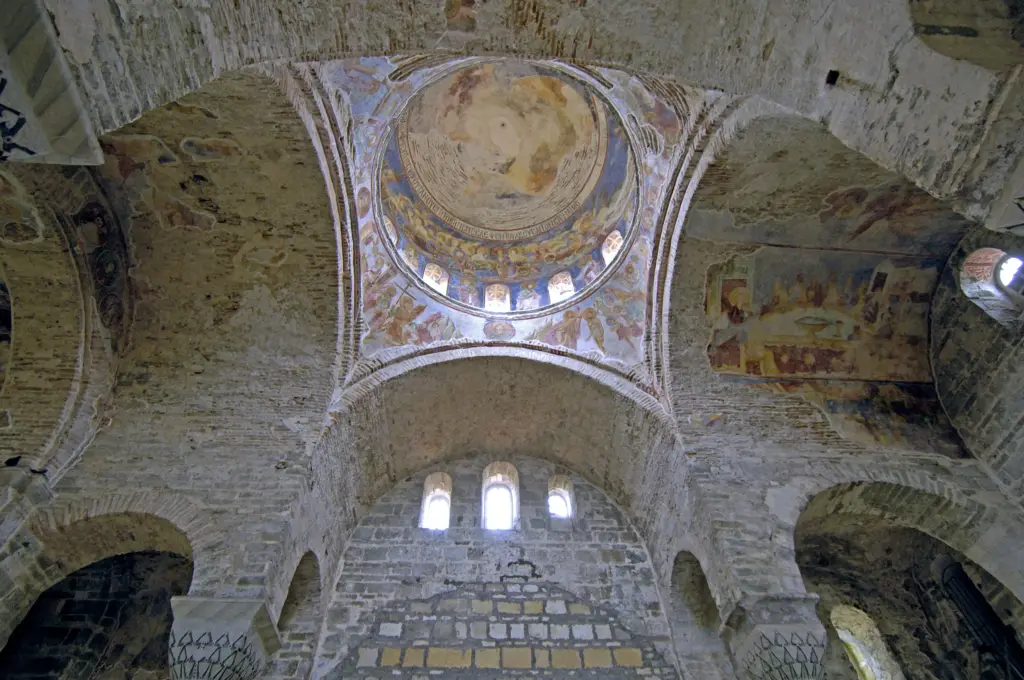
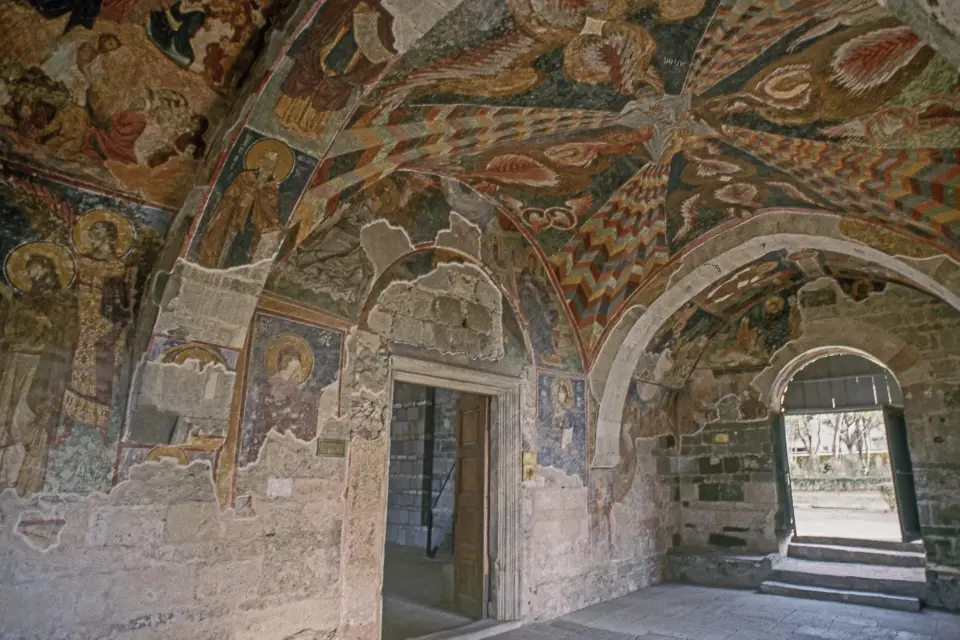
First, look up at the paintings. Dating from just after the church was built, they belong to the late Byzantine revival of art under the Palaiologan emperors and show New Testament scenes. Look especially for the Marriage at Cana, the Resurrection and Christ in the dome. Today, a curtain covers the frescoes of the prayer hall, while those in the narthex stay in view.


Next, take in the building itself as well. Overall, it measures 22 meters (72 feet) long, 11.6 meters (38 feet) wide and 12.7 meters (42 feet) high. Above, a high central dome rests on four great arches. Below it, in turn, lies a floor of colored stone inlay, today protected under glass.
After that, walk around the outside. On the porches, for example, stone reliefs with figures and inscriptions follow the traditions of nearby Armenia and Georgia.

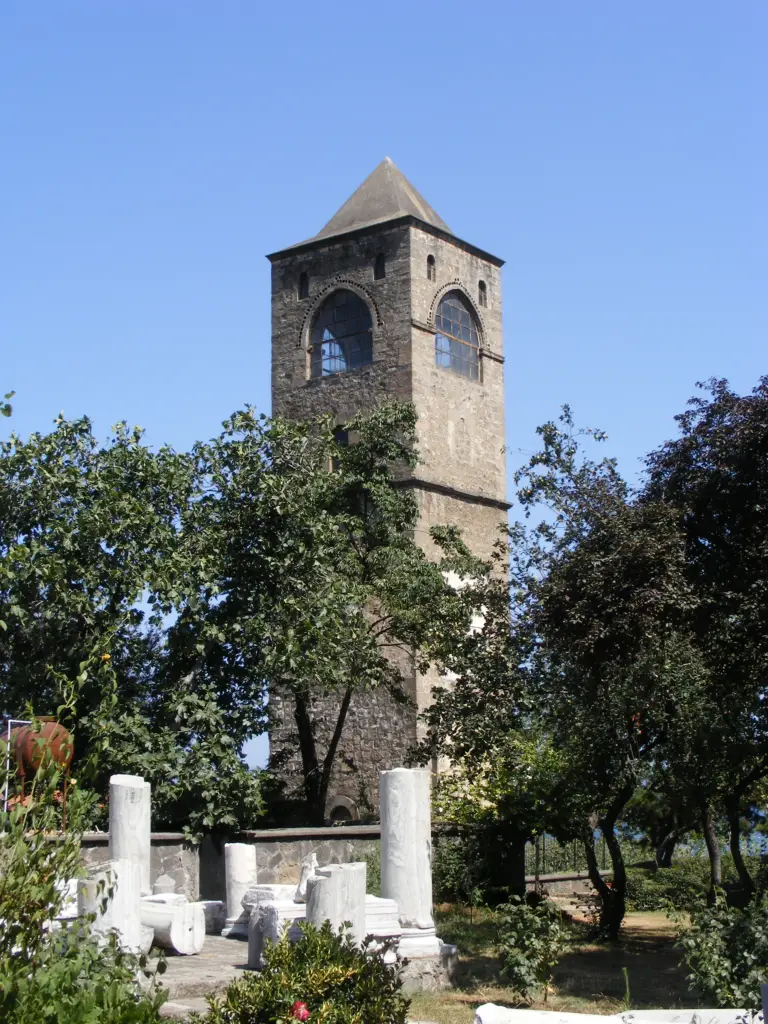
Finally, cross the garden to the square bell tower of 1427, built in a style that recalls Venice. It may have served as a lighthouse or for astronomy, and in the mosque years it worked as a minaret.
Our notes for Hagia Sophia
Our suggestion Visit outside prayer times to see the frescoes, and save time for tea in the garden by the sea.
The Hagia Sophia of Trabzon mixes three traditions. First, its plan follows a Byzantine provincial style. Its dome takes a Georgian form, and its stone carving recalls Seljuk work. So the church shows how the Empire of Trebizond stood between Byzantium, the Caucasus and Anatolia.
Also, look down as well as up. The floor under the main dome is an opus sectile of nine kinds of marble, and in the twelve-sided drum of the dome the apostles look down from the frescoes. The church stands about 3 km (2 miles) from the central square, by the sea. Finally, to see it with the other great Byzantine monuments of Türkiye, join our Byzantine Turkey journey.
In practical terms, the church stands near the shore, west of the old center of Trabzon. In the evening, drive up to Boztepe for tea and the view over the city. Our Trabzon city tour joins the church with the Atatürk Pavilion and Boztepe.

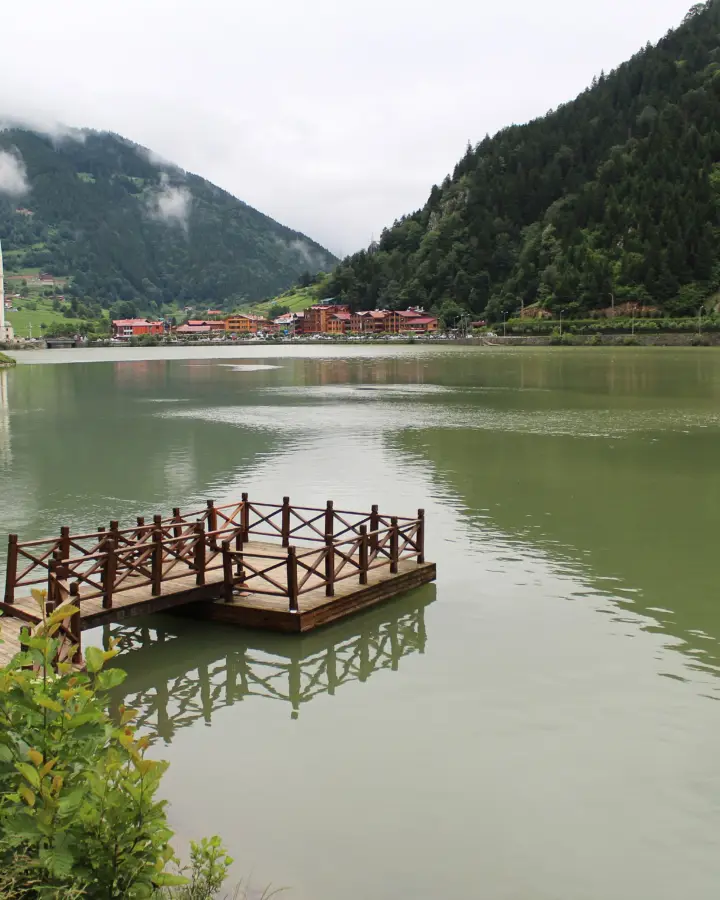
Afterward, drive into the mountains to the Sumela Monastery, another treasure of the Pontic Greeks, or continue east to the lake of Uzungöl. To the west, a boat trip from Giresun reaches the legendary Giresun Island. In Istanbul, compare it with the great Hagia Sophia that gave it its name.
Because it is the last empire's masterpiece on the Black Sea. Find Gospel scenes painted in the 13th century, a carved porch and a bell tower where astronomers once watched the sky.
Sumela Monastery near Trabzon: a Greek Orthodox monastery built into a cliff above the Altındere valley,…
Nature
Uzungöl, the long lake in the mountains south of Trabzon: how a landslide made it, the…

Open in Google Maps (opens in a new tab) Open in Apple Maps (opens in a new tab)
In the mid-13th century, under Emperor Manuel I of the Empire of Trebizond.
Partly. A curtain covers the frescoes of the prayer hall, while those in the narthex stay in view.
A square tower of 1427 west of the church, in a style that recalls Venice. It may have served as a lighthouse or for astronomy, and it later worked as a minaret.
No. It is a smaller 13th-century church in Trabzon, named after the great church of Istanbul.
Under the main dome lies an opus sectile floor made of nine kinds of marble, today protected under glass.
 Tour
Private Trabzon City Tour: Hagia Sophia and Boztepe
 Journey
Eastern Turkey and the Black Sea Tour in 9 Days: Trabzon, Sumela, Ayder, Kars, Ani and Lake Van
 Journey
Trabzon and Rize in 3 Days: A Private Black Sea Tour
 Article
The Empire of Trebizond: Byzantium’s Last Outpost on the Black Sea
 Place
Boztepe, Trabzon
 Article
The 5 Best Restaurants in Trabzon, From Akçaabat Köfte to Kuymak
 Place
Atatürk Pavilion
 Article
Is Sumela Monastery Worth It?
