Photo: Mark Landon / Wikimedia Commons, CC BY 4.0
Notion
The pilgrims' port of Claros: a theater, a temple of Athena and a hidden hoard of gold, on a green hill above the sea.
Overview
Beside the seaside town of Ahmetbeyli, south of İzmir, a green hill rises straight from the Gulf of Kuşadası. On its grassy top, walls, a small theater and the foundations of temples look out over a rocky cape and the open sea. Long ago, pilgrims stepped ashore here on their way to ask Apollo for answers. This is Notion.

- Good for
- Ruins with sea views, history of the Peloponnesian War
- Best combined with
- Claros, Ephesus, Teos and Sığacık
The Port of the Oracle
To begin with, the name Notion means “southern”. Its people built on a hill with a view of the sea. The town served as the port for the larger inland city of Colophon and for the oracle of Apollo at Claros, just inland. So many pilgrims passed through Notion on their way to consult the god.
Rival neighbors
Herodotus counted Notion among the Aeolian cities, the southernmost of them, while Colophon was Ionian. Their rivalry may even lie behind a famous myth: at Claros, the seer Mopsus, linked to the Aeolians, defeated Calchas, linked to Colophon, in a contest of prophecy.
The History of Notion
Persians and Athenians
First, in the mid-6th century BC, the Persians took the city. After the Persian Wars, however, Notion joined the Delian League, paying only a third of a talent a year. Early in the Peloponnesian War, the Athenian admiral Paches restored a pro-Athenian faction here, and, Athens sent out its own settlers.
The Battle of Notium
After that, Notion became an Athenian base. In 406 BC, a Spartan fleet defeated the Athenians off its shore, in what history calls the Battle of Notium. In the 3rd century BC, the city formed a political union with Colophon, with a shared citizenship.
A hoard of gold
Much later, excavations began again in 2022, with a team including the University of Michigan. Then, in recent excavations, archaeologists found a hoard of gold Persian coins, called darics, under the walls of a house. A soldier may have hidden them for safekeeping.
Notion, the Colophon by the Sea
Notion stayed a city of its own, yet it often looked like a part of Colophon. For example, people called it “Colophon on the Sea”, “New Colophon” or “Southern Colophon”. Then, to tell the two apart, they called the inland city “Old” or “Northern” Colophon. Also, Notion never minted its own coins.
Kings and rebels
After Alexander died in 323 BC, a long struggle began for the Greek cities of Anatolia. First, in 218 BC, the city came under Attalus I, king of Pergamon. In 196 BC, Antiochus III of Syria took it, but by 191 BC Eumenes II of Pergamon held it again. Because it sided with Rome and its allies at the Battle of Magnesia, the Peace of Apamea in 188 BC gave it self-rule. In 133 BC, the rebel Aristonicus sailed in with his fleet and seized the acropolis.
Walls, gates and a bishop
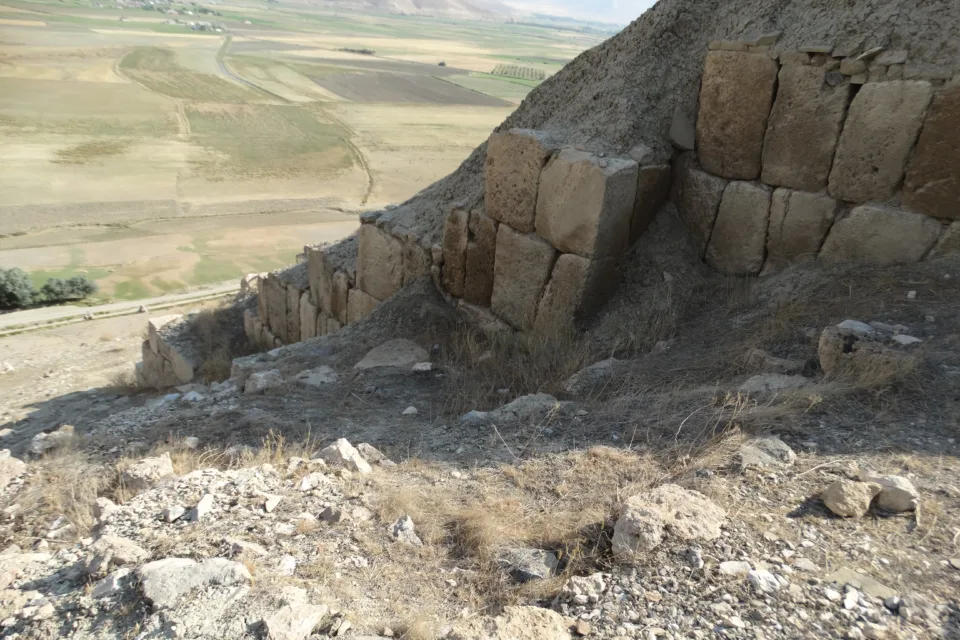
Besides, the 4 km (2.5-mile) wall with towers around the acropolis went up in the Hellenistic period, and the Romans repaired it. Two of its gates, one on the north and one on the west, opened onto the ancient harbor. Much later, under Byzantium, the town became the seat of a bishop. Today, walk the walls and the theater with a guide on our Claros and Notion tour.
What to See at Notion
First, walk up to the small theater on the hillside. Find the foundations of the temple of Athena and the agora on the plateau. Follow the line of the old defense walls toward the necropolis, with the sea always in view.


Tips for visiting Notion
Our notes for Notion
- ClarosThe oracle lies just inland.
- BattleThe Spartans won here at sea in 406 BC.
- GoldA hoard of Persian darics was found here.
Our suggestion Visit Claros and Notion together, then swim at Ahmetbeyli.
How to Visit Notion
Notion lies east of Ahmetbeyli in the Menderes district of İzmir Province, about 50 kilometers (31 miles) south of İzmir. We check access to Notion and pair it with Klaros.
Then combine it with the oracle of Claros, the ruins of Teos to the north and Ephesus to the south. For more ancient stages, see our collection of ancient theaters.
Because few ruins have a finer view. Climb the green hill above Ahmetbeyli where pilgrims once landed for the oracle of Claros, sit in the little theater, and look out over the gulf where Spartans beat the Athenians.
Map
Open in Google Maps (opens in a new tab) Open in Apple Maps (opens in a new tab)
Frequently asked questions
Where is Notion?
On a hill east of the seaside town of Ahmetbeyli in the Menderes district of İzmir Province, about 50 kilometers (31 miles) south of İzmir, on the Gulf of Kuşadası.
What was Notion?
A small Greek port city that served nearby Colophon and the oracle of Apollo at Claros. Pilgrims often landed here on their way to the oracle.
What happened at the Battle of Notium?
In 406 BC, during the Peloponnesian War, a Spartan fleet defeated the Athenians off Notion, which was then an Athenian base.
What was found at Notion in 2023?
Archaeologists found a hoard of gold Persian coins, called darics, buried under the walls of a house, perhaps hidden by a soldier.