Photo: Carole Raddato from FRANKFURT, Germany / Wikimedia Commons, CC BY-SA 2.0
Tripolis on the Meander
A Roman street of marble columns near Pamukkale, and a town of weavers who once made a sultan's wedding kaftan.
Overview
Not far from the white terraces of Pamukkale, in the valley of the upper Maeander, a marble street runs between rows of columns toward green hills. Few visitors walk it, however. Yet this was Tripolis, a Roman city on the great road from Sardis to Laodicea, and nearby lies Buldan, a town that has been weaving cloth for centuries. With a guide, join our Tripolis tour.
- Good for
- Roman ruins, textiles, a half day from Pamukkale
- Best combined with
- Pamukkale, Laodicea, Philadelphia
The Story of Tripolis
To begin with, Tripolis stood where three regions met: Lydia, Caria and Phrygia. For this reason, ancient writers disagreed about where it belonged. Over time, it also had several names, among them Apollonia and Neapolis, and its coins showed the goddess Leto.
On the road of the Seven Churches
Also, the city lay on the Roman road from Sardis through Philadelphia to Laodicea. So travelers between the great cities of the region passed through its streets. Later, it became a Christian bishopric under Sardis, and in 2013 archaeologists uncovered a church about 1,500 years old.

What to See at Tripolis
The colonnaded street
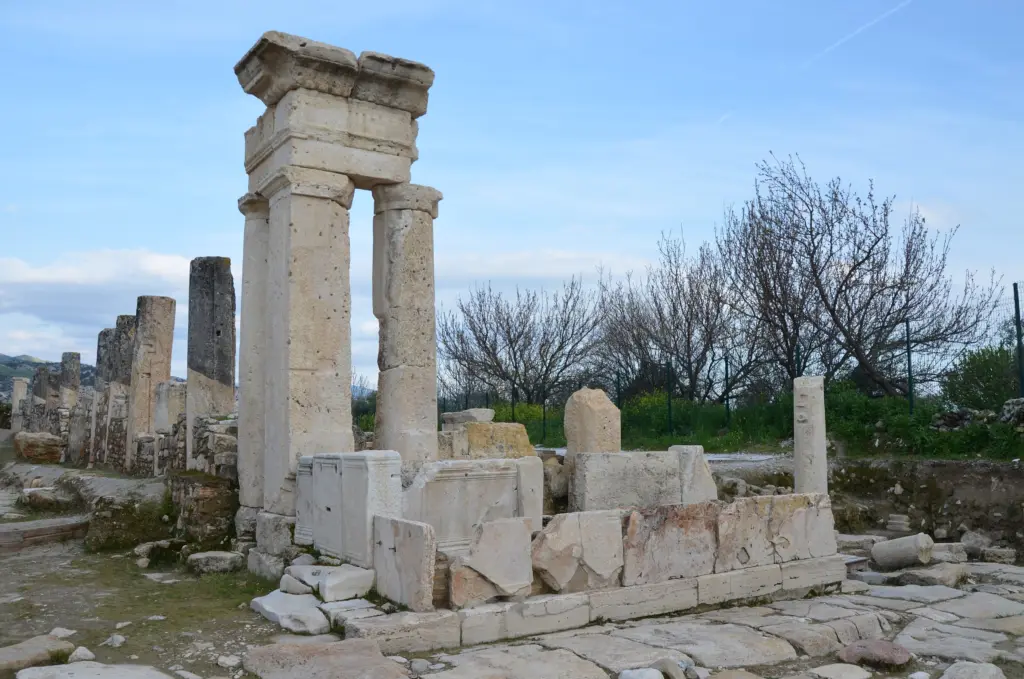
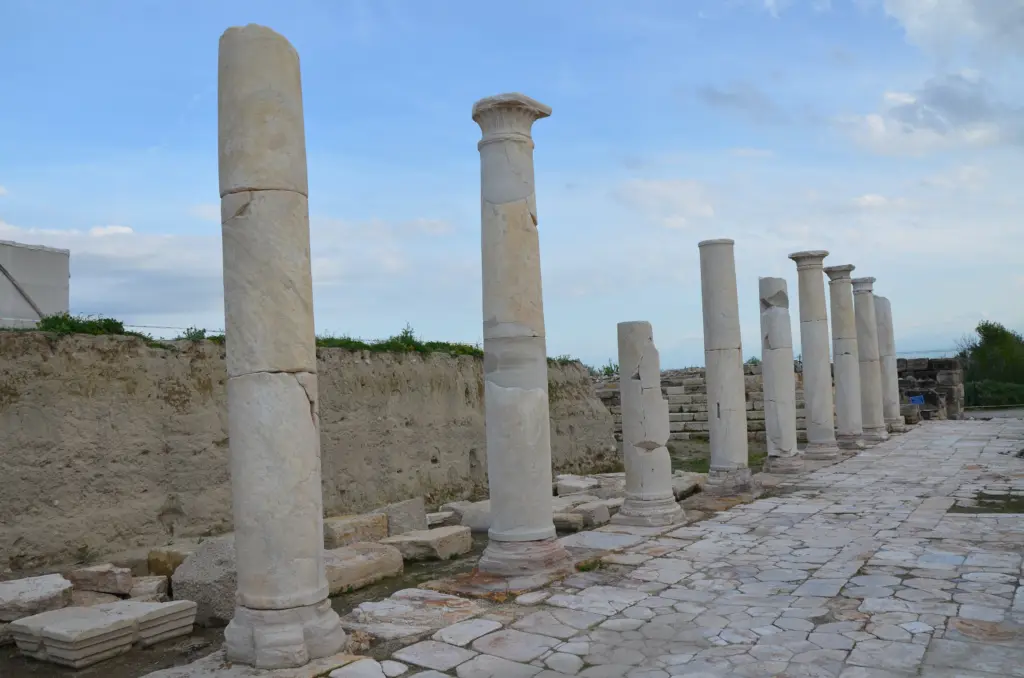
First, walk the colonnaded street, paved with marble slabs and lined with standing columns. Look for the gateway of two columns that still carry their stone lintel.
The theater, baths and walls
Next, find the theater, the baths and the city walls, mostly from Roman and Byzantine times. Beyond them lies the necropolis.
Apollonia on the Büyük Menderes
The site lies at Yenicekent in the Buldan district, on the edge of the Büyük Menderes River and northeast of the Çürüksu (Lykos) Plain. First founded in the Hellenistic period as Apollonia, it was a border city of Lydia on the trade routes that linked Smyrna, Pergamon and Ephesus with Hierapolis and Laodicea. The city was at its richest in Roman times and came under Ottoman rule in 1429. Since 2012, teams have excavated and restored a colonnaded street, a church, the agora and a monumental fountain. Minibuses run from the Denizli bus station to Buldan and Yenicekent.
The Weavers of Buldan
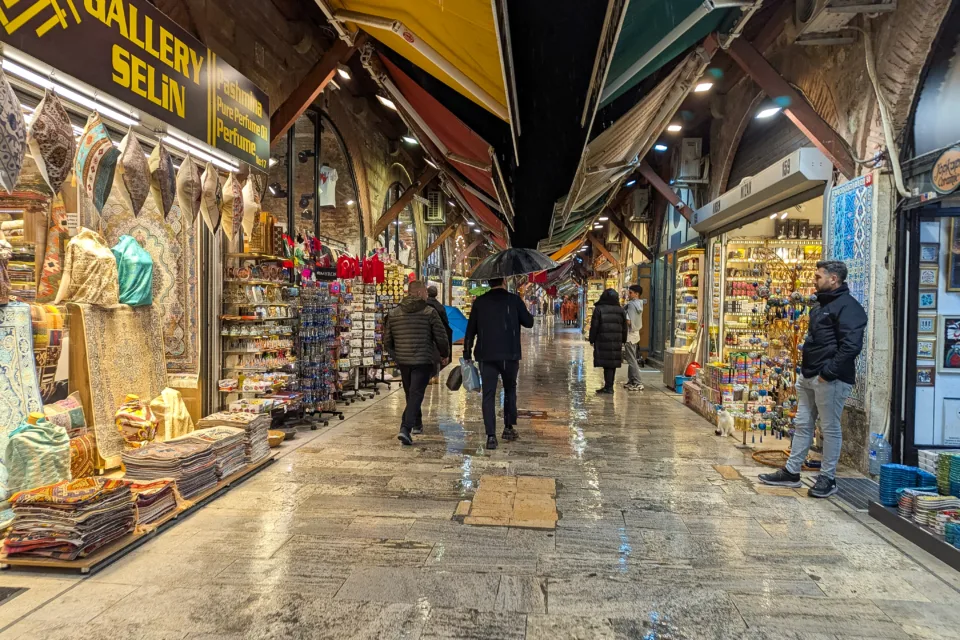
Some scholars think Tripolis itself may have grown up around weaving. Either way, the craft still lives on in nearby Buldan, the district town. Today, its best-known product is Buldan bezi, a thin hand-woven cotton cloth with laced edges, used for bed covers and tablecloths.
A sultan’s wedding kaftan
By the end of the 19th century, Buldan had about 1,500 looms. So its weavers made striped alaca cloth, handkerchiefs, silk peştemal wraps and colorful head scarves. Besides, a sign at the entrance to town proudly recalls that Buldan wove the kaftan of Sultan Bayezid I for his wedding in 1390.
Tips for visiting Tripolis
Our notes for Tripolis
- BuldanBuy Buldan bezi straight from the weavers.
- FruitBuldan’s hills grow pomegranates, figs and grapes.
- PamukkaleA short drive to the southeast.
Our suggestion Pair Tripolis with a stop in Buldan to buy hand-woven cloth.
How to Visit Tripolis
Tripolis lies near Yenicekent in the Buldan district of Denizli Province, northwest of Hierapolis. We confirm access to Tripolis and fit it into a Pamukkale day.
Then combine it with Pamukkale, the church city of Laodicea and, further along the old road, Philadelphia.

Because Pamukkale has an ancient neighbor. Walk the marble street of Tripolis among its columns, then drive up to Buldan to buy hand-woven cloth from a town that has been weaving for centuries.
Map
Open in Google Maps (opens in a new tab) Open in Apple Maps (opens in a new tab)
Frequently asked questions
Where is Tripolis?
Near the township of Yenicekent in the Buldan district of Denizli Province, on the Büyük Menderes northwest of Hierapolis and Pamukkale.
What is there to see at Tripolis?
A Roman colonnaded street paved in marble, a theater, baths, city walls, a necropolis and an early church found in 2013.
What is Buldan cloth?
A thin hand-woven cotton cloth with laced edges, used for bed covers and tablecloths. Buldan has been a weaving town for centuries.
Can I visit Tripolis from Pamukkale?
Yes. It lies northwest of Pamukkale, so it makes an easy half-day trip, together with the town of Buldan.
How do I get to Tripolis by public transport?
Take a minibus from the Denizli bus station to Buldan and Yenicekent, near the site.