
Aphrodisias
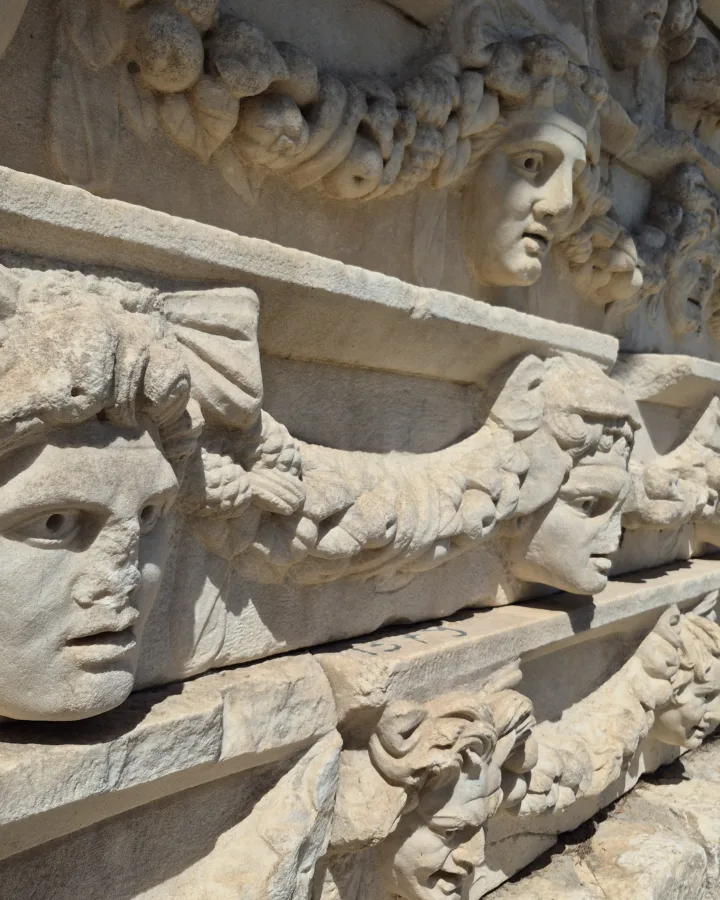
Aphrodisias near Geyre: the city of Aphrodite and its sculptors, with the Tetrapylon gate, a stadium…
Türkiye GMT+3
Monday, November 9, 2026
Replies within 24 hours
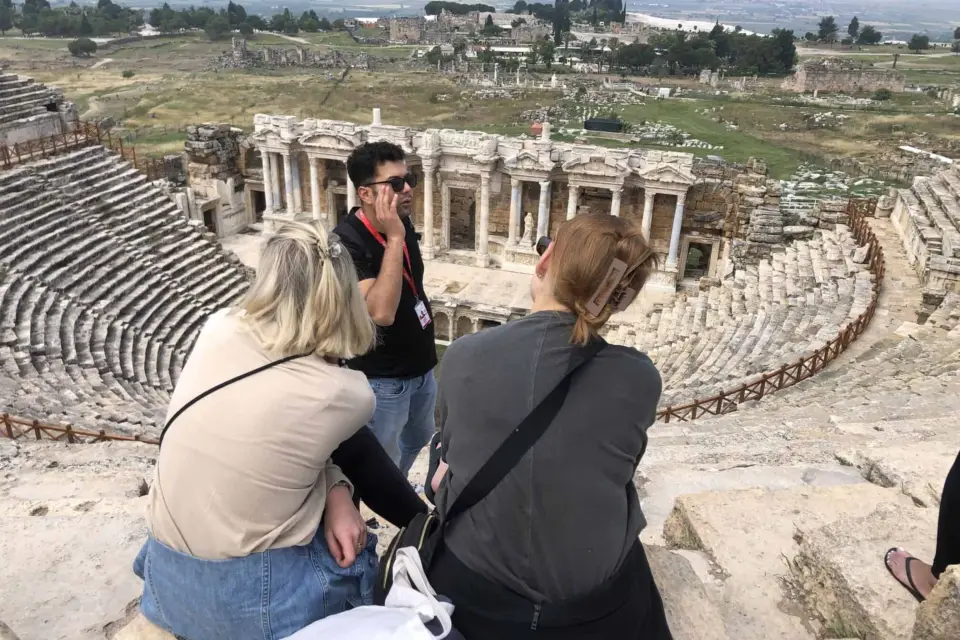
Photo: Turkey Your Way
A rich Roman trading city and one of the Seven Churches of Asia, rising again column by column near Pamukkale.
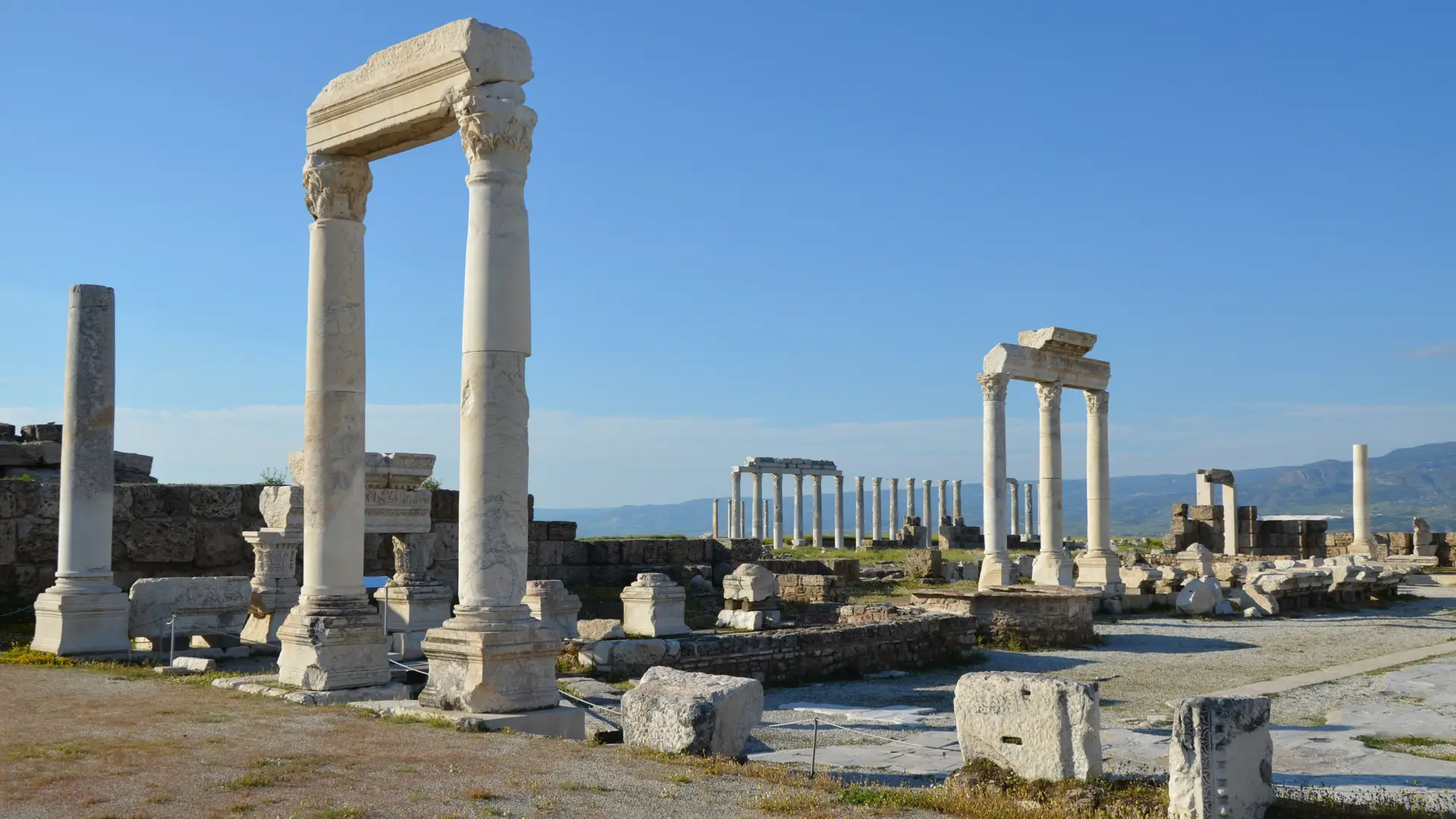
Just outside Denizli, rows of white marble columns rise again along paved Roman streets, with mountains behind them and Pamukkale only 10 kilometers (6 miles) to the north. Laodicea was a rich city of Roman Asia Minor, and one of the Seven Churches of Asia named in the Book of Revelation. From Fethiye, join our Pamukkale tour from Fethiye. Our Laodicea tour pairs it with Hierapolis.
Laodicea lies on the road to Pamukkale, and our Antalya Pamukkale Ephesus tour in 3 days stops here. Since 2002 the excavations have brought back so much of the city that it now deserves half a day of its own.
Laodicea on the Lycus, in Turkish Laodikeia, lies near the modern city of Denizli, on a long hill above the Lycus River, today’s Çürüksu. It stood on a major trade route in the Lykos valley, south of Hierapolis. Excavations and restoration work have run since 2002.
In 2013, the site joined Turkey’s tentative list for UNESCO World Heritage status. Its ruins include a stadium, baths, temples, a gymnasium, two theaters and a council house. Our Laodicea tour from Pamukkale walks these ruins before Hierapolis.
Laodicea in numbers
The Seleucid king Antiochus II founded the city in the mid-3rd century BC and named it after his wife, Laodice. Its earlier names were Diospolis, “City of Zeus”, and Rhoas. Later, Antiochus the Great brought 2,000 Jewish families to Phrygia from Babylonia.
Under Rome, the city became a great commercial city of Asia Minor, rich from banking and from trade in black wool. It also had a famous medical school. However, when an earthquake destroyed the city under Nero, its citizens refused imperial help and rebuilt it with their own money.
Because of its large Jewish community, it became an early center of Christianity. Paul’s Letter to the Colossians mentions the believers of Laodicea and asks for his letter to be read there. Later, the Book of Revelation also addresses one of its seven letters to the church of Laodicea.

Restorers have raised many columns along the main streets, which are flanked by colonnades and pedestals. Walking them, you get a real sense of a busy Roman city.
The city also has two theaters. The West Theater, restored with almost complete rows of stone seats, was used until the 7th century. Near the southern end, a stadium lies in a narrow valley, and next to it stands a gymnasium with twin baths built for the visit of Emperor Hadrian in 135.
Finally, under a modern protective roof, the excavated Church of Laodicea shows its nave and floors. Nearby, you can also trace the aqueduct, which carried water across the valley in a pressurized stone pipeline, an unusual inverted siphon.
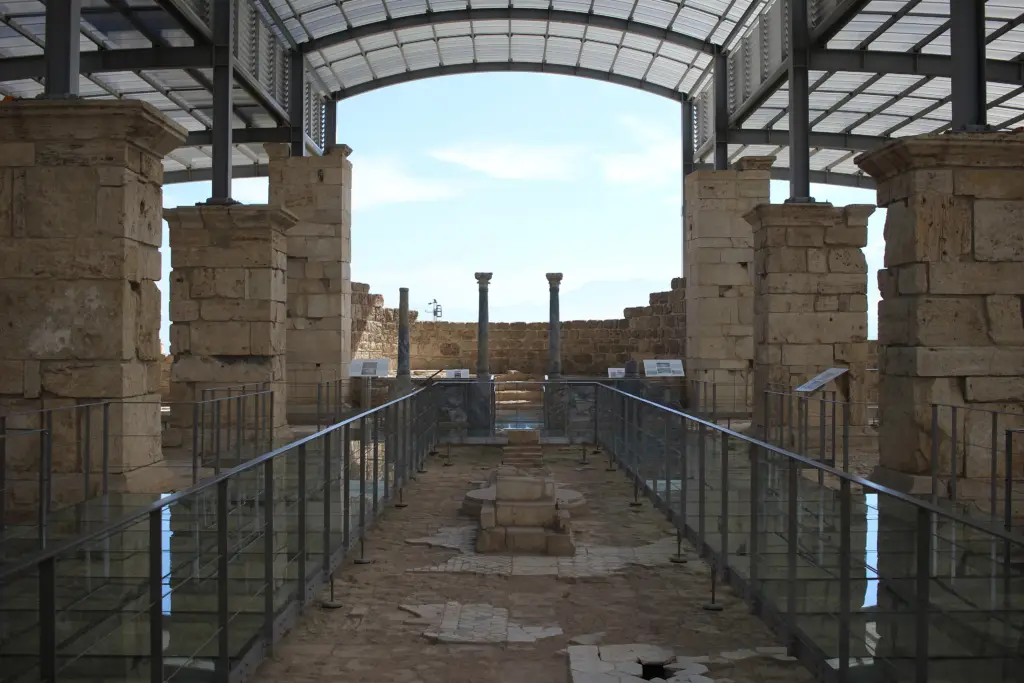
Today the ruins lie on the edge of Denizli. In antiquity, its neighbors were Colossae to the east, and Hierapolis to the north, and Paul’s letters link the three Christian communities together.
Our notes for the Lycus Valley
Our suggestion Visit Laodicea in the morning and Pamukkale in the afternoon, when the travertines turn gold. The two lie on opposite sides of the same valley.
Because few ancient cities are returning to life so fast. Walk the re-erected colonnaded streets, sit in the restored West Theater, and step into the Church of Laodicea, one of the Seven Churches of Revelation.
Aphrodisias near Geyre: the city of Aphrodite and its sculptors, with the Tetrapylon gate, a stadium…
Archaeological site
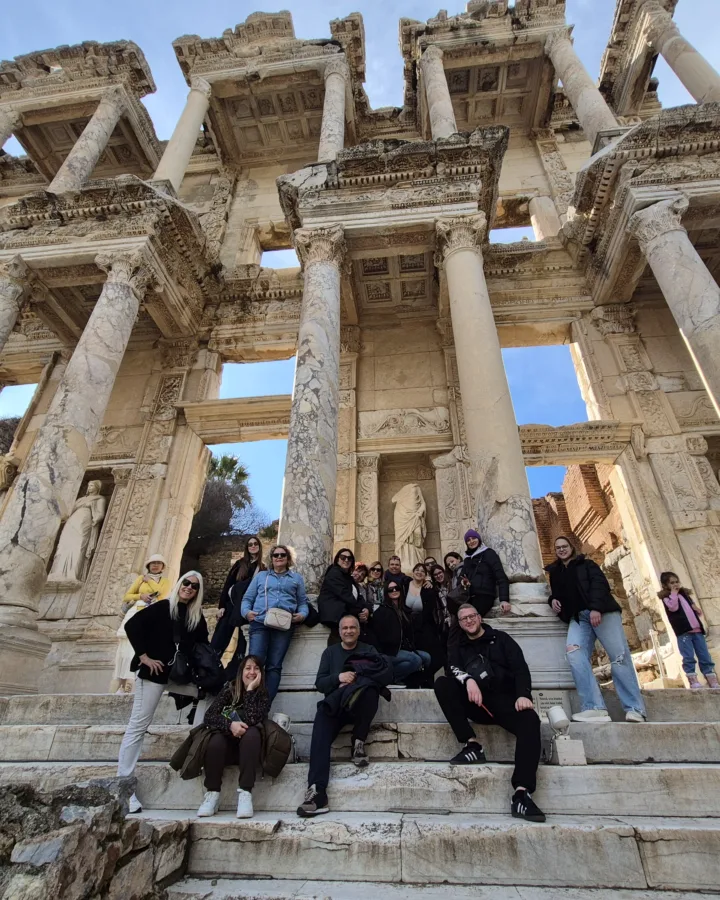
The best-preserved ancient city of the eastern Mediterranean: the Library of Celsus, the Terrace Houses, the…
Open in Google Maps (opens in a new tab) Open in Apple Maps (opens in a new tab)
Yes. The Book of Revelation addresses one of its letters to the church of Laodicea.
Near Denizli in western Turkey, about 10 km (6 miles) south of Pamukkale and Hierapolis.
Yes. Excavations since 2002 have restored colonnaded streets, a theater and an early church.
The Seleucid king Antiochus II, between 261 and 253 BC, who named it after his wife Laodice.
Yes. The two sites are about 10 km (6 miles) apart, so both fit into one day.
 Journey
Antalya to Pamukkale and Ephesus in 3 Days: A Private Tour by Road
 Tour
Pamukkale Day Tour From Istanbul by Plane
 Tour
Private Laodicea and Hierapolis Tour: Biblical Pamukkale
 Tour
Private Pamukkale Tour from Fethiye: Laodicea and Hierapolis
 Person
Saint Paul in Anatolia
 Article
The Seven Churches of Revelation in Turkey: A Traveler’s Guide
 Place
Kaklık Cave
 Place
Karahayıt
