Photo: Carole Raddato / Wikimedia Commons, CC BY-SA 2.0
Nysa on the Maeander
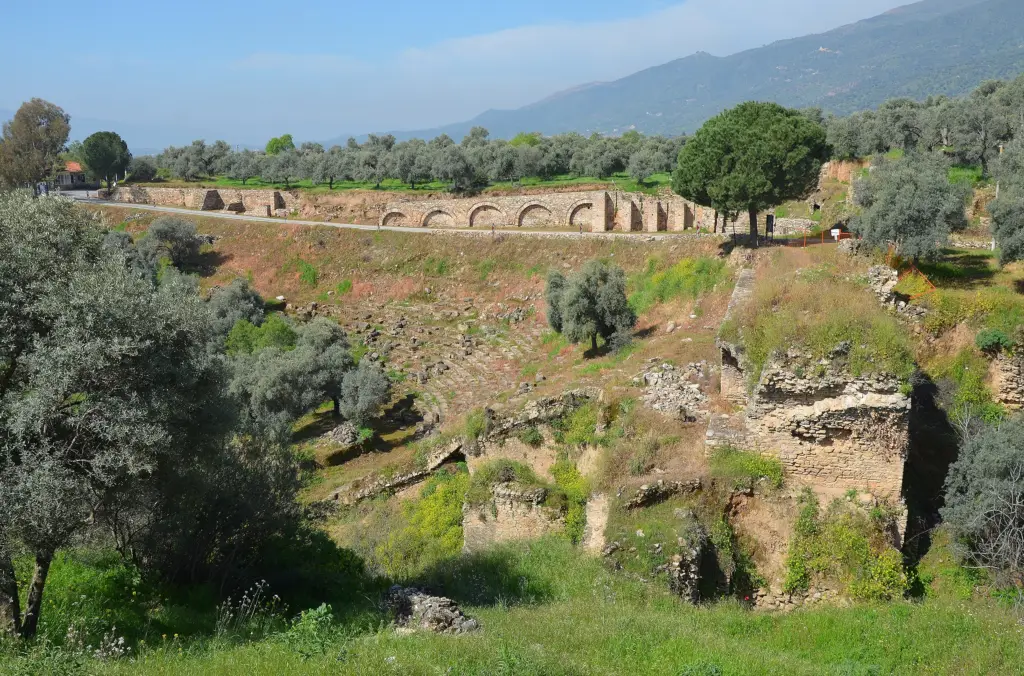
A city of scholars split by a gorge: a theater of Dionysus, a two-story library and a stadium among olive groves above the Maeander valley.
Overview
On the road from Aydın to Denizli, a turn leads up from the town of Sultanhisar into olive groves. Then the ground suddenly drops into a gorge, and on both sides of it stand the stones of a Roman city: a theater, a library, a council house and a stadium. This is Nysa on the Maeander, a city of scholars that is easy to drive straight past. With a guide, join our Nysa tour.
- Good for
- Roman ruins, theaters, ancient libraries
- Best combined with
- Aphrodisias, Ephesus, Pamukkale
The Story of Nysa
Three brothers from Sparta founded three small towns here. The name also echoed the mythical Nysa where the god Dionysus was raised, so the people of Nysa took the wine god as a patron.
A city of scholars
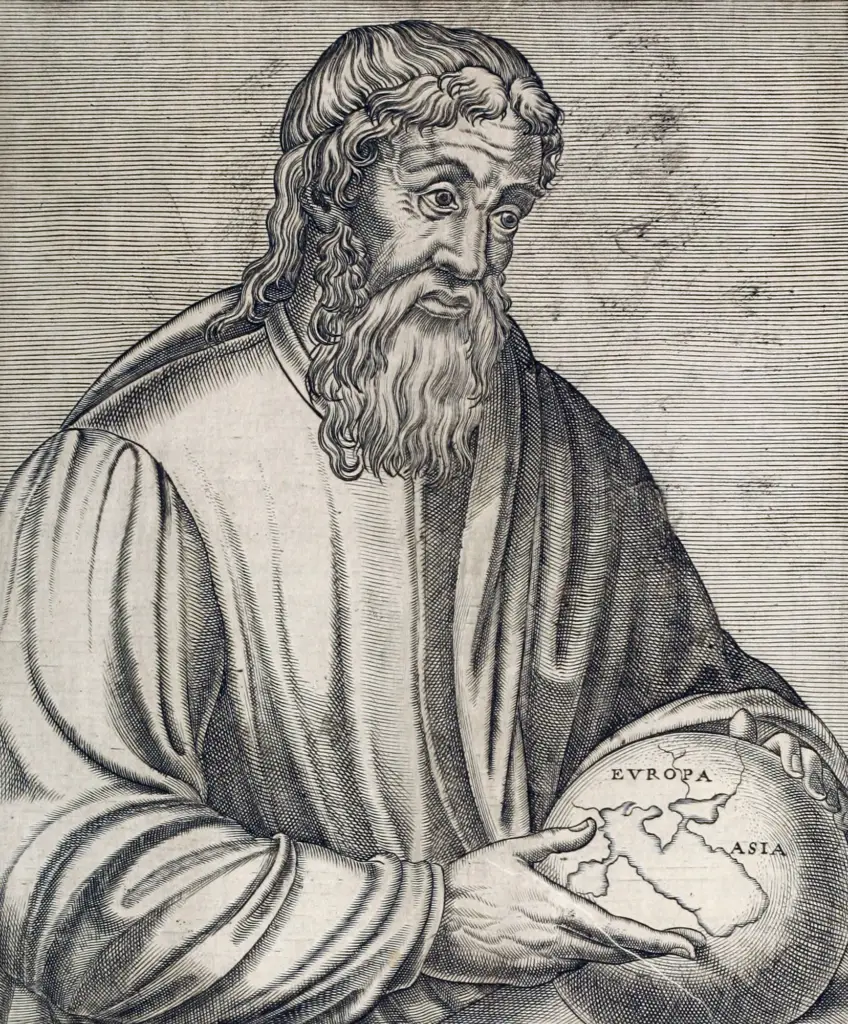
In Roman times, Nysa was famous for its teachers, especially for the study of Homer. For example, the young Strabo, who later wrote a great geography of the known world, came here to study under Aristodemus. Besides, another Aristodemus of Nysa taught the Roman general Pompey.
Bishops and Tamerlane
After that, Nysa lived on into the Byzantine period.
What to See at Nysa
The theater of Nysa
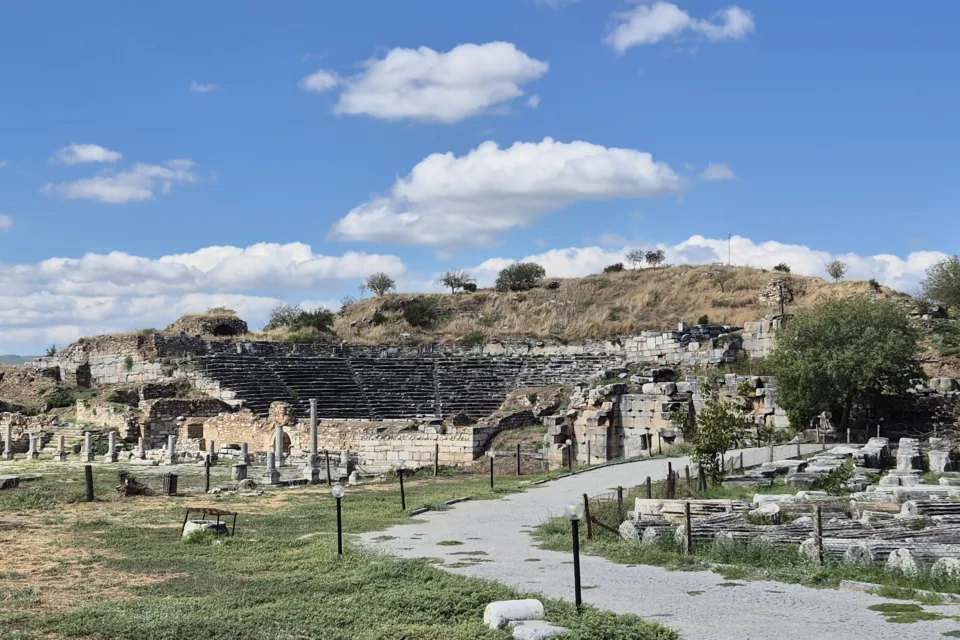
First, climb into the theater, one of the best-preserved buildings of the site. Its stage building carried friezes that told the life of Dionysus, a fitting story for a city named after his nurse. From the top rows, look out over the olive trees to the Maeander valley.
The library
Next, find the library, which the city built in the 2nd century AD. Its walls still rise on two stories, much like the Library of Celsus at Ephesus.

The council house and the agora
Then walk to the council house, which later served as an odeon. Nearby, the agora, the gymnasium and the baths lie among old olive trees.


The stadium and the tunnel
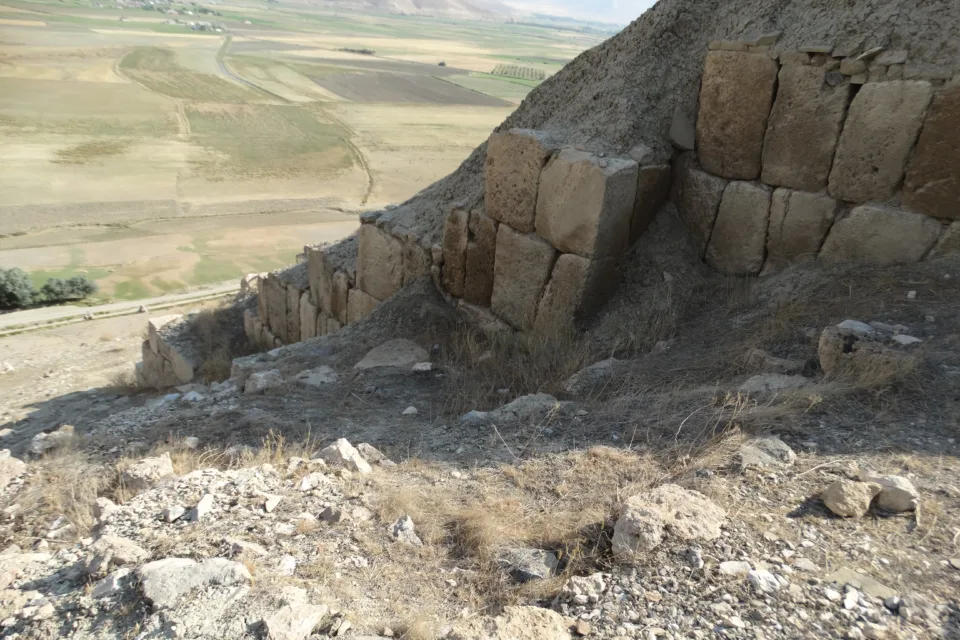
A stream once ran through the middle of the city in a deep ravine. So the people of Nysa built the stadium along the gorge, though floods later broke parts of it. Then they covered the stream with a vaulted tunnel, and a street ran on top.

Our notes for Nysa
- LocationOn the hill above Sultanhisar, north of the Maeander valley.
- TunnelWalk through it: it is cool inside even in summer.
- PaceSit in the theater and take your time.
- ShadeOlive trees shade much of the site.
Our suggestion On the way from Aydın, stop at Salavatlı, ancient Acharaca, where Strabo wrote of a sacred cave of Pluto. There, priests read the dreams of the sick to find a cure.
Inside the Library and the Theater
The library rose around AD 130 on the west side of the city. It served as a library, a meeting hall and a court. Later, builders renewed it around AD 400, and public use ended in the 6th century. Look at the agora on the eastern side. Its north and east sides had Ionic stoas with double rows of columns, while the south and west had single Doric rows.
The theater has its own long story. Builders probably began it in the 1st century BC. Under Hadrian, they added a stage building. However, an earthquake destroyed it in AD 178, so the city rebuilt it on three stories between 180 and 200. Also, its friezes with the life of Dionysus now stand in the Aydın Archaeological Museum. Finally, look for the three bridges that once crossed the gorge.
How to Visit Nysa
Nysa lies in the Sultanhisar district of Aydın Province, east of Ephesus. We arrange your visit to Nysa from Kuşadası or Pamukkale.
Also, it fits well on a day along the Maeander valley, together with Magnesia, between Ephesus and Pamukkale, together with the marble city of Aphrodisias. For more ancient stages like this one, see our collection of ancient theaters.
Because Nysa is the Ephesus you get to yourself. Walk through the tunnel under the old street, sit high in the theater among the olive trees, and stand in the library where the young Strabo listened to his teachers.
Map
Open in Google Maps (opens in a new tab) Open in Apple Maps (opens in a new tab)
Frequently asked questions
Where is Nysa?
In the Sultanhisar district of Aydın Province, on the hills north of the Maeander (Büyük Menderes) valley, east of Ephesus.
What is there to see at Nysa?
A Roman theater with friezes of the life of Dionysus, a 2nd-century library, a council house, a stadium, the agora, baths and a tunnel that carried a street over the stream.
Is the library of Nysa like the Library of Celsus?
Both are Roman libraries. Nysa's was built around AD 130 and still rises on two stories.
Who studied at Nysa?
The geographer Strabo studied here as a young man under the teacher Aristodemus, and Nysa was known for the study of Homer.
Where are the theater friezes of Nysa?
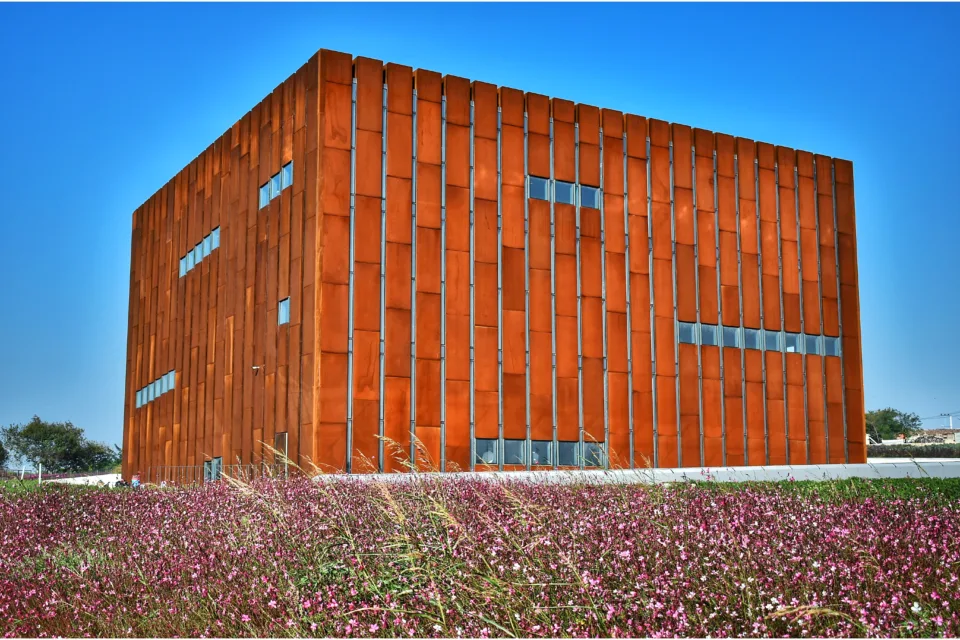
The friezes from the podium of the stage building, with scenes from the life of Dionysus, are now in the Aydın Archaeological Museum.