Aizanoi
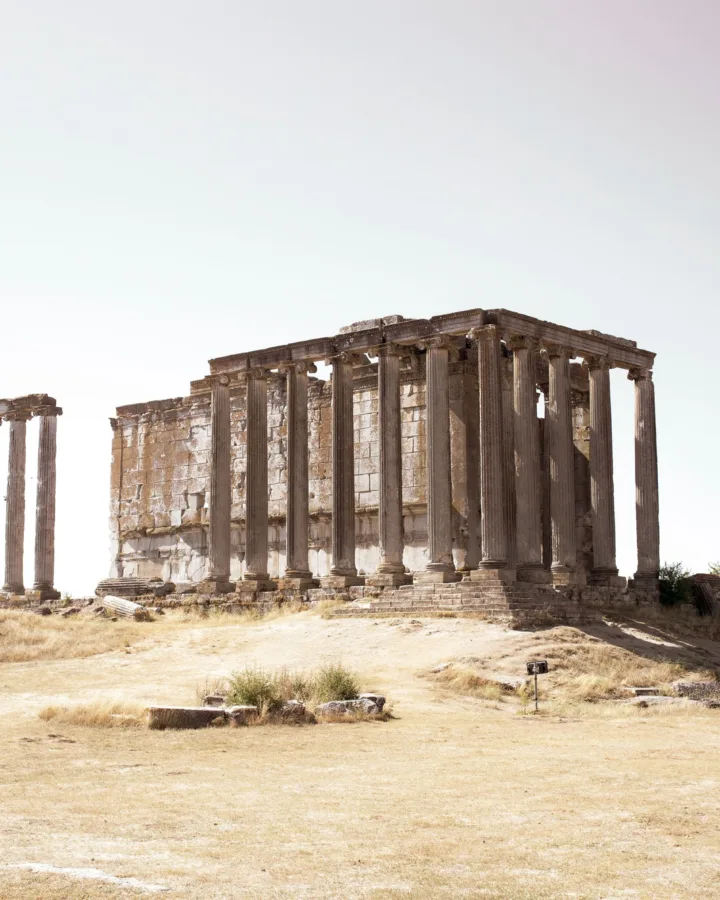
Aizanoi at Çavdarhisar near Kütahya: one of the best-preserved Roman temples in Anatolia, a theater joined…
Photo: Turkey Your Way
A Carian city named for a Seleucid queen, where a Turkish village still lives among the columns and inscriptions.
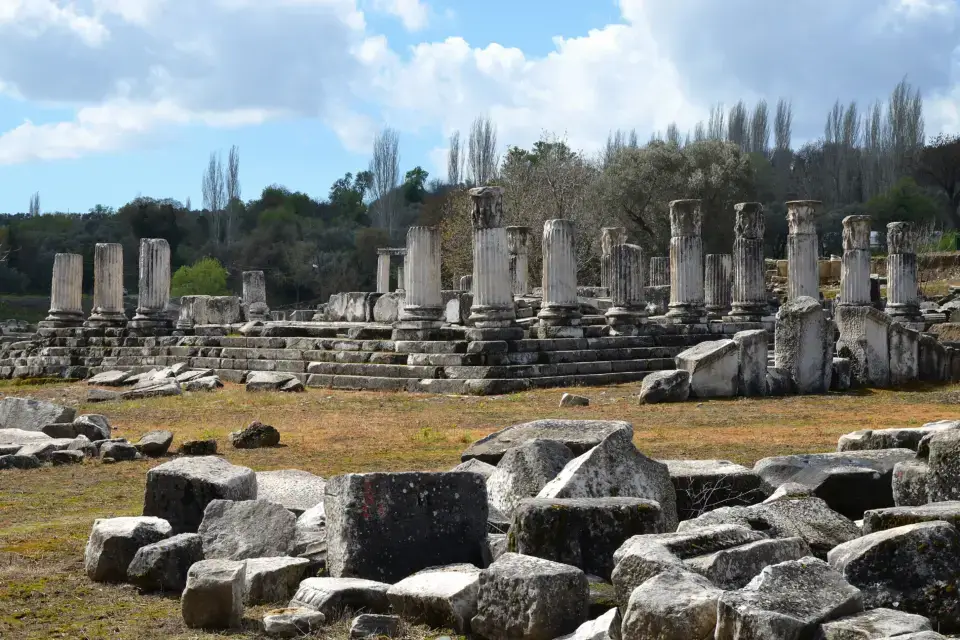
In the village of Eskihisar, near Yatağan, stone farmhouses stand right among Roman columns, and a dirt lane leads past a council house still covered in ancient inscriptions. In antiquity, Stratonikeia was one of the most important inland cities of Caria. For both sites in one day, join our Stratonikeia and Lagina tour. Even now, its huge gymnasium, monumental north gate and great theater show how rich it once was.
Here, a Turkish village grew up inside an ancient city, so take your time and read the stones as you go.
Stratonikeia lies at Eskihisar in Muğla province, about 1 kilometer (0.6 miles) from the D330 road that links Yatağan with Milas and Bodrum. Back then, it stood east-southeast of Mylasa, today’s Milas, and south of the Marsyas River. For Milas itself, see our Euromos tour from Bodrum.
People lived in the region as early as the Early Bronze Age. Almost everything you see today, however, dates from the Hellenistic and Roman periods.
The city was refounded in the name of Stratonice, wife of the Seleucid king Antiochus I (r. 281–261 BC). Either way, it rose on the site of an older Carian town called Idrias, once Chrysaoris. Close by, the sanctuaries of Hekate at Lagina and Zeus at Panamara came under the city, and every year its people walked in procession to their temples.
Later still, the city passed to Rhodes, until in 167 BC Rome declared all of Caria free. The rebel king Aristonicus made his last stand here. Mithridates VI of Pontus stayed in the city and married Monime, the daughter of a leading citizen. The city resisted a siege by Quintus Labienus and his Parthian troops, and Augustus and the Senate thanked it for its courage.
First, where the sacred road from Lagina entered the city, a monumental gate with two arches stood. Between the arches, at the same time, on the city side, a semicircular fountain house rose in two tiers of Corinthian columns. From there, in turn, a wide colonnaded street ran south to the center.
Best of all, the well-preserved council house has semicircular rows of seats and a courtyard to the east. Its north wall, for example, is covered with Greek and Latin inscriptions, including part of the Price Edict of Diocletian and a Greek calendar inscription.

By contrast, in the northwest of the city, stands a huge gymnasium. Stratonikeia is a city built largely of marble. Further south, also, the theater sits at the foot of Kadıkulesi hill. Finally, in the west, you also find a Roman bath of the 2nd century AD and a public latrine.
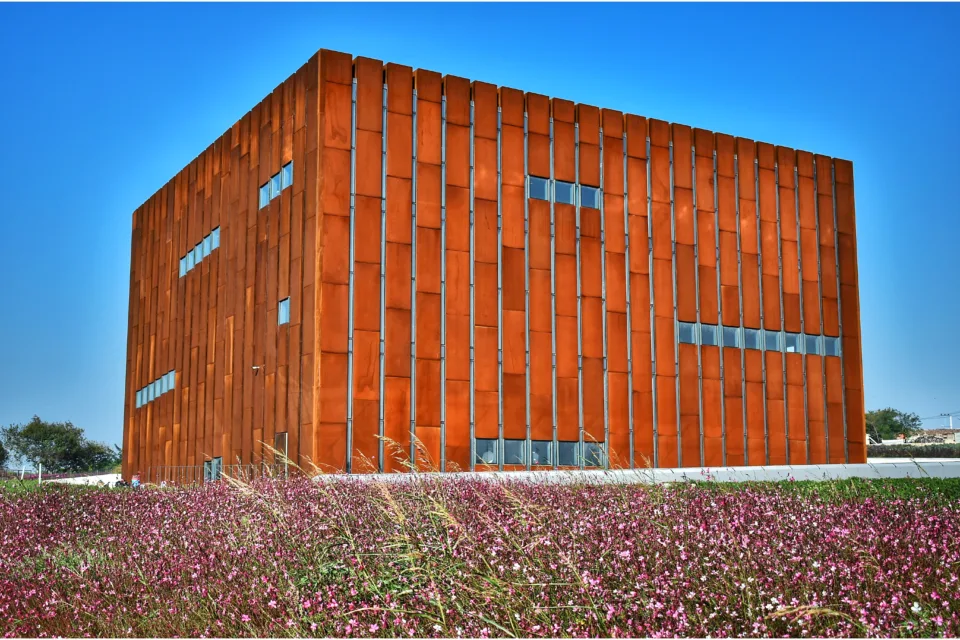
Part of the ancient city is still the village of Eskihisar, and old stone houses stand among the ruins. Besides, a small village museum displays mostly Roman finds, along with an Early Bronze Age jug and two Submycenaean vases.

Nearby, however, a lignite mine for the Yatağan power station has destroyed part of the necropolis. Once the reserves run out, consequently, the pit may become a lake.
Our notes for Stratonikeia
Our suggestion Look for the old village houses among the Roman walls, a rare mix of ancient and Ottoman remains.
Because here the ancient city and the village share the same lanes. Walk through the north gate, read Diocletian's prices on the council house wall, then pass farmhouses built among Roman stones.
Aizanoi at Çavdarhisar near Kütahya: one of the best-preserved Roman temples in Anatolia, a theater joined…
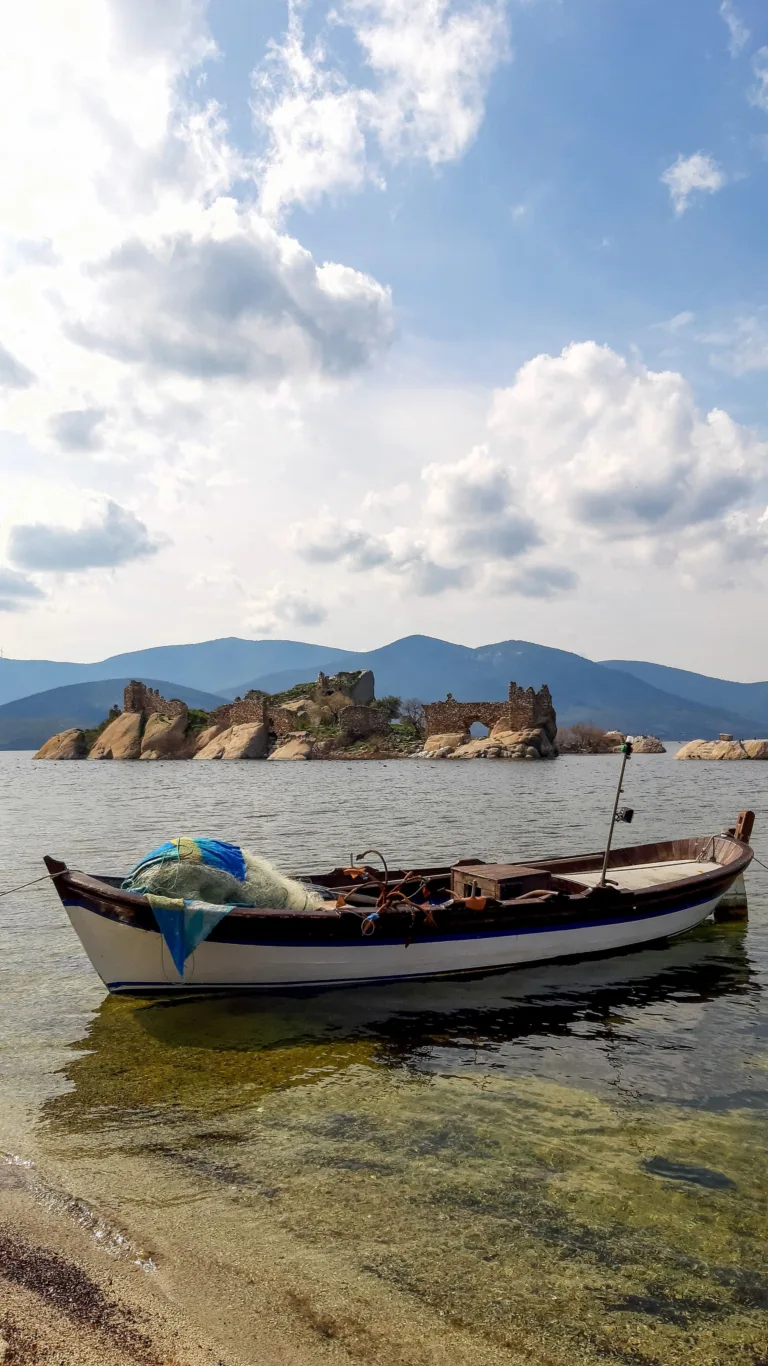
Lake Bafa between Söke and Milas: a former Aegean gulf below sacred Mount Latmos, with the…
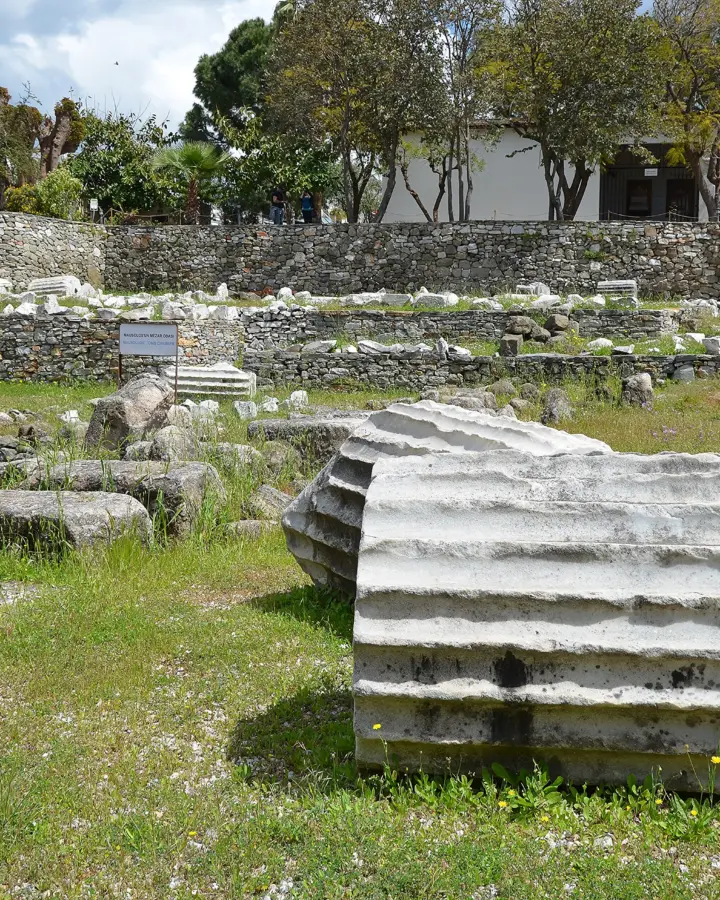
The Mausoleum at Halicarnassus in Bodrum, the tomb of King Mausolus and a Wonder of the…

Open in Google Maps (opens in a new tab) Open in Apple Maps (opens in a new tab)
At the village of Eskihisar near Yatağan in Muğla province, about 1 km (0.6 miles) from the D330 road between Milas and Yatağan.
It was refounded in the name of Stratonice, wife of the Seleucid king Antiochus I (r. 281–261 BC).
A council house inscribed with Diocletian's price edict, a huge gymnasium, and a village among the ruins.
Yes. A small village museum displays mostly Roman finds and some earlier pieces.