Mudurnu
Mudurnu in Bolu: an early Ottoman Ahi town of timber houses on the Silk Road, the…
Türkiye GMT+3
Monday, November 9, 2026
Replies within 24 hours
Photo: Dosseman / Wikimedia Commons, CC BY-SA 4.0
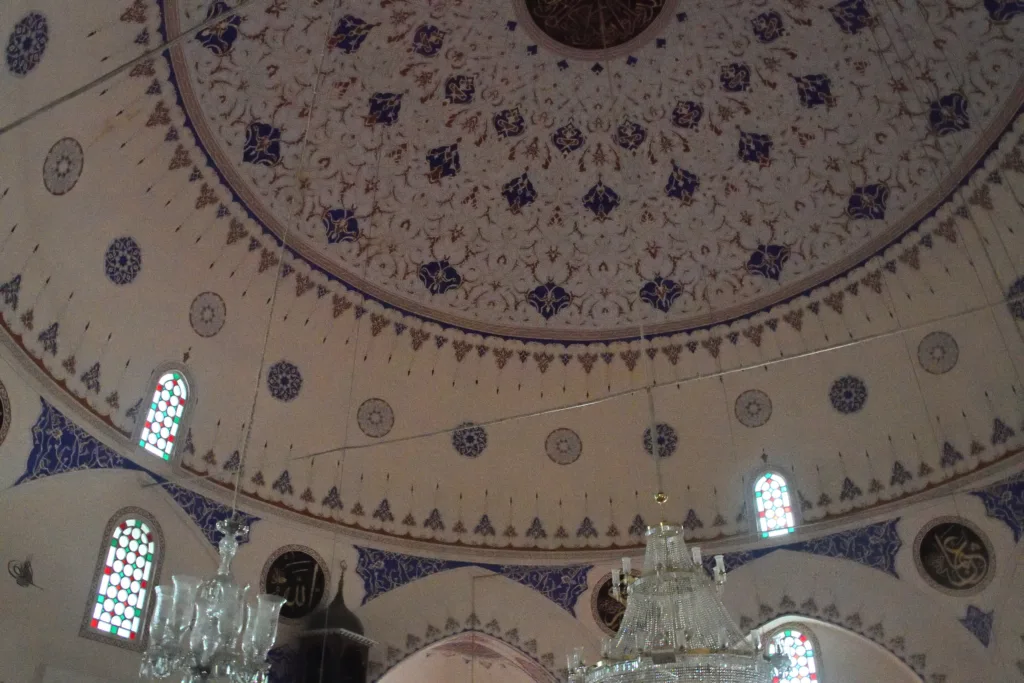
A great early Ottoman dome of 1382, built by a prince who would become sultan.
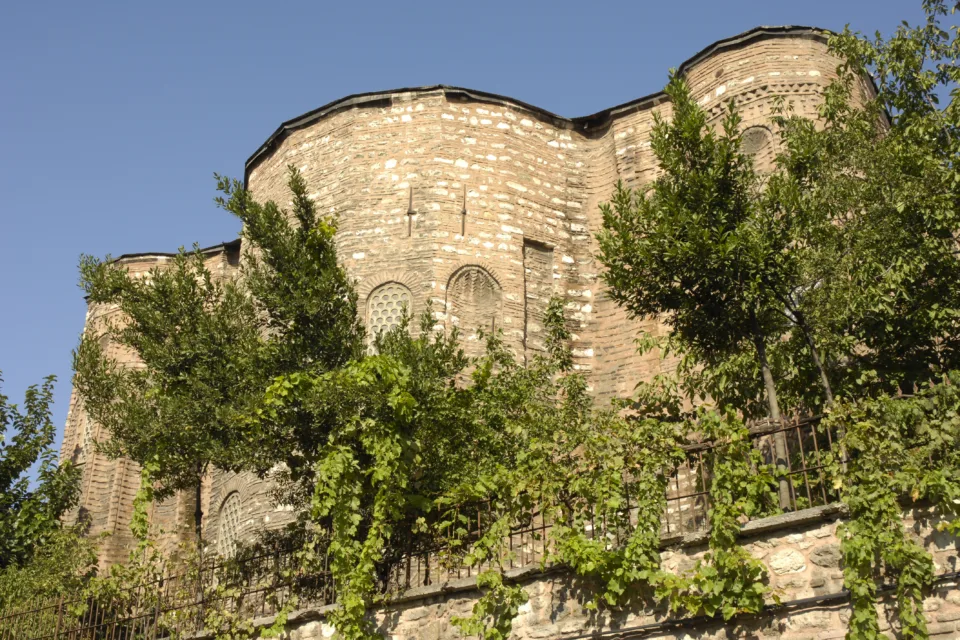
In the middle of Mudurnu, a square stone hall carries one great dome. From Bolu, our Mudurnu and Göynük day trip covers both towns. It looks simple from outside, yet it marks a turning point in Ottoman building. This is the Yıldırım Bayezid Mosque, built by a prince who later became Sultan Bayezid I.
Bayezid, later nicknamed Yıldırım, “the Thunderbolt”, built the mosque while he was still a prince. It dates from 1382. Later, he also built a mosque and a bath in Bolu itself.
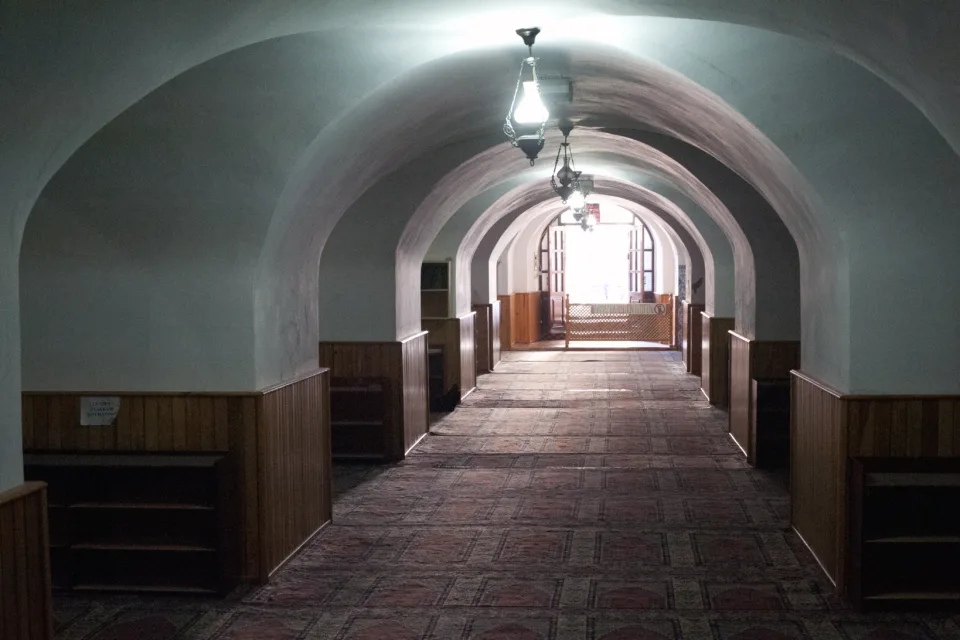
First, pass through the three-bay entrance portico. Inside, a single dome of 19.43 m (64 ft) covers the almost square prayer hall. It has one of the first large Ottoman domes, and it is an early example of a mosque supported by eight buttresses.
Our notes for the Yıldırım Bayezid Mosque
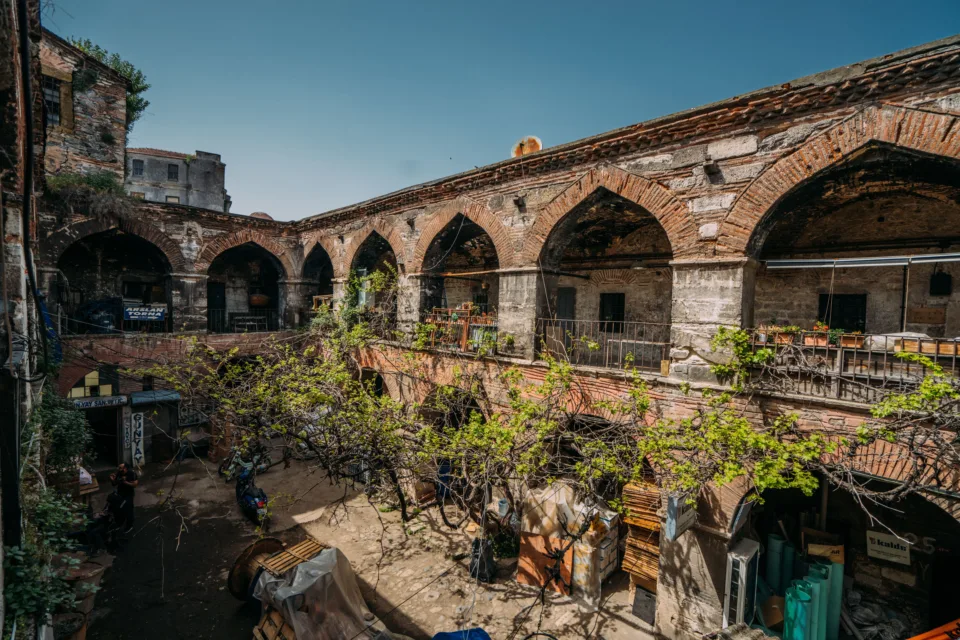
Our suggestion Visit outside prayer times, then walk on to the Arasta bazaar and the old hamam (a Turkish bath) nearby.
The mosque was once part of a small complex with a madrasa and a double bath. Bayezid built the bath and the madrasa while he was still a prince. However, the madrasa came down in 1953, so today the bath is the other survivor. Its men’s section has a dome of about 20 m (66 feet), with muqarnas, the honeycomb vaulting of Islamic architecture. Also, the mosque itself carries no inscription. Its date of 1382 comes from the bath’s inscription and the waqf deed, which give the Hijri year 784.
Mudurnu grew as a town of craft guilds, and in 2015 it joined Türkiye’s UNESCO World Heritage Tentative List as the Historic Guild Town of Mudurnu. So the old customs still show. Every Friday after the call to prayer, the shopkeepers say the Esnaf Duası, the tradesmen’s prayer, in Orta Çarşı (a market street or bazaar) and Demirciler Çarşısı, the blacksmiths’ bazaar. Then, for something sweet, look for Mudurnu kaşık sapı, a registered local specialty since 2021.
Also, Mudurnu lies 52 km (32 miles) from Bolu on the historic Silk Road route, and it was an early Ottoman center of the Ahi brotherhoods of craftsmen. So, if you are lucky, you may see the Şed Kuşatma, the ceremony in which a master ties a sash on an apprentice.
The mosque stands in the center of Mudurnu. It is a working mosque, so dress modestly and avoid prayer times.

Would you like to see Bolu with a local guide? The mosque of a prince is the first stop of our Mudurnu and Göynük day trip, before the bazaar; our Bolu guide has the whole province.
Because it is one of the first large Ottoman domes. Stand under it and look up: this is where the great mosques of Istanbul began.
Mudurnu in Bolu: an early Ottoman Ahi town of timber houses on the Silk Road, the…

Göynük in Bolu: a Cittaslow town of timber houses, the tomb of Akşemseddin built in 1464,…

Sünnet Lake Nature Park near Göynük in Bolu: a forest lake among the ten nature parks…

The Bolu Museum: archaeology from the Neolithic to Byzantium, Roman marble busts of Artemis and Hermes,…

The Büyük Cami of Bolu: founded by Yıldırım Bayezid, rebuilt on the same site after a…

The Tabaklar Hamamı in central Bolu: a double bathhouse of the tanners' quarter, dated to the…

Lake Abant in Bolu: a clear mountain lake at 1,328 meters among pine and beech forests,…

Yedigöller north of Bolu: seven lakes dammed by landslides in a deep beech and fir forest,…

Open in Google Maps (opens in a new tab) Open in Apple Maps (opens in a new tab)
In 1382. The mosque has no inscription, so the date comes from the inscription of its bath.
Bayezid I, known as Yıldırım, "the Thunderbolt", built it while he was still a prince.
About 19.5 m (64 feet) across.
Mudurnu is on Türkiye's UNESCO World Heritage Tentative List as the Historic Guild Town of Mudurnu, added on April 13, 2015.