Photo: Dosseman / Wikimedia Commons, CC BY-SA 4.0
Zal Mahmud Pasha Mosque
Sinan's late mosque in Eyüp, built for a princess and the vizier who strangled Prince Mustafa.
Overview
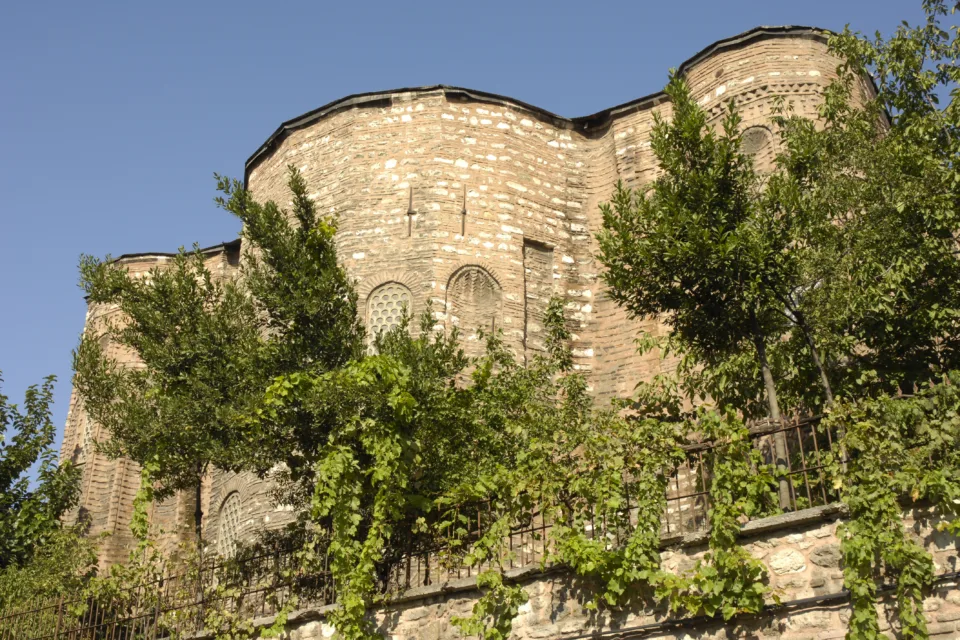
On a slope in Eyüp, at the top of the Golden Horn, a mosque of striped stone and red brick rises above a crowded old graveyard. Inside, however, two rows of windows flood the prayer hall with light. Yet for a long time, many people of Istanbul would not pray here at all. So this is the Zal Mahmud Pasha Mosque, one of the last works of Mimar Sinan, probably finished around 1580, and the memorial of a man linked to a famous royal murder. Nearby, our Islamic heritage of Istanbul tour visits the Eyüp Sultan Mosque.
- Good for
- Sinan's architecture, Ottoman history, the Golden Horn
- Best combined with
- Eyüp Sultan Mosque, Pierre Loti Hill, Golden Horn
The Story of the Zal Mahmud Pasha Mosque
The founders
The complex was founded jointly by Şah Sultan, a daughter of Sultan Selim II and Nurbanu Sultan, and her second husband, the Bosnian-born vizier Zal Mahmud Pasha. At first, in 1569, Şah Sultan planned only a madrasa, a tomb and a fountain. After her marriage to the pasha in 1574, however, a mosque was added to the plan. In the end, both of them died in 1580.
The shadow of Prince Mustafa
Earlier, in 1553, on the orders of Suleiman the Magnificent, Zal Mahmud had strangled Şehzade Mustafa, the sultan’s eldest son and a much-loved prince. As a result of the deep public grief over that death, people avoided this mosque for a time. So even today, the building carries a darker story than most of Sinan’s works.
Sinan’s late work
Work began in 1577, and the mosque was probably finished around 1580, late in the life of Mimar Sinan. Later, the 1894 earthquake brought down the original minaret, and the present one was built afterward. The mosque was restored between 2012 and 2015.

What to See at the Zal Mahmud Pasha Mosque
A complex on two levels
First, notice that the complex sits on two levels. Above, the mosque and one madrasa stand around an upper courtyard with a fountain for ablutions. From there, in turn, a staircase leads about 4 meters (13 feet) down to a second madrasa and the tomb.
Two rows of windows in the Zal Mahmud Pasha Mosque
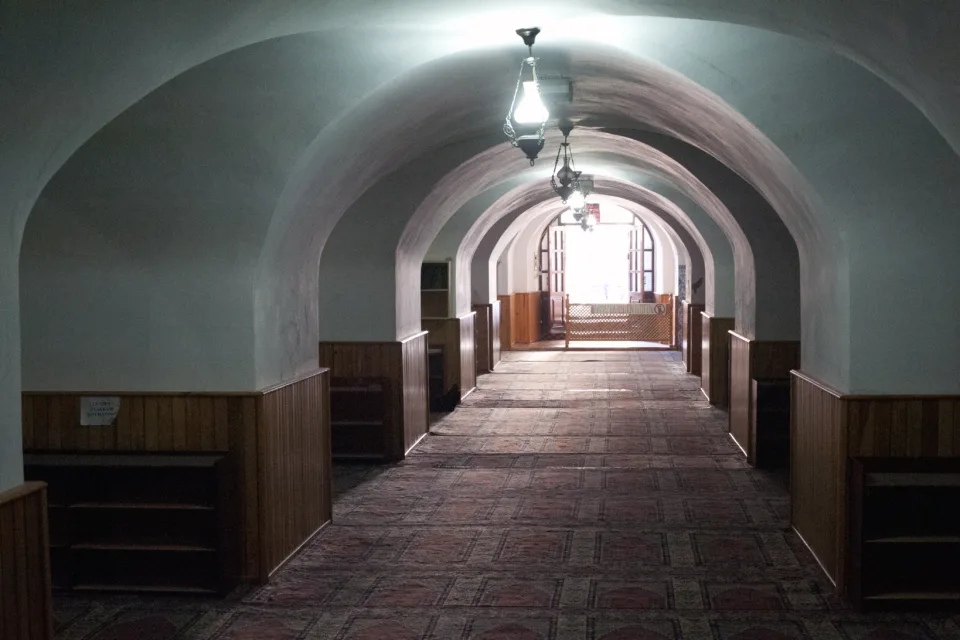
Next, step inside. Here, for example, a large dome covers the hall, and galleries on slender columns run along three sides. Strikingly, the side walls have two closely spaced rows of windows, a style not seen in Sinan’s other works.


İznik tiles and a praised minbar
Then walk to the mihrab (the niche that shows the direction of prayer), framed by İznik tiles of its own time. Beside it, likewise, the carefully carved marble minbar once won the praise of Evliya Çelebi.

The tomb and the fountain
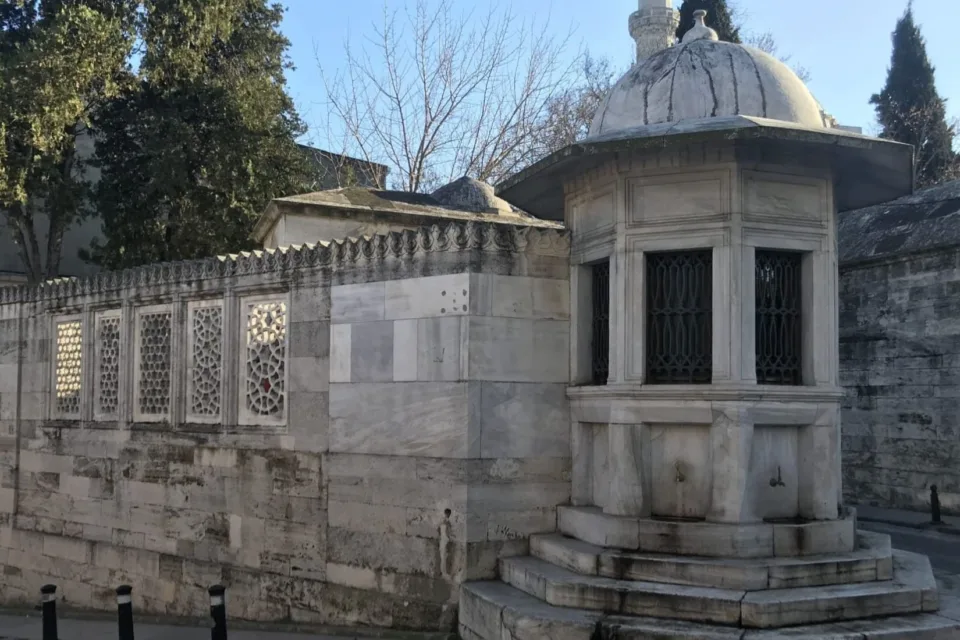
After that, go down to the eight-sided tomb, where Zal Mahmud Pasha lies. Afterward, look for the stone fountain on Feshane Street. There, too, its inscription of 1590 names Şah Sultan and Zal Mahmud Pasha as its donors.

Tips for visiting the Zal Mahmud Pasha Mosque
Our notes for Zal Mahmud Pasha
- FinishedAbout 1580; the fountain’s inscription reads 1590.
- WindowsTwo rows, unique in Sinan’s work.
- PrayerA working mosque; visit outside prayer times.
Our suggestion Visit on the way between Fener and Eyüp Sultan, and walk down the stairs to the lower courtyard.

How to Visit the Zal Mahmud Pasha Mosque
In practical terms, the complex stands in Eyüpsultan, between Defterdar Street and Zal Pasha Street, near the shore of the Golden Horn.
Afterward, walk on to the Eyüp Sultan Mosque, then ride the cable car up to Pierre Loti Hill for tea above the water.
Our Sinan mosques tour pairs Zal Mahmud Pasha with Atik Valide in Üsküdar, and our Pierre Loti sunset tour ends the day on the hill above Eyüp. Book either one as a private day, and we time the mosque visits between prayers.
Because it is a beautiful building with a dark story. Light pours through two rows of windows, while the founder's role in a royal murder once kept Istanbul away.
Map
Open in Google Maps (opens in a new tab) Open in Apple Maps (opens in a new tab)
Frequently asked questions
Who built the Zal Mahmud Pasha Mosque?
Mimar Sinan designed it for Şah Sultan and her husband Zal Mahmud Pasha. It was begun in 1577 and probably finished around 1580.
Who was Zal Mahmud Pasha?
A Bosnian-born Ottoman vizier who, on Suleiman's orders, strangled Prince Mustafa in 1553.
What is unusual about the building?
It stands on two levels. Its side walls also have two closely spaced rows of windows, not seen in Sinan's other works.
Where is it?
In Eyüpsultan, near the Golden Horn, on the way to the Eyüp Sultan Mosque.