Full day (about 8 hours) · Eastern Anatolia, Van
Private Ahlat Tour: Seljuk Tombstones on Lake Van
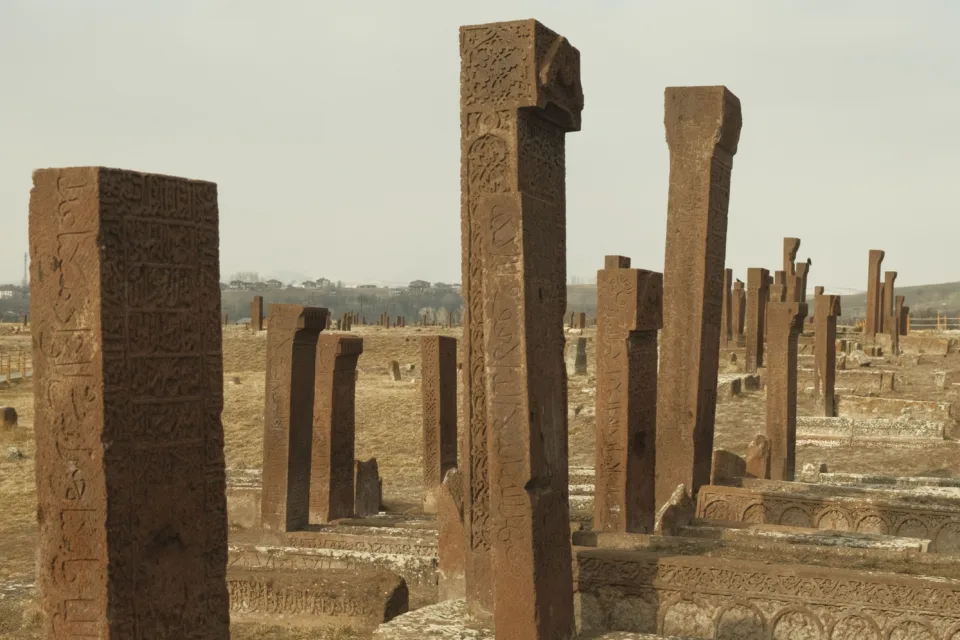
A private Ahlat tour: the Seljuk Meydan Cemetery with about 9,000 carved…
Best for Returning visitors
Photo: Turkey Your Way
Destination
Van lies near the eastern shore of Lake Van, with the Urartian castle of Çavuştepe, the boat to Akdamar and a breakfast registered under its name.
Van lies in eastern Turkey, near the eastern shore of Lake Van. About 5 km (3 miles) from the center, a long rock rises from the plain. There the Urartian kings built Tushpa, their capital, and its fortress dates to 840–825 BC. Later, in the 16th and 17th centuries, Ottoman builders raised mosques in the walled town at its foot. Today the city is known for its breakfast, registered under its name in 2020. So we plan the city around three things: Urartian sites, the lake shore and a long morning at the table. Near Van, see the Urartian castle of Çavuştepe.
Van is a provincial capital in the closed basin of Lake Van. Its story begins with Urartu, whose capital Tushpa is today's Van Fortress. Then, in 1548, Ottoman forces took the fortress, and the old city grew below it. After World War I, the city was rebuilt about 7 km (4 miles) from the shore, where it stands today. Two monuments, Akdamar and Van Fortress, sit on Türkiye's tentative list for UNESCO World Heritage. Choosing one? Read Kars or Van.
Quick facts
Most sights here are Urartian or Ottoman, and several of them are state museums or archaeological sites. Because hours and status change, we confirm each one for the dates of your trip.
Van Fortress stands on a rock in the Van plain. King Sarduri I founded it, and eight royal rock tombs line its cliffs. Türkiye's World Heritage tentative list carries it under 2016. Below its south side lay the old walled city, with gates named Tebriz, Orta, Uğrun and Yalı. Our fortress page covers the tombs, the inscriptions and the climb. Our Van Akdamar tour ends at the fortress after Akdamar.

Inside the old walls, two Ottoman mosques still stand. Mimar Sinan designed the Hüsrev Pasha complex, and its mosque dates from 1567–68 by its inscription. After a fire in 1915–1917 badly damaged it, excavation and restoration from 1996 to 2007 repaired the mosque. Nearby, Kaya Çelebizade Koçi Bey began the Kaya Çelebi Mosque in 1660. When he was executed, Cem Dedemoğlu Mehmet Bey finished it in the 1660s. Today its square prayer hall, under one dome, is open for worship.
The museum began in 1932 as a depot for Urartian inscribed stelae and the ram-shaped gravestones of the Karakoyunlu and Akkoyunlu. Then, in 2019, a new building opened with 23 exhibition halls. Its Urartian rooms show bracelets, armbands, earrings and votive plaques. Besides the metalwork, it holds 13 stone stelae found by chance in Hakkari in 1998. However, the museum has been closed for display and repair work, so check whether it has reopened before visiting.
Çavuştepe lies 25 km (16 miles) from the city, just south of the Van–Hakkari road. In the mid-8th century BC, King Sarduri II founded it as Sardurihinili, "the city Sarduri founded." Its lower castle runs 800 meters (2,620 feet) along the ridge and holds a temple of the god Irmushini. Then, 30 meters (100 feet) higher, the upper castle held a temple of Haldi, the chief god. No other Urartian castle has two temples to two different gods.
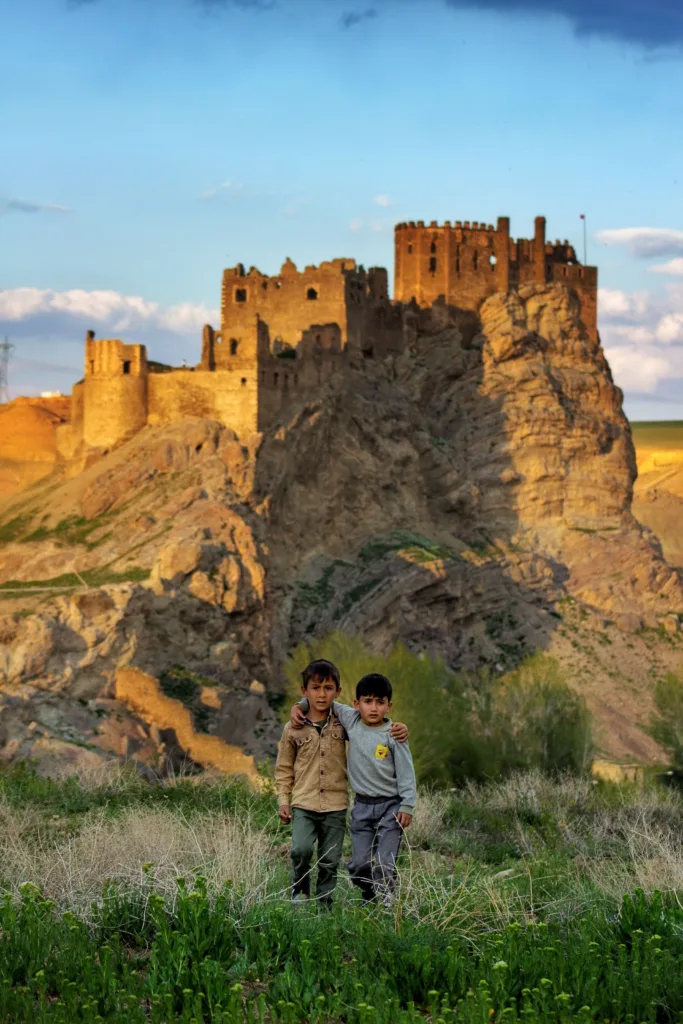
Hoşap Castle rises on a steep rock above the Hoşap stream, 60 km (37 miles) from the city on the Hakkari road. Its history reaches back to Urartu, but its present form comes from the Mahmudi beys, who ruled under the Ottomans. Over the inner gate, a Persian inscription names Süleyman Bey as builder, in 1052 of the Islamic calendar (1642–43). Two carved lions flank it, and the old iron door leaves still hang. After people left the castle in the mid-19th century, it survived largely intact. Still, Hoşap has been closed to visitors, so ask whether it has reopened before the drive.

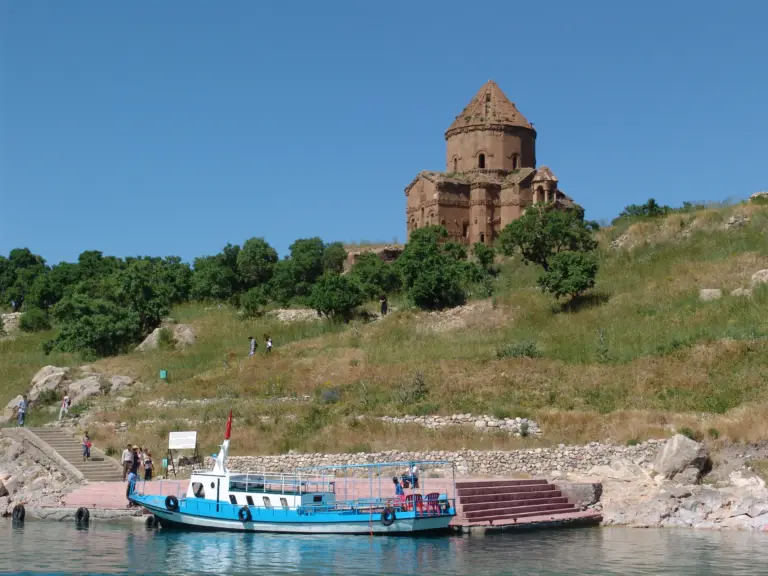
Akdamar Island lies about 4 km (2.5 miles) off the shore in Gevaş district, 50 km (31 miles) west of the city. The boat crossing takes about 20 minutes. The architect monk Manuel built its Akdamar Church of the Holy Cross between 915 and 921 for Gagik I Ardsruni, the Armenian king of Vaspurakan. After a restoration in 2005–2006, it opened as a memorial museum in 2007. We time your visit to the hours of the Van Museum. Our Akdamar Island page reads its carved walls in detail.
In Muradiye district, 80 km (50 miles) from the city, the Bend-i Mahi stream drops 18 meters (59 feet). Tendürek Dağı feeds the stream, and the falls take their name from Sultan Murad IV, who passed on his Baghdad campaign. A suspension bridge crosses to the far bank. From the city bus station, Çaldıran minibuses and buses serve the falls.
Southwest of the city, on the Van–Tatvan road, the Edremit shore holds a water sports center about 15 km (9 miles) away. There you can try sailing, canoeing, rowing, dragon boats and water skiing. For the lake itself, its soda water and its size, see our Lake Van page.
People lived around Van by about 4000 BC. Later, about 2000 BC, the Hurrians ruled the region. Then King Sarduri I founded the state of Urartu, with Tushpa as its capital, and Urartian rule lasted into the late 7th century BC. After that, Medes, Persians, Macedonians, Parthians, Romans, Sasanians and Byzantines followed. Between 908 and 1021, the Vaspurakan kingdom ruled Van and its surroundings under the Abbasids. In the 11th century, Seljuk forces took Van, and later Karakoyunlu, Akkoyunlu and Safavid rulers held it. Finally, on August 24, 1548, the fortress surrendered to the army of Süleyman the Magnificent. Then the Treaty of Amasya confirmed Ottoman rule in 1555, and Van became the seat of a frontier province.
During World War I, Russian forces occupied Van in 1915, and the old walled city below the fortress burned. That same year began the Armenian genocide of 1915–16, the Ottoman government's destruction of its Armenian population. Ottoman forces entered Van again on April 2, 1918. Because the old city lay largely in ruins, people who returned built a new one about 7 km (4 miles) inland. After the railway reached Tatvan on the lake's western shore in 1964, the city became easier to reach. Across the lake, our Ahlat tour walks the Seljuk cemetery of Ahlat.
In 2020, Van Kahvaltısı, the Van breakfast, was registered as number 504, at the request of Van Yüzüncü Yıl University. It began with tradesmen who ate breakfast in town after dawn prayers, before opening their shops. Then, in 1947, the first breakfast shop opened, called a süt evi, or milk house. Today a registered Van breakfast must include otlu peynir, murtuğa, kavut, kaymak, butter, honey, rose jam, cacık and egg dishes. However, french fries, salami, sausage, ham and börek are not allowed. Our Turkish breakfast article sets Van beside other regions.
Otlu peynir is herb cheese, made mostly from sheep's milk. Since its 2018 registration, number 405, cheesemakers must use six herbs, among them sirmo, heliz and wild mint. Then makers bury the cheese underground in pots to mature. Cooks make murtuğa, registered in 2017 as number 243, from flour, egg, butter and salt. For kavut, cooks roast wheat, grind it and work in warm butter, and people eat it with honey or rose jam. Since 2018, Van Kavut has carried its own registration, number 390.
Our notes for Van
Our suggestion Eat a late Van breakfast, then drive south to Çavuştepe in the afternoon.
The Van cat has been a registered national breed of Türkiye since 2006, under a communiqué in the Official Gazette. The breed comes from the Lake Van basin. Its eyes come in three varieties: one blue and one amber, both blue, or both amber. Most are all white, while some carry reddish-yellow patches on the head, back, legs, ears and tail. These cats can swim, and they like to. On the campus of Van Yüzüncü Yıl University, the center's cat house is open to visitors.

Our suggestion: on the first day, climb Van Fortress and walk through the old city to the two mosques. Then, on the second day, take the boat to Akdamar and stop at Edremit on the way back. Finally, on the third day, drive south to Çavuştepe, and on to Hoşap if it has reopened. Before each outing, start with breakfast.
Winters here are cold, and summers are warm and dry. Across 1939–2025, January averages a high of 2.1°C (36°F) and a low of −7.4°C (19°F). By contrast, August averages a high of 28.6°C (83°F) and a low of 14.8°C (59°F). Because July and August see only one or two rainy days, summer suits the lake and the castles. March and April are the wettest months by rainy days, with about 12 each. So we pack a warm layer for summer evenings, and real winter clothing from December to February.
Van Ferit Melen Airport lies 8 km (5 miles) from the city center, along the lake shore. Flights link it daily with Ankara and Istanbul, among other cities, so check current schedules. From the terminal, municipal buses and taxis run into town, and public buses stop at the airport gate 300 meters (330 yards) away. Besides these, private shuttles leave the terminal for Erciş, Muradiye and Çaldıran; the airport's transport page has the details.
The railway reached Tatvan, on the western shore of Lake Van, on October 25, 1964. Then, from 1971, ferries carried rail wagons across the lake between Tatvan and the city. Check the current passenger timetable with TCDD, the state railways, before you plan the crossing. By road, the Tatvan–Van road runs around the south side of the lake.
Updated: October 24, 2026.
We plan Van with at least three nights, because the castles and the island lie in different directions. Our eastern Turkey tour in 7 days joins Van with Kars, Ani and the Ishak Pasha Palace. Our driver service covers the runs to Gevaş, Çavuştepe and Muradiye. At the fortress and on Akdamar, our guide service reads the inscriptions and the reliefs with you. From Van, we often continue north to Ishak Pasha Palace near Doğubayazıt in Ağrı province, or on to Kars and Erzurum. For the wider region, see our page on Eastern Anatolia.
Full day (about 8 hours) · Eastern Anatolia, Van
A private Ahlat tour: the Seljuk Meydan Cemetery with about 9,000 carved…
Best for Returning visitors

Full day (about 8 hours) · Eastern Anatolia, Van
A private Van Akdamar tour: a boat to Akdamar Island and its…
Best for Returning visitors
9-day journey
A private 9-day Urartu tour: the Van Fortress and Çavuştepe, the Seljuk…
Best for Returning visitors

9-day journey
A private 9-day eastern Turkey and Black Sea tour: Trabzon and Sumela,…
Best for Returning visitors
 Istanbul
 spreads across Europe and Asia on both shores of the Bosphorus. Explore the…
 Cappadocia
 is a Central Anatolian region where wind and water cut volcanic tuff into…
 Ephesus
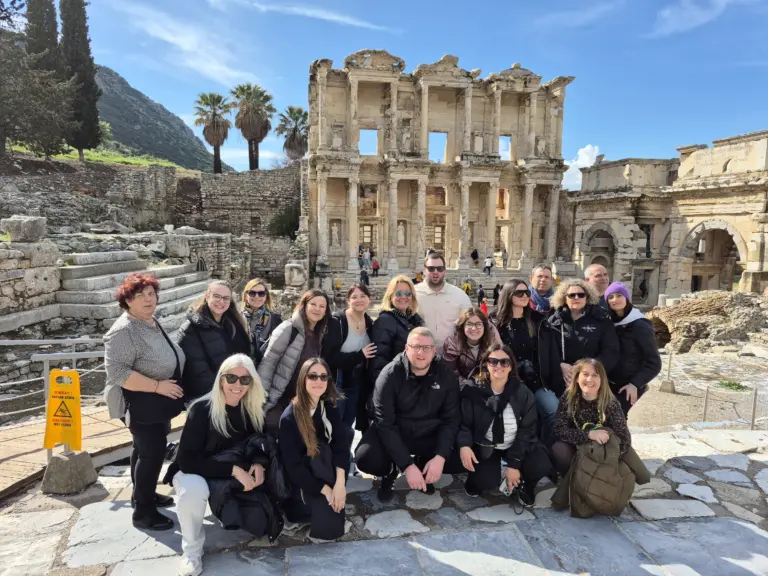
Selçuk is the town beside the ancient ruins of Ephesus and holds the Ephesus…
 Pamukkale
 and Denizli, from the white travertines and the Roman spa city to red…